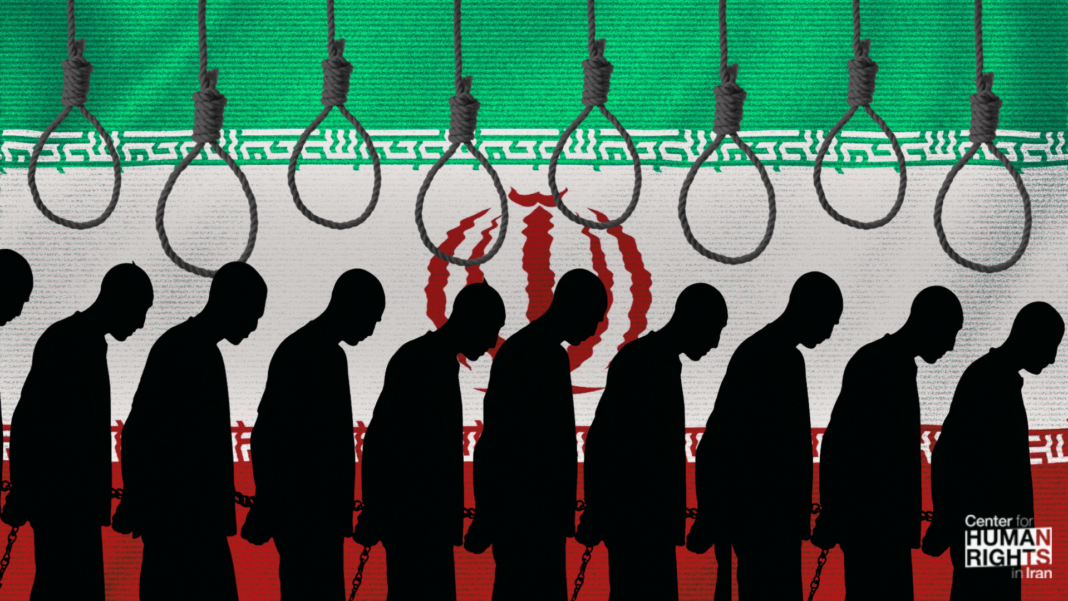
Iran faced renewed international criticism on Thursday after authorities carried out several executions linked to security and espionage charges. The surge in executions in Iran has intensified concerns among rights groups, especially during a period of political unrest and regional tension.
A news agency, which operates close to the Islamic Revolutionary Guard Corps, announced the execution of Ramin Zaleh and Karim Maroufpour. Authorities accused both men of joining separatist groups and planning armed attacks. Officials also claimed the pair attempted assassinations and shootings to destabilize national security.
Meanwhile, the Norway-based Hengaw Organization for Human Rights reported another alarming development. The group said Iranian authorities secretly executed two Iraqi nationals in Karaj Central Prison near Tehran. Hengaw identified the men as Ali Nader al-Obaidi and Fadel Sheikh Karim.
According to the rights organization, Iranian courts sentenced both Iraqis to death over alleged espionage activities. Hengaw stated the case involved accusations of spying for an unnamed Arab country in the region. However, the organization criticized the legal process and questioned the transparency of the trial.
Furthermore, Hengaw argued that Iranian authorities continue using unclear national security charges against foreign nationals. The group also warned that officials deny many defendants fair legal representation and due process protections.
At the same time, human rights organizations continue documenting a sharp rise in executions across Iran. The Iran executions surge accelerated during the recent regional conflict that began in late February. Rights monitors believe authorities increased pressure on dissidents and minority communities during the war period.
Several watchdog groups reported between 25 and 35 political executions from late February to mid-May 2026. These organizations included the Center for Human Rights in Iran, Hengaw, and Iran Human Rights Monitor.
Additionally, critics accused Tehran of using executions to silence opposition voices and discourage public protests. Rights advocates especially highlighted cases involving ethnic minorities, political dissidents, and low-income prisoners.
In late April, the United Nations also condemned the growing number of executions. Volker Turk, the UN High Commissioner for Human Rights, expressed concern over worsening conditions inside Iran.
Turk stressed that authorities must respect fair trial rights, even during wartime conditions. He also urged Iranian officials to halt executions immediately and release detainees held without proper legal procedures.
Moreover, Turk criticized the arrest of nearly 4,000 people during the conflict period. He warned that arbitrary detentions and rushed trials continue to damage public trust and violate international law.
Earlier this week, Amnesty International released another troubling report. The organization recorded 2,707 executions worldwide during 2025 across 17 countries. Iran reportedly accounted for at least 2,159 of those executions.
Amnesty described Iranian authorities as the main force behind the dramatic increase. The organization also noted that the country more than doubled its execution total compared to 2024.
As global criticism grows, the Iran executions surge continues, drawing attention from international rights groups and diplomatic observers worldwide.