Iraq government formation talks progressed further on Wednesday after Iraq’s National Political Council announced it had completed internal understandings on its position in the next cabinet. Moreover, the council confirmed readiness to attend a parliamentary confidence vote once officially scheduled.
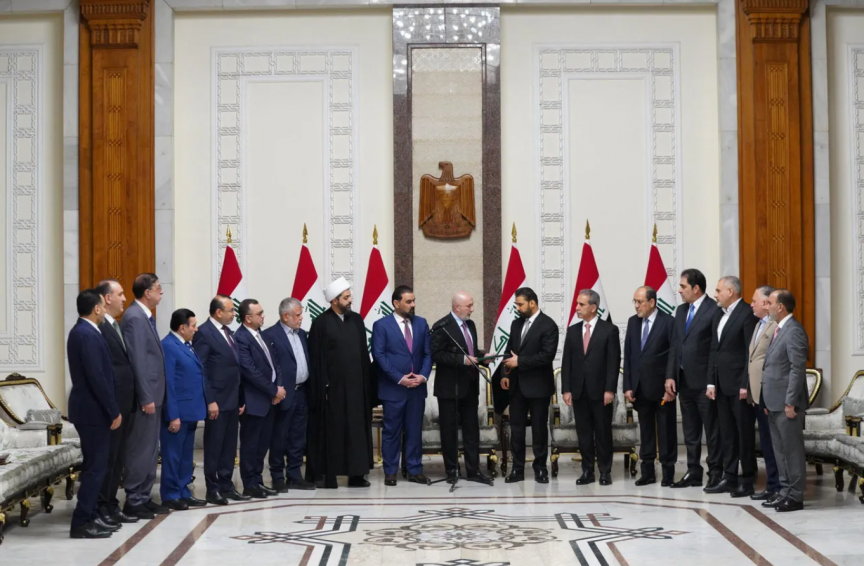
The council, also known as the Sunni Framework, held a high-level meeting in Baghdad. Furthermore, leaders gathered at the residence of Sheikh Thabit al-Abbasi alongside parliamentary speaker Haibat al-Halbousi and representatives of member parties.
Participants declared the completion of all internal understandings related to government formation. In addition, they submitted a unified policy document outlining their vision for the next government.
That document included proposals addressing governance priorities in Sunni-majority provinces. Consequently, the bloc aims to secure stronger representation in the upcoming cabinet.
Meanwhile, parliamentary discussions also accelerated in Baghdad. Halbousi confirmed that lawmakers will receive the government program prepared by Prime Minister-designate Ali al-Zaidi either on Wednesday or Thursday.
Earlier, he stated that parliament members would review the program before voting on the cabinet lineup. Therefore, the legislative process now moves into a decisive phase.
The National Political Council emerged after the November 2025 elections. Moreover, it brought together several major Sunni political forces under one coordinating umbrella.
These groups include the Taqaddum Movement, Azm Alliance, Sovereignty Alliance, National Hasm Alliance, and Jamaheer Party. Together, they aim to unify positions during Iraq government formation talks.
The council was formed specifically to manage negotiations with other political blocs. In addition, it coordinates parliamentary strategy and cabinet bargaining positions.
Zaidi’s nomination came on April 27 after a prolonged political deadlock. Subsequently, negotiations intensified among Shiite, Sunni, and Kurdish blocs.
Each bloc continues discussions over ministerial allocations under Iraq’s power-sharing system. Furthermore, political leaders seek balance across Iraq’s diverse communities.
The Sunni bloc emphasized that its proposals reflect local governance needs. In contrast, other political actors focus on national-level power distribution.
As a result, cabinet negotiations remain complex but active. However, recent agreements suggest gradual progress toward a final consensus.
Observers note that Iraq government formation talks now enter a critical stage. Moreover, parliamentary approval will determine the pace of the next political transition.
Ultimately, all blocs appear committed to completing the process within constitutional deadlines. Therefore, attention now shifts to parliamentary review and final cabinet approval.