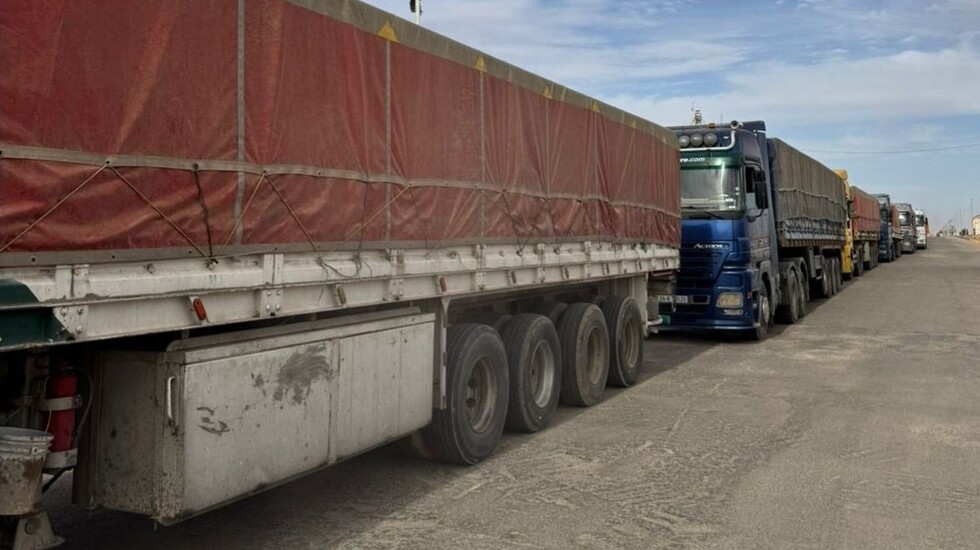
Iraq-Syria trade revival is gaining pace as Baghdad resumes exports through key border crossings. On Sunday, the Border Ports Authority confirmed the first cement shipment to Syria in over a decade. This step marks a turning point in Iraq’s and Syria’s trade revival and signals renewed economic coordination.
The shipment crossed through the Al-Waleed border point under close supervision from border officials. Authorities emphasized strict regulatory procedures during the operation. Moreover, officials described the step as a clear sign of improved border management.
Omar al-Waeli, head of the Border Ports Authority, oversaw the operation directly. He highlighted the importance of organized oversight at crossings. In addition, he noted that efficient procedures now support smoother trade movement.
Meanwhile, the al-Waleed crossing reopened on April 2 after more than eleven years of closure. Initially, the crossing handled oil tanker entries heading toward Syria’s Baniyas refinery. This early activity laid the groundwork for broader commercial movement.
Previously, the crossing had remained closed since 2014 due to security challenges. Large areas in Iraq and Syria had fallen under extremist control at that time. Consequently, trade routes collapsed, and economic ties weakened significantly.
However, recent developments show a steady recovery in bilateral cooperation. The reopening aligns with wider efforts to restore trade links between the two countries. Furthermore, Iraq-Syria trade revival continues to expand with each step forward.
In June 2025, authorities also reopened the al-Qaim border crossing. That decision strengthened land trade routes and increased cross-border coordination. Together, these steps reflect a broader strategy to rebuild economic connections.
At the same time, Iraq is exploring alternative export pathways beyond its southern terminals. Regional tensions had disrupted traditional oil export routes in recent years. Therefore, overland access to Mediterranean ports through Syria offers a valuable option.
Officials believe these steps will diversify Iraq’s export network and reduce reliance on limited routes. Additionally, stronger trade links could support economic stability for both countries.
Overall, Iraq and Syria’s trade revival is reshaping regional trade dynamics after years of disruption. Authorities continue to expand trade channels while maintaining strict oversight at border points.