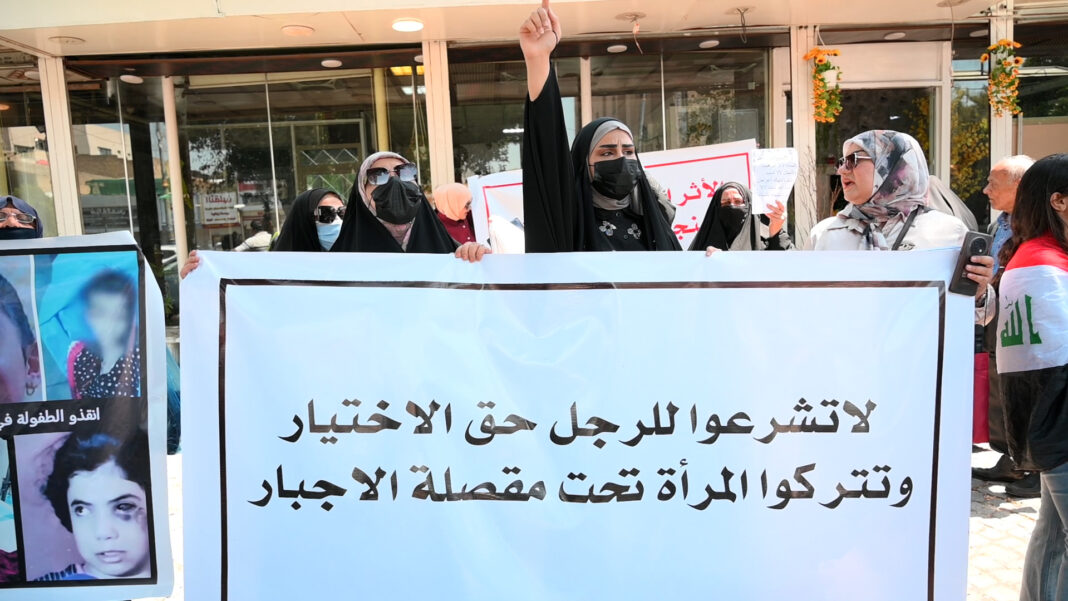
Iraqi custody law protests intensified on Friday after dozens of women gathered in Baghdad’s Firdos Square. Demonstrators rejected proposed legal changes that they believe weaken mothers’ custody rights across Iraq.
Women carried signs and shared emotional stories about losing contact with their children after divorce disputes. Several protesters accused former husbands of exploiting the amended personal status law for custody battles.
The demonstrations focused on changes to Article 57 of Iraq’s Personal Status Law of 1959. The current law gives mothers priority in child custody unless authorities identify serious harm to the child.
However, many protesters opposed the Jaafari personal status code and its custody provisions. They argued that the amendments transfer children away from their mothers after the age of seven.
Many women warned that the changes could create long-term psychological harm for children and families. Protesters also demanded stronger civil protections for divorced mothers across the country.
One protester, Um Hussein, described years of raising her children without financial assistance from her former husband. She explained that her husband divorced her in absentia before marrying another woman.
She said the legal amendments now threaten her custody rights despite years of sacrifice and hardship. Furthermore, she criticized personal status courts and called the new measures deeply unfair toward women.
Another protester, Um Zahra, shared a painful account involving her eight-year-old daughter. She claimed her former husband demanded 35 million Iraqi dinars to allow communication with the child.
She said she had not spoken to her daughter for five consecutive days. As well as, appealing to Iraq’s judiciary for urgent intervention and legal protection.
Meanwhile, Randa Khalil described the amendments as discriminatory against Shiite mothers. She questioned why courts would remove children from mothers who already received legal custody.
She also criticized lowering the custody age from 18 years to seven years. According to Khalil, children often become the biggest victims during custody disputes.
Iraqi custody law protests also drew support from women’s rights activists and legal observers. Activist Um Abbas warned that separating children from mothers could damage emotional and social development.
She stressed that some children later experience mistreatment inside blended family environments. Additionally, she called for judicial accountability in cases involving abuse and forced separation.
Public prosecutor Nawar Obeid explained that Iraqi law does not officially recognize “parental abduction” terminology. Instead, courts handle these disputes under laws related to failing to hand over a child.
Obeid also pointed to Article 382 of Iraq’s Penal Code during remarks about custody enforcement. The article allows prison sentences and financial penalties in specific custody violations.
The protests followed ongoing disputes surrounding the amended Personal Status Law No. 1 of 2025. The law took effect on February 18, 2025, after parliamentary approval.
The amendments allow families to choose civil, Jaafari, or Sunni jurisprudence in personal matters. Those matters include marriage, divorce, inheritance, and child custody cases.
Under the amended framework, mothers maintain custody until children reach seven years old. After that age, custody automatically transfers to fathers in many cases.
Iraqi custody law protests have continued since courts began implementing the amendments across the country. Protesters stressed that Iraqi women repeatedly return to the streets whenever custody rights face new threats.