A widening Shiite political rift in the Iraq Coordination Framework has pushed senior leaders into urgent talks as tensions rise over government formation in Baghdad. Moreover, internal disagreements continue shaping Iraq’s fragile political balance following the partial approval of the new cabinet.
The Shiite political rift in the Iraq Coordination Framework became more visible after senior factions failed to reach a consensus on key ministerial posts. In addition, political sources confirmed growing coordination with Iranian actors to manage the escalating dispute.
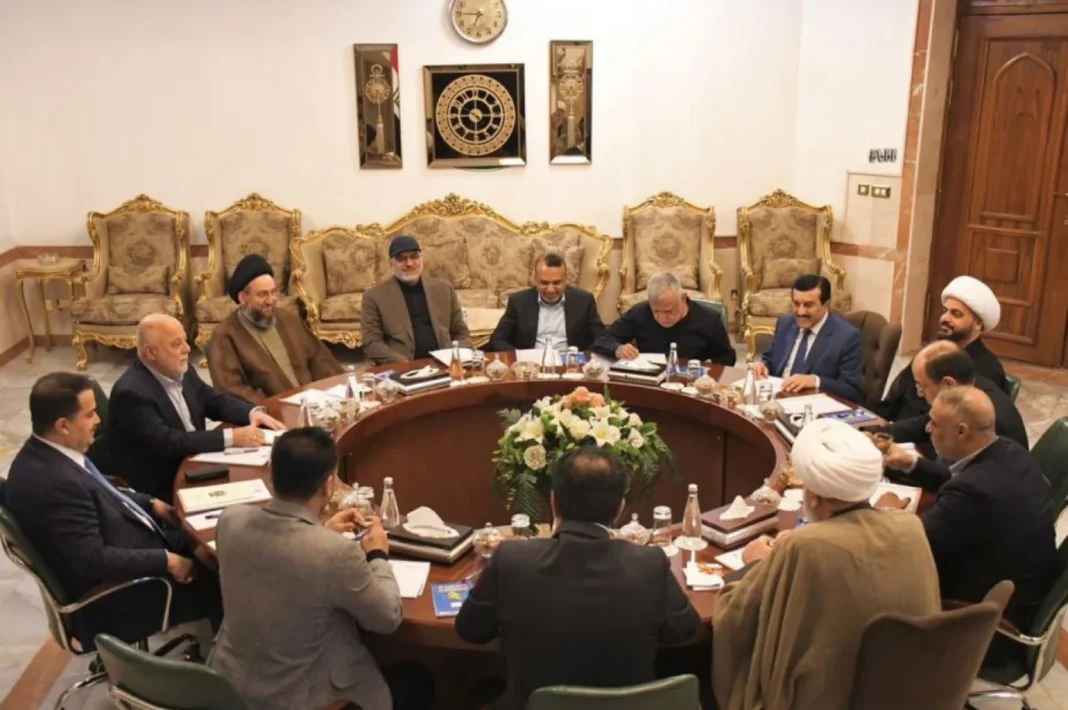
A political source told a media outlet that senior Shiite leaders inside the Coordination Framework launched efforts to prevent a full political split. Furthermore, they aim to restore balance after disputes over cabinet distribution intensified.
Leaders also focus on disagreements surrounding ministry allocations. Consequently, debates over nominations for interior, defense, higher education, and planning ministries continue delaying full government formation.
The Shiite political rift in the Iraq Coordination Framework deepened after parliament approved only 14 out of 23 cabinet positions. As a result, nine ministries remain unresolved due to ongoing political disagreements and quota disputes.
Meanwhile, internal discussions continue across major factions. In addition, leaders warn that the current political conflict may reshape long-term power distribution inside the Iraqi state.
Political sources also revealed possible Iranian involvement in mediation efforts. Specifically, discussions include a potential visit to Baghdad by Esmail Qaani, commander of Iran’s Qods Force.
Moreover, Iranian officials reportedly express concern over rising divisions among Shiite factions. They also worry about the impact on groups aligned with Tehran within Iraq’s political system.
The Shiite political rift Iraq Coordination Framework reflects deeper tensions over future governance direction. Additionally, disputes now extend beyond cabinet positions to questions about state authority and armed group regulation.
According to the source, leaders fear the new government may transform into a long-term political turning point. Therefore, they consider whether it will serve as a consensus administration or trigger further fragmentation.
At the same time, disagreements are linked closely to broader issues involving armed factions. Furthermore, debates continue over how Iraq should respond to external pressure demanding state control over weapons.
Earlier reports indicated that five major factions inside the Coordination Framework may form a new political alliance. These include figures such as Nouri Al-Maliki, Hadi Al-Amiri, Faleh Al-Fayyadh, Hammam Hamoudi, and Ahmed Al-Asadi.
In addition, sources suggest the emerging bloc could include between 75 and 100 lawmakers. Consequently, this development could significantly reshape parliamentary dynamics if negotiations succeed.
However, political observers warn that expanding divisions may weaken the alliance further. Therefore, leaders continue holding consultations in an effort to prevent deeper fragmentation.
Ultimately, the Shiite political rift in the Iraq Coordination Framework highlights ongoing struggles over power distribution in Iraq. Moreover, it underscores how coalition politics and external influences continue shaping the country’s political future.