
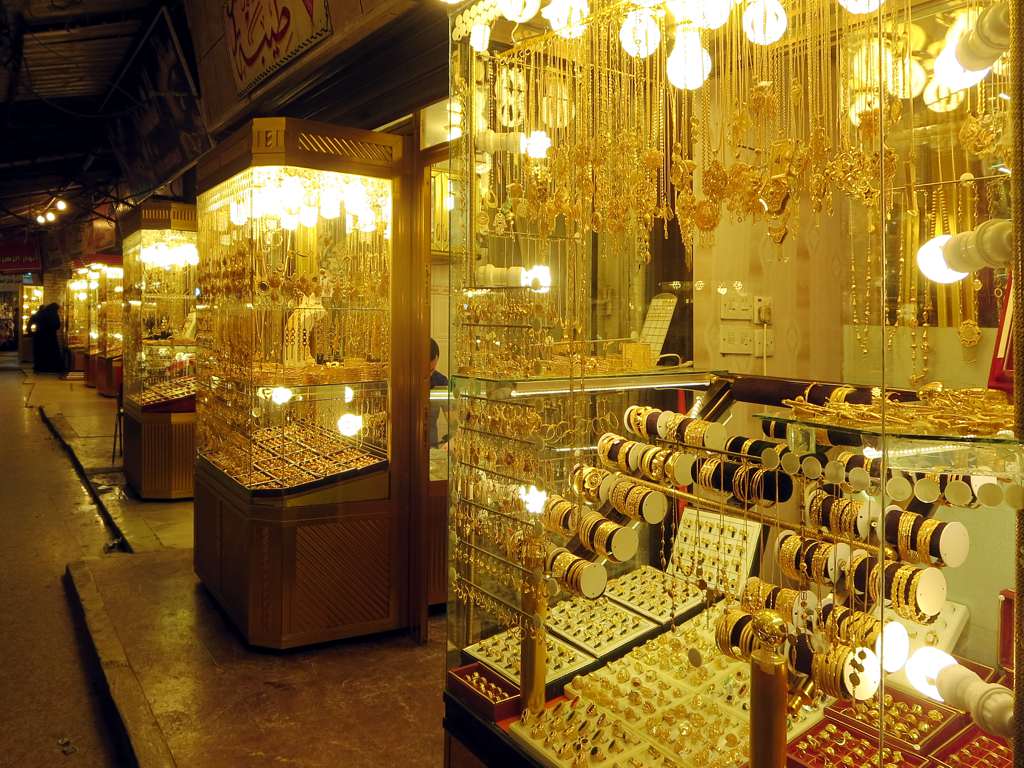
Gold prices climbed in Baghdad and Erbil as local markets continued their upward movement. Traders reported higher rates across several major gold categories. The increase placed market attention back on Iraq’s jewelry sector.
In Baghdad, Al-Nahr Street traders listed 21-carat Gulf, Turkish, and European gold at 883,000 dinars per mithqal. Buyers offered 879,000 dinars for the same category. A mithqal equals five grams.
The latest rate showed a clear rise from the previous level of 860,000 dinars. Therefore, the market recorded stronger pricing pressure in the capital. Iraq’s gold prices also moved higher for locally produced gold.
Traders set 21-carat Iraqi gold at 853,000 dinars per mithqal. Meanwhile, buyers offered 849,000 dinars for the same type. This kept Iraqi gold below imported gold in Baghdad’s market.
Jewelry shops also showed higher retail prices across the capital. Stores offered 21-carat Gulf gold between 885,000 and 895,000 dinars per mithqal. They also offered Iraqi gold between 855,000 and 865,000 dinars.
As a result, buyers faced a wider cost gap between gold types. Imported gold continued to carry higher prices than Iraqi gold. However, both categories followed the same upward trend.
In Erbil, traders listed 22-carat gold at 939,000 dinars per mithqal. They also priced 21-carat gold at 896,000 dinars. In addition, they set 18-carat gold at 768,000 dinars.
These figures showed strong pricing across the Kurdistan Region’s main market. Moreover, Erbil prices remained higher than several Baghdad categories. This reflects differences in demand, supply, and retail pricing.
Iraq’s gold prices often respond to global bullion trends. They also react to currency movement and local buying demand. Therefore, traders watch both international markets and domestic exchange conditions.
Gold carries major importance for Iraqi families. People buy it for weddings, savings, gifts, and protection against currency pressure. Because of that, daily price changes can influence household decisions.
The rise may slow some buying activity in jewelry stores. Many customers wait when prices move quickly. Others buy before further increases push costs even higher.
Furthermore, shop owners must adjust prices carefully during fast market shifts. They need to protect margins while keeping customers interested. This balance becomes harder when prices climb in consecutive sessions.
The increase also highlights gold’s role as a financial refuge. Some buyers see gold as a safer store of value during uncertainty. Consequently, demand can rise even when prices already look high.
Still, higher prices can limit activity among regular consumers. Families with fixed budgets may delay purchases or choose smaller pieces. Retailers may also see more customers selling old gold for cash.
Going forward, traders will monitor global prices, exchange rates, and local demand. Any change in these factors could move prices again. For now, Iraq’s gold prices show a firm upward trend in both Baghdad and Erbil.