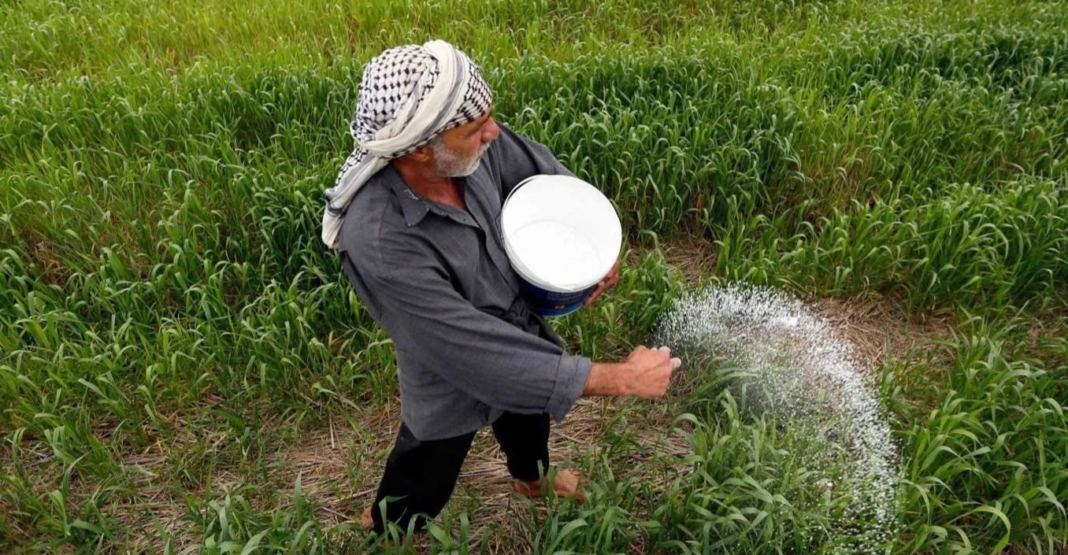
Rice farmers in Najaf have urged the government to help cover rising production costs. Improved water supplies have encouraged growers to return to fields after severe drought.
The Iraq rice revival has restored cultivation across several important farming areas. However, farmers still carry the financial burden of planting and maintaining their crops.
Al-Issa remains one of the main rice-growing areas in Najaf’s Kufa district. Farmers there have started planting Amber and Jasmine rice across larger areas.
Farmer Abu Amir al-Issawi planted more than 17.5 hectares with both varieties. He and his brothers had previously stopped cultivation because irrigation supplies could not support their fields.
Better water availability encouraged the family to resume production. Nevertheless, the family must still finance every important stage of cultivation.
Farmers pay for seeds, fertilizers, pesticides, fuel, and water pumps. Moreover, higher operating costs can reduce profits and threaten future planting decisions.
Al-Issawi urged the government to support farmers and protect domestic rice production. Financial assistance could help growers maintain cultivation during difficult economic conditions.
State support could also reduce the risk of another sharp production decline. Furthermore, reliable assistance may encourage more farmers to return to abandoned fields.
Iraq approved about 90,500 hectares for rice cultivation across the country. During the previous drought cycle, severe water shortages limited planting to only 50 hectares.
The dramatic expansion reflects greater water availability in the Tigris and Euphrates rivers. Agricultural officials connected the increase directly to improving national water supplies.
Meanwhile, Iraq’s water reserves climbed from about 4.5 billion cubic meters to nearly 30 billion. This increase provided farmers with greater confidence before planting their crops.
However, water availability can change quickly because of climate conditions and regional water policies. Therefore, farmers still need efficient irrigation systems and careful water management.
The Agriculture Ministry expects rice production to reach approximately 300,000 metric tons. Nevertheless, domestic output will remain below Iraq’s total consumption requirements.
Iraq may still need approximately 800,000 tons of imported rice to satisfy local demand. Consequently, stronger domestic production could reduce pressure on food imports.
Higher local output could also keep more agricultural spending inside Iraq. Farmers, transport companies, mills, and retailers could benefit from greater production.
Najaf’s Amber and Jasmine varieties also hold significant value within local markets. Their return could support farmers and strengthen Iraq’s traditional agricultural sector.
However, growers need dependable prices alongside reliable water supplies. Low market prices could discourage cultivation even when irrigation conditions improve.
Production costs remain another major challenge for rice farmers. Seeds, chemicals, machinery, and fuel require substantial investment before growers receive any income.
Therefore, government support could include affordable loans, subsidized supplies, or equipment assistance. Clear programs could help farmers plan each cultivation cycle more confidently.
Authorities could also improve access to modern agricultural machinery. Better equipment may reduce labor costs and increase planting efficiency.
Mechanical rice transplanting offers several potential benefits for Iraqi farmers. Agricultural experts estimate that this method could reduce water consumption by 30 percent.
The technology could also reduce seed use from 150 kilograms to 60 kilograms per cultivation unit. Therefore, farmers could lower costs while using available resources more efficiently.
Furthermore, mechanical transplanting could reduce pesticide use by up to 80 percent. Lower chemical use could reduce expenses and support more sustainable farming practices.
Experts also estimate that modern transplanting could increase yields by between 15 and 20 percent. Higher yields would allow farmers to produce more rice from the same land.
Technology could therefore strengthen both productivity and water efficiency. However, many farmers may need financing and training before adopting modern machinery.
Government agencies could support equipment programs and practical training. Agricultural cooperatives could also help farmers share machinery and technical knowledge.
Efficient irrigation remains essential because rice requires significant water resources. Consequently, new technology could help Iraq balance food production with water conservation.
Authorities must also maintain canals, pumps, and local irrigation networks. Reliable infrastructure could prevent water losses before supplies reach farming areas.
Furthermore, farmers need clear planting plans from agriculture and water officials. Early guidance could help them choose suitable areas and avoid unnecessary financial losses.
Better coordination could also protect national water reserves. Iraq must balance agricultural needs with household, industrial, and environmental demands.
The rice expansion carries wider economic importance for Najaf. Increased planting could create seasonal jobs and support transportation, storage, and processing businesses.
Local mills could also gain more Iraqi rice for processing and distribution. Meanwhile, retailers could offer consumers greater access to domestically produced varieties.
Stronger production could help Iraq improve food security. However, the country will continue relying on imports until local output covers more demand.
Therefore, policymakers need a long-term agricultural strategy. That strategy should combine water planning, farmer assistance, technology, and market protection.
The government could also support storage facilities and reliable purchasing arrangements. These measures may protect farmers from sudden price changes after harvest.
Transparent support programs would help ensure fair access for growers. Clear eligibility rules could also reduce administrative delays and improve farmer confidence.
Protecting the Iraqi rice revival will require continued cooperation between farmers and government institutions. Both sides must manage water carefully and improve production efficiency.
Ultimately, better water supplies have created a major opportunity for Iraqi agriculture. Government support could help farmers turn the current recovery into sustainable long-term growth.