
Prime Minister Ali al-Zaidi has directed Iraq’s Finance Ministry to include government jobs for graduates in the draft federal budget, responding to months of demonstrations demanding employment opportunities in the public sector.
Al-Zaidi instructed the ministry to consider government positions and contract opportunities based on the actual staffing needs of ministries and state institutions. However, his directive places particular emphasis on graduates who completed their studies years ago but have continued to wait for public sector employment.
The move comes as Iraq faces growing pressure over jobs, public spending and the preparation of its next federal budget. At present, Iraq does not have an approved 2026 budget. Under the Financial Management Law, the government must submit its next budget proposal to Parliament by October 15.
Meanwhile, the Finance Ministry continues to prepare its fiscal strategy as authorities deal with significant financial pressures. Last month, the government reduced spending on areas outside wages by half. Furthermore, delays in salary payments have added to concerns among public employees, with July salaries arriving in stages and some payments reportedly running as much as 50 days behind schedule.
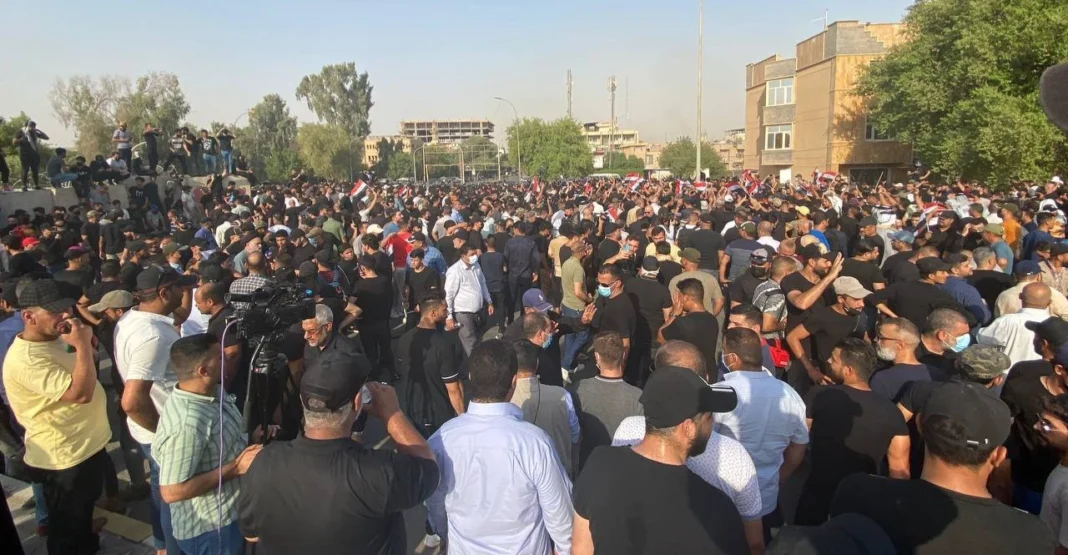
Against this backdrop, demands for government jobs for graduates have intensified across several Iraqi provinces. Thousands of demonstrators marched toward Baghdad’s Green Zone on August 17, protesting what they described as a lack of adequate government action after repeated calls for employment.
The demonstrations have also spread to Basra, where engineering, petroleum and science graduates launched an open-ended sit-in outside the Basra Oil Company on August 30. The protesters demanded contracts with state-owned oil companies. They later blocked access to several facilities, prompting security forces to detain some participants on September 2.
Similarly, medical graduates have raised employment concerns in previous protests. In August 2024, medical graduates demonstrated outside the Finance Ministry over thousands of positions they said remained unfilled under that year’s budget. The protests eventually led to clashes with riot police, with more than a dozen people reportedly injured.
Consequently, the latest government directive seeks to address a long-running employment issue while considering Iraq’s current financial limitations. Rather than announcing a fixed number of positions, the prime minister instructed officials to base recruitment on institutional requirements.
The approach could therefore provide opportunities for long-term graduates while limiting unnecessary expansion of the public payroll. At the same time, however, the government must balance employment demands with its broader efforts to control spending and manage delayed budget planning.
As Parliament prepares to receive the next federal budget proposal, government jobs for graduates are likely to remain a major issue for protesters and policymakers alike. The coming weeks will show whether the directive translates into concrete positions and contracts for those who have waited years for public employment.