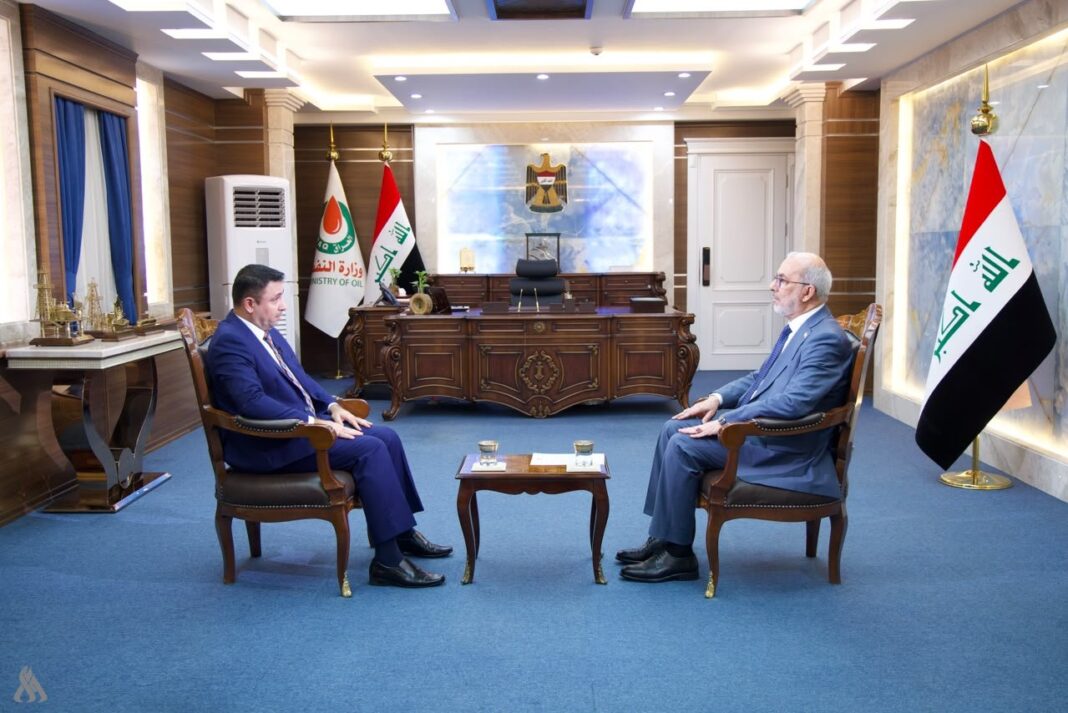
Iraq plans to expand its energy sector through agreements worth almost $200 billion with major American companies. Oil Minister Basim Mohammed Khudair outlined the government’s strategy during an interview with state television. He said the Iraq energy deals will strengthen production, infrastructure, employment, and technical skills.
Moreover, the agreements will support Iraq’s plans to increase its proven crude oil reserves. They will also help the country raise daily output from several important fields.
Khudair said the American companies’ participation shows strong international confidence in Iraq’s energy market. Consequently, the government expects the agreements to attract further foreign investment.
Prime Minister Ali Falih al-Zaidi helped finalize the agreements during his official visit to Washington. The portfolio includes contracts, development plans, and memorandums covering several energy projects.
HKN Energy secured an agreement to increase production at the Hamrin oil field. The project will develop the field’s infrastructure and improve its long-term output.
Meanwhile, Chevron will support operations at West Qurna 2, Nasiriya, and Balad. These fields could make important contributions to Iraq’s future production targets.
Halliburton will also manage integrated development work at the Bin Umar and Sindibad fields. The company will provide technical experience, field services, and modern production systems.
Furthermore, Iraq plans to work with Syria on the strategic Haditha–Baniyas pipeline. Both countries want to build new sections and restore existing infrastructure.
The pipeline could provide Iraq with another route for exporting crude oil. Therefore, Baghdad considers the project an important part of its energy security strategy.
Khudair said Iraq’s production capacity now exceeds 4.8 million barrels per day. However, the country still needs reliable routes to deliver more oil to global markets.
Disruptions around the Strait of Hormuz have increased Iraq’s focus on alternative export corridors. As a result, officials want to expand routes through Turkey and Syria.
The Ceyhan pipeline could carry Iraqi oil northward through Turkey. Meanwhile, the Baniyas corridor could transport crude westward through Syrian territory.
Together, these projects could reduce Iraq’s dependence on southern export terminals. They could also protect government revenues during regional emergencies or shipping disruptions.
Additionally, Baghdad continues serious negotiations with OPEC about Iraq’s official production and export limits. Iraq wants a quota that reflects its current production capacity.
Officials also argue that previous conflicts severely damaged the country’s oil infrastructure. Therefore, they want OPEC to consider those historical losses during negotiations.
However, higher production alone cannot guarantee stronger export revenues. Iraq must also secure stable routes, international buyers, and competitive operating costs.
The Iraq energy deals also place strong attention on natural gas development. Iraq currently struggles to produce enough gas for its domestic electricity network.
Consequently, the country still relies on imported gas to support several power stations. New projects aim to capture gas that oil fields currently waste.
Khudair expects these projects to deliver full gas self-sufficiency by 2030. This target could strengthen electricity supplies and reduce Iraq’s dependence on imports.
Additionally, the projects could reduce harmful gas flaring near oil-producing communities. Modern processing plants could convert that gas into useful fuel and industrial materials.
Iraq has already achieved full self-sufficiency in diesel and kerosene, according to Khudair. Domestic refineries also produce about 30 million liters of gasoline daily.
Nevertheless, Iraq continues to modernize its refining system and improve fuel quality. The government also wants refineries to meet growing domestic demand.
Khudair addressed earlier operational failures at the Baiji Refinery. He blamed poor management for wasting public money and damaging refinery performance.
Therefore, the Oil Ministry plans to strengthen administrative controls across its operations. It also intends to improve accountability and prevent further compliance failures.
The government expects the wider energy program to create thousands of jobs. Moreover, Iraqi workers could gain technical training from experienced international energy companies.
These opportunities could support engineers, technicians, construction workers, and local service providers. They could also help Iraq develop a more skilled energy workforce.
Ultimately, Iraq wants to transform stronger production into lasting economic growth. Success will depend on implementation, security, transparency, and effective project management.