
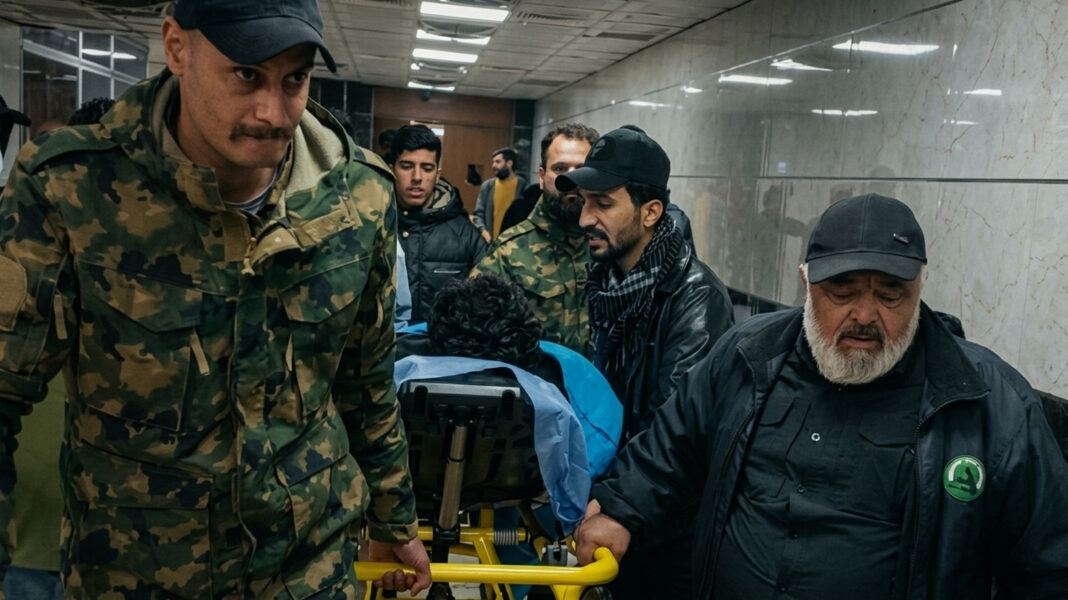
At least one Popular Mobilization Forces (PMF) fighter died and another suffered injuries after unidentified gunmen attacked a checkpoint in Pirde, also known as Altun Kupri, in Kirkuk province early Thursday. The Kirkuk security attack occurred around 2 a.m., raising fresh concerns about militant activity in the area.
The PMF said an armed group targeted a checkpoint belonging to Brigade 16 in the Pirde subdistrict. The attack killed Ali Bahjat Hamed, a member of the brigade. Meanwhile, another fighter, Junaid Ismat Bahjat, sustained injuries and received medical treatment at a hospital.
Security authorities have launched an investigation to determine how the attackers carried out the assault and identify those responsible. However, officials have not yet established the identity of the gunmen or confirmed whether any particular militant organization planned the attack.
Brigade 16 includes fighters from the Turkmen Power armed faction and the Badr Organization. Therefore, the incident carries additional significance in an area where several ethnic communities live alongside one another and where security forces continue to monitor militant activity.
Pirde sits along the road connecting Kirkuk and Erbil. The town has a Turkmen majority, alongside Kurdish and Arab communities. Moreover, the area forms part of Dibis district, northwest of Kirkuk, where Islamic State remnants have maintained a presence despite years of Iraqi military operations against the group.
Security gaps in the wider area have continued to create opportunities for militant attacks. In particular, Islamic State remnants have targeted security personnel operating around Dibis and nearby areas. Nevertheless, authorities have not confirmed that the group carried out Thursday’s assault.
The latest Kirkuk security attack also follows other clashes involving Islamic State remnants in the district. On July 4, an Iraqi counterterrorism officer died during clashes with militants in Dibis. Iraqi F-16 fighter jets subsequently struck suspected militant hideouts in the area, while Iraqi forces reported the death of an Islamic State member during the fighting.
Consequently, Thursday’s attack could renew attention on security gaps around Kirkuk and the areas linking the city with Erbil. The region’s mixed population and proximity to areas where militant cells operate make effective intelligence gathering and coordination particularly important.
At the same time, investigators must determine whether the attackers had links to an established militant network or acted independently. Identifying the perpetrators could provide authorities with information about possible militant movements and security weaknesses around the checkpoint.
For now, authorities continue to investigate the circumstances surrounding the Kirkuk security attack. The incident highlights the continuing risks faced by security personnel in areas where militant remnants remain active and where gaps in security coverage can create vulnerabilities.