Iraq-Iran security agreement implementation took center stage during a senior meeting in Erbil on Saturday. Federal and Kurdistan Region officials reviewed progress under the 2023 pact with Tehran. The agreement focuses on border security and armed Kurdish opposition groups.
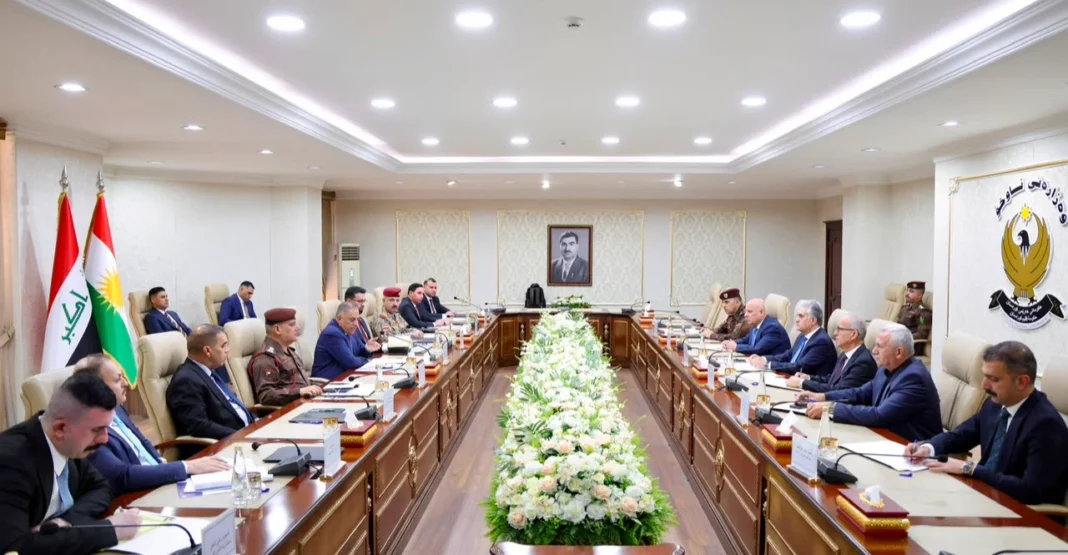
Iraq’s National Security Advisor Qasim al-Aboudi met with KRG Interior Minister Rebar Ahmed. The officials discussed several provisions covering border control and security coordination. They also examined measures to prevent infiltration and smuggling along the frontier.
Furthermore, the two sides stressed the need for continued communication. They also emphasized coordination between Baghdad and the Kurdistan Regional Government. Officials linked the cooperation to Iraq’s sovereignty and national security priorities.
The KRG Interior Ministry had not issued a separate statement about the meeting. However, Aboudi continued his visit with a meeting with Masoud Barzani. Barzani leads the Kurdistan Democratic Party and remains an influential Kurdish political figure.
According to a statement from Barzani’s headquarters, both sides discussed regional political and security developments. They also highlighted cooperation between the federal government and the Kurdistan Region. The officials stressed joint efforts to confront security threats and preserve stability.
Iraq and Iran signed the original security agreement in March 2023. The deal requires Baghdad to disarm Iranian Kurdish opposition groups based in the Kurdistan Region. It also calls for stronger security measures along Iraq’s border with Iran.
Tehran had previously warned Baghdad about possible military action over the agreement. Iranian authorities accused Kurdish opposition groups of threatening Iran from Iraqi territory. Tehran also linked some groups to the 2022 Women, Life, Freedom protests.
In August 2025, Baghdad and Tehran upgraded the security protocol into a memorandum of understanding. Since then, both governments have continued discussions about its implementation.
Meanwhile, tensions around the Kurdish opposition groups have increased. Iran’s concerns intensified during its conflict with Israel and the United States. The conflict began in late February and created wider regional security pressures.
Despite subsequent ceasefire arrangements, attacks have continued against opposition group positions. Iranian forces and allied groups have targeted locations inside the Kurdistan Region. Those attacks have raised concerns among Kurdish officials about regional security.
Kurdistan Region President Nechirvan Barzani recently highlighted the scale of the attacks. He said around 1,000 missiles and drones had targeted the Region. The attacks have reportedly caused dozens of deaths and injured many others.
Consequently, Baghdad faces pressure to balance its obligations to Tehran and Erbil. Iraq-Iran security agreement implementation also requires closer coordination between federal and regional authorities.
An Iraqi delegation previously met Iranian officials to discuss the pact’s implementation. Tehran presented information concerning activities linked to armed groups in the Region. Iranian officials also called for tighter border controls and stronger security coordination.
For now, Saturday’s meeting signals continued efforts to implement the agreement through dialogue. Moreover, cooperation between Baghdad and Erbil could remain crucial for managing border security. Iraq-Iran security agreement discussions are therefore likely to continue as regional tensions persist.