Iraq’s judiciary has expanded a major graft case involving detained former oil official Adnan Al-Jumaili. The case centers on large sums of money, gold, property, and luxury assets. Investigators said the latest operation added another major amount to the file. As a result, the Iraq corruption crackdown now covers one of the country’s largest recent asset seizures.
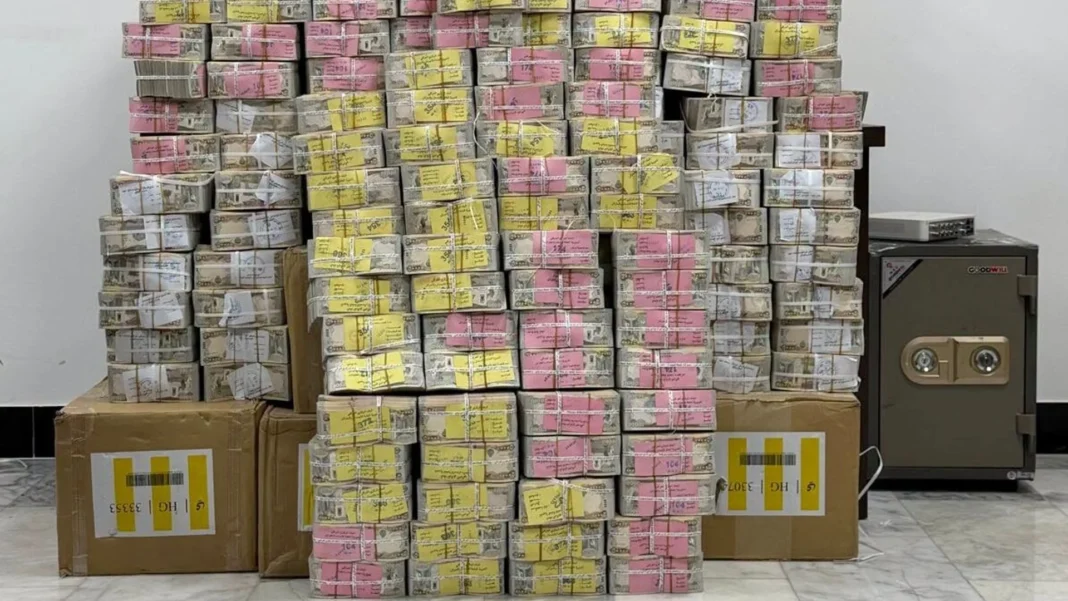
Judicial teams found 25 billion Iraqi dinars, one million U.S. dollars, and nearly five kilograms of gold jewelry. They discovered the assets during searches linked to Al-Jumaili and other suspects. Investigators said some of the money sat inside large plastic water bottles. They also found hidden cash inside a residential property in Tikrit.
Moreover, the court said the discovery raised the total confiscated amount sharply. The case now includes 127 billion Iraqi dinars and 24 million U.S. dollars. In addition, authorities linked the file to real estate deeds and high-value vehicles. They also secured large gold holdings connected to the investigation.
The case has drawn attention because Al-Jumaili served as Deputy Minister of Oil for Refining Affairs. Therefore, investigators continue to examine contracts and financial dealings from his time in office. They want to identify how public money moved through the alleged network. They also want to track every person who helped hide or transfer assets.
Furthermore, judicial officials said the investigation still targets several connected suspects. Financial tracking teams continue to review accounts, property records, and business links. They also examine possible brokers who helped manage the funds. Therefore, the Iraq corruption crackdown may expand further in the coming phase.
The Central Anti-Corruption Criminal Court continues to lead the case. Its investigators focus on recovering public funds and proving the full financial trail. They also seek to uncover how the suspects used companies, properties, and cash storage methods. Meanwhile, enforcement teams continue field operations against people linked to the network.
In addition, the case highlights wider concerns about corruption inside strategic public sectors. Iraq’s oil sector manages some of the state’s most important revenue streams. Because of that, any corruption case in this sector carries major financial weight. It also raises public pressure for stronger controls and clearer oversight.
Judicial authorities said they continue to issue warrants for remaining suspects. They also continue to pursue people who allegedly supported the financial network. As the inquiry moves forward, investigators aim to recover more assets. They also aim to prevent suspects from moving money beyond state reach.
The Supreme Judicial Council said anti-corruption efforts will continue. It also stressed that courts will follow the money trail until the case reaches full accountability. Therefore, the Iraq corruption crackdown sends a strong message to public officials. It shows that investigators now place asset recovery at the center of major graft cases.