By early 2026, the Iraq pollution crisis had reached alarming levels. The country now ranks among the world’s most polluted nations. Meanwhile, more than five million cubic meters of untreated wastewater flow into rivers every day. These numbers reveal a country fighting for clean air and safe water.
Across Iraq, pollution shapes daily life. Toxic air fills the skies. Contaminated water runs through taps. Piles of waste line city edges. Constant noise overwhelms neighborhoods. As a result, millions face rising health risks and shrinking economic stability.
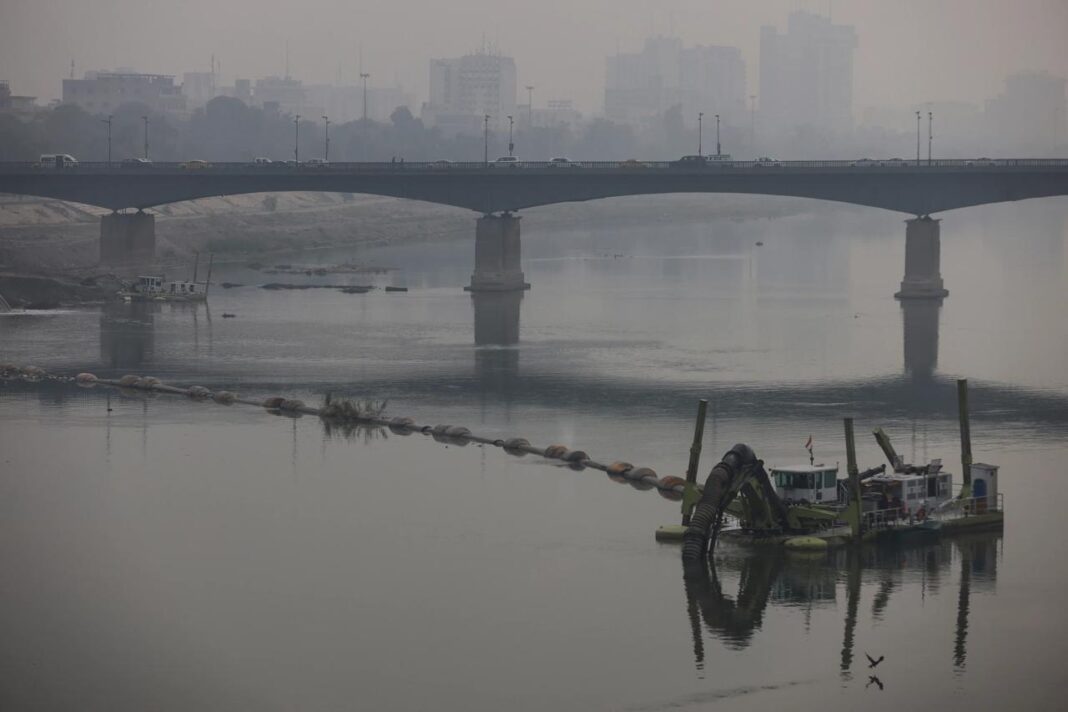
In Baghdad, gray smog often covers the skyline before noon. Consequently, air quality readings frequently enter unsafe ranges. In 2024, the capital recorded an average AQI of 113. This level exposed residents to unhealthy air for long periods. Several cities, including Karbala and Diyala, reported similar conditions. Heavy gas flaring from oil fields releases sulfur dioxide and fine particles. At the same time, power shortages force households to rely on diesel generators. In addition, aging vehicles crowd streets with exhaust fumes.
Doctors now report worrying trends. Hospitals admit more patients with asthma and bronchitis each year. Furthermore, young adults show lung damage usually seen in older people. Many of them have never smoked. Long-term exposure to dirty air drives these conditions. Therefore, the Iraq pollution crisis no longer appears seasonal. Instead, it has become a constant threat.
While air pollution worsens, water contamination spreads quietly. Every day, untreated sewage pours into Iraq’s rivers. Officials estimate that polluted discharge affects up to 90 percent of waterways. Only a minority of households connect to proper sewage treatment. Consequently, many families depend on unsafe surface water. In southern provinces, saltwater intrusion compounds the danger. High salinity levels push drinking water beyond safe standards.
Hospitals in Basra and nearby regions report spikes in kidney and liver illnesses. Moreover, farmers struggle with declining crop yields. Polluted irrigation water damages soil and reduces harvests. As farmland weakens, rural families lose income and stability. Clearly, the Iraq pollution crisis extends from taps to fields.
At city outskirts, open dumps burn day and night. Iraq produces about 23 million tons of solid waste each year. However, authorities collect only around half that amount. The rest rots or burns in unmanaged sites. Burning trash releases toxic gases into nearby communities. Meanwhile, rainwater carries waste chemicals into soil and groundwater. These conditions increase cancer risks and spread disease.
In addition to air and water threats, noise pollution rises sharply. Baghdad neighborhoods often record sound levels above safe limits. Continuous traffic, generators, and construction fuel the problem. Health experts link chronic noise to stress and heart disease. Children also face learning difficulties in loud environments. Therefore, noise joins air and water as part of a broader environmental emergency.
Environmental damage drains national income each year. Healthcare costs rise steadily. Workers lose productivity due to illness. Families lose breadwinners too soon. Although solutions exist, progress remains slow. Leaders must invest in cleaner energy, modern sewage systems, and proper waste management. Without decisive action, the Iraq pollution crisis will deepen further. For now, millions continue to breathe polluted air and drink unsafe water. The price grows higher every day.