
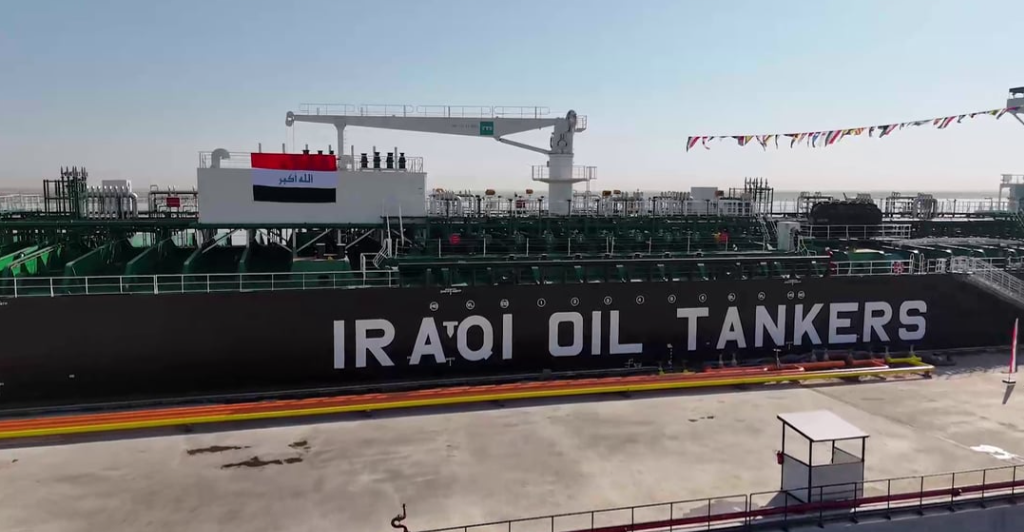
A supertanker carrying Iraqi crude oil crossed the Strait of Hormuz on May 10, according to Iranian media reports released on Monday. The movement comes amid ongoing instability affecting regional maritime shipping routes and energy transport flows.
Iraq’s oil exports in 2026 remain closely tied to developments in the Strait of Hormuz, a critical passage for global energy shipments. Semi-official Tasnim News Agency reported that the very large crude carrier AGOIS FANOURIOS I passed through a route designated by Iranian authorities. The vessel then continued its journey through the Sea of Oman toward Nghi Son port in Vietnam.
The Strait of Hormuz has faced major disruption since February 28. Reports indicate that shipping activity has remained heavily restricted following the U.S.–Israel conflict involving Iran. As a result, maritime traffic in the region has slowed significantly, affecting multiple Gulf exporters.
Iraq depends heavily on this route for its oil exports. Nearly 95% of its crude shipments pass through the Strait of Hormuz. Therefore, any disruption directly impacts national export performance and shipping schedules.
The Iraq oil exports 2026 outlook also reflects operational challenges beyond crude oil shipments. Industry estimates show a sharp decline in marine fuel sales. Vinayak Kharmale, head of operations at Sea Crown Marine Services, reported that Iraq’s marine fuel sales dropped to around 7,000 metric tons in April. This compares to 15,000 metric tons in March.
He explained that the decline represents a reduction of approximately 53%. However, he linked the fall not to weak demand but to logistical difficulties. These include vessel movement restrictions and complex voyage planning conditions.
In addition, ongoing security concerns in regional waters continue to complicate shipping operations. As a result, energy companies face delays and uncertainty when routing tankers through key maritime corridors.
Despite these challenges, oil shipments have not stopped completely. The recent transit of the Iraqi crude tanker signals continued attempts to maintain export flows. However, operational risks remain high.
Overall, the Iraq oil exports 2026 situation highlights how regional tensions directly influence energy trade. Iraq continues to depend on the Strait of Hormuz while adapting to shifting security and shipping conditions.