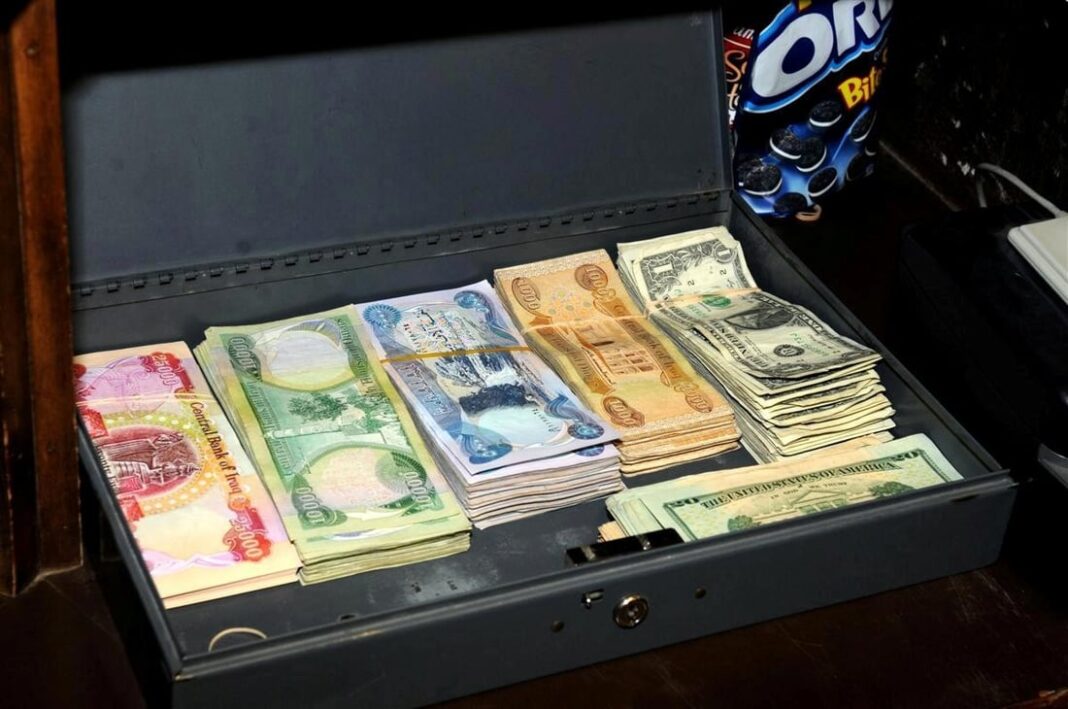
The U.S. dollar moved lower against the Iraqi dinar in local currency markets. Market figures showed the dollar near 157,000 dinars for every $100. Meanwhile, traders reported a softer opening in Baghdad and Erbil.
The Iraqi dollar rate slipped in Baghdad’s main exchange markets. The Al-Kifah and Al-Harithiya exchanges recorded 156,850 dinars for every $100.
Previously, the market stood at 157,250 dinars for every $100. Therefore, the latest movement showed a clear decline in the dollar price.
Additionally, exchange shops in Baghdad displayed different retail prices. They sold $100 for 157,250 dinars. They also bought $100 for 156,250 dinars.
This difference showed the normal gap between buying and selling prices. Moreover, it reflected cautious trading among local exchange dealers.
In Erbil, the dollar also moved within a narrow range. Exchange shops sold $100 for 156,800 dinars. They bought $100 for 156,700 dinars.
As a result, Erbil showed a smaller gap between buying and selling prices. This gave traders a clearer view of demand in the city.
The Iraqi dollar rate remains important for businesses and households. Many traders price imported goods in dollars. Therefore, small currency changes can affect market costs.
Furthermore, the dollar price can influence daily purchasing decisions. Shop owners often watch the rate before setting product prices. Families also follow the market because prices affect daily spending.
Iraq depends heavily on imports for many consumer goods. Because of that, the dollar market plays a major role in trade. When the dollar rises, import costs often increase.
However, when the dollar eases, some traders may lower pressure on prices. Even so, retail prices do not always fall quickly. Many businesses wait for a stable currency movement first.
Currency markets also react to demand from companies and travelers. Moreover, they follow liquidity levels in exchange shops and banks. Therefore, traders watch Baghdad and Erbil markets closely.
Baghdad remains the main center for currency activity. Its large exchange markets often guide rates across other provinces. In addition, Erbil provides a key view of northern market trends.
The latest decline may offer some relief for buyers. However, traders still expect careful movement in the market. Many dealers want clearer signs before changing their wider pricing plans.
The Iraqi dollar rate also affects confidence in the dinar. A stable exchange market can support business planning. It can also reduce pressure on consumers and merchants.
Meanwhile, financial observers continue to monitor buying and selling gaps. These gaps can show demand strength and market uncertainty. They can also reveal how quickly dealers adjust to price changes.
For now, the dollar has eased in both Baghdad and Erbil. The movement remains limited, but it still matters. Therefore, traders will continue to watch local exchange prices closely.