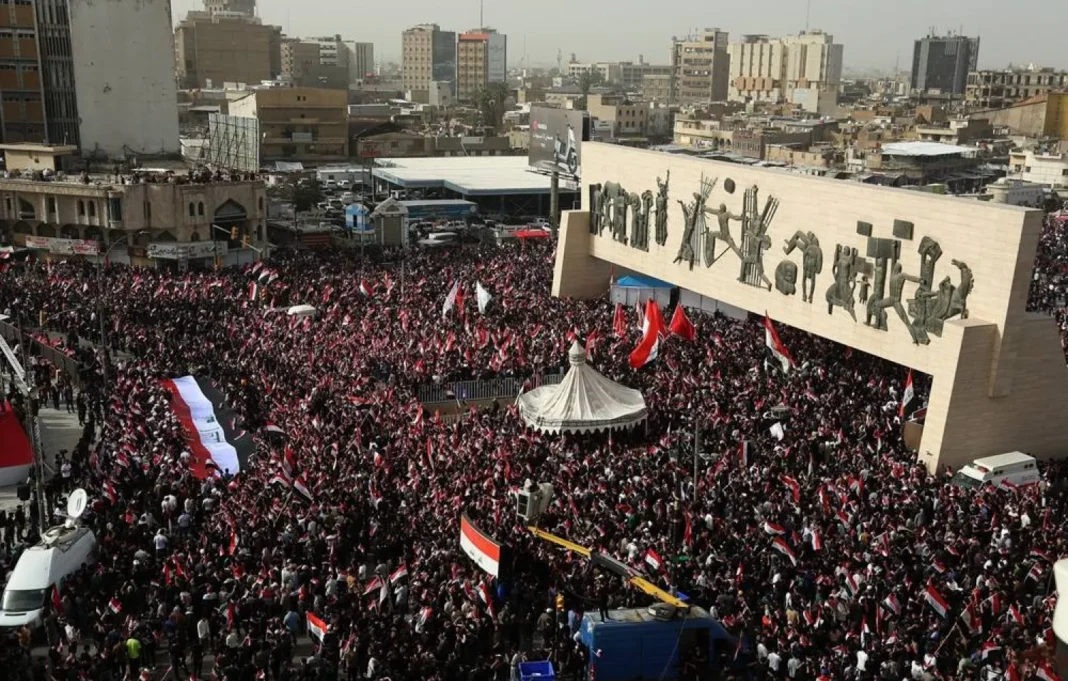
Tens of thousands gathered in Iraq during the Baghdad protest against war escalation on Saturday. Moreover, crowds filled Baghdad and several other cities. They protested the ongoing Middle East conflict. The demonstration reflected rising anger over regional violence.
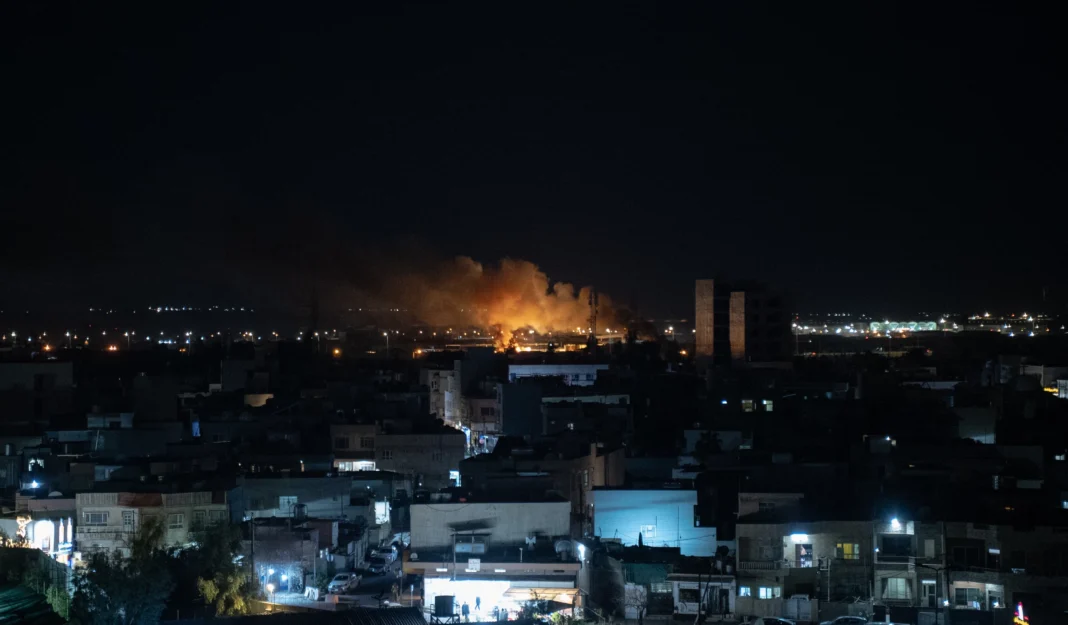
The Baghdad protest against war escalation grew as the conflict entered its sixth week. In addition, tensions increased after strikes by U..S and Israeli forces on Iran. These strikes began on February 28. Consequently, Iraq faced indirect involvement in the widening war.
Crowds gathered near Tahrir Square in central Baghdad. They waved national flags and chanted strong slogans. Furthermore, they rejected foreign military actions in the region. Many participants demanded an immediate end to the war.
One protester described the conflict as senseless. He stated that it targets civilians and destroys stability. Moreover, he argued that the war lacks a clear military justification. His comments reflected widespread frustration among attendees.
The Baghdad protest against war escalation also spread beyond Baghdad. Similar gatherings appeared in other Iraqi provinces. Meanwhile, organizers called for peaceful expression throughout the demonstrations. They stressed unity and non-violence.
A statement linked to clerical leadership encouraged peaceful protest. It called for rejecting external aggression and supporting regional peace. Additionally, it urged people to speak out against ongoing violence.
Under the Freedom Monument, demonstrators voiced criticism of foreign influence. They accused external powers of interfering in regional affairs. Furthermore, speakers called for global awareness of the conflict.
One cleric at the rally stressed the need for international unity. He argued that the world must reject violence and arrogance. Moreover, he urged stronger global opposition to escalation.
Supporters of the movement hold significant influence in Iraq. They include large networks across political and social institutions. In addition, they maintain strong grassroots support across Shiite communities.
The Baghdad protest against war escalation highlighted Iraq’s fragile position. The country continues to face pressure from regional conflicts. Therefore, public anger reflects deeper fears of instability.
Analysts note that Iraq remains vulnerable to spillover effects. Meanwhile, diplomatic efforts struggle to contain regional escalation. Consequently, protests may continue if tensions persist.