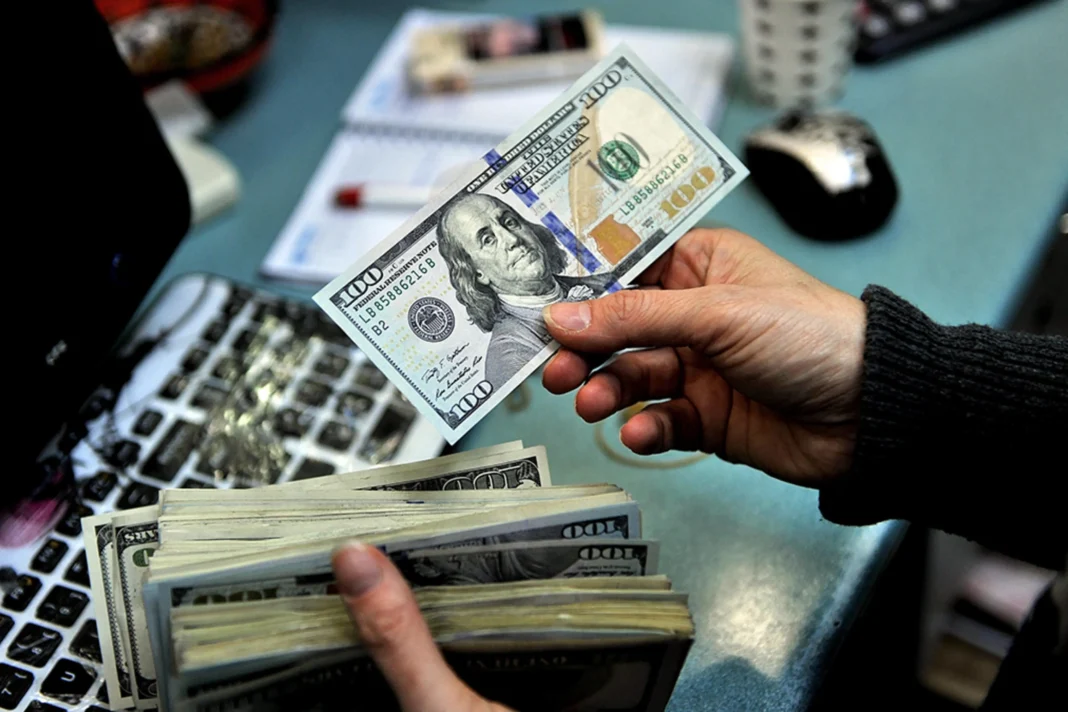
The dollar rises sharply in Baghdad and Erbil, impacting traders and consumers across Iraq. The currency opened Thursday’s trading session higher, signaling increased market demand. Experts say economic conditions and regional uncertainty are driving the trend.
According to a Shafaq News market survey, the dollar traded at 156,000 dinars per 100 dollars in Baghdad’s Al-Kifah and Al-Harithiya exchanges. This marks an increase from Wednesday’s rate of 155,600 dinars. Consequently, businesses and investors are adjusting transactions to reflect the new rates.
In Baghdad, exchange shops sold the dollar at 156,500 dinars and bought it at 155,500 dinars. Meanwhile, in Erbil, selling prices stood at 156,200 dinars, with buying prices at 156,100 dinars. Traders report that fluctuations are becoming more frequent as global financial pressures affect Iraq’s market.
Economists explain that dollar rises often reflect a combination of domestic inflation and foreign market trends. Therefore, many consumers are rushing to exchange local currency, aiming to preserve value against potential declines in purchasing power.
Additionally, banks in Baghdad and Erbil have been adjusting their cash reserves to meet the rising demand. Market analysts note that even small changes in global oil prices can indirectly influence currency rates in Iraq.
Investors are monitoring the situation closely, as short-term currency movements can affect import costs, business planning, and daily commerce. Many small businesses have reported higher expenses for imported goods, linking these increases directly to the dollar rises.
Furthermore, experts recommend tracking exchange rates before committing to large financial transactions. In addition, traders suggest diversifying holdings to mitigate risk caused by sudden currency movements.
In summary, the dollar rises across Baghdad and Erbil, affecting market behavior and consumer decisions. Stakeholders in both cities are advised to follow updates and prepare for potential short-term fluctuations.