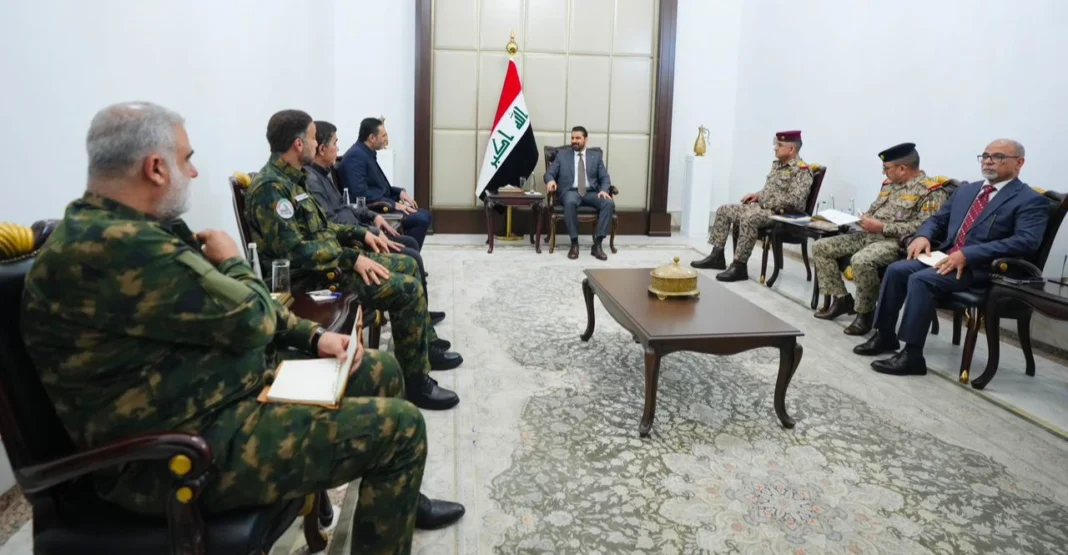
The Iraq corruption investigation has uncovered millions of dollars in cash, dozens of properties, and large quantities of weapons linked to a former oil ministry official and several associates. The case marks the first major anti-corruption operation under Prime Minister Ali al-Zaidi’s administration.
On Tuesday, Iraq’s Supreme Judicial Council announced new developments in the ongoing case. Authorities said investigators had taken several legal steps after examining allegations involving former Deputy Oil Minister for Refining Affairs Adnan Mohammed Mahmoud, also known as Adnan al-Jumaili.
According to the council, investigators have identified extensive assets connected to the suspects. As a result, authorities seized nearly 40 properties across Baghdad, Salahaddin, and Erbil.
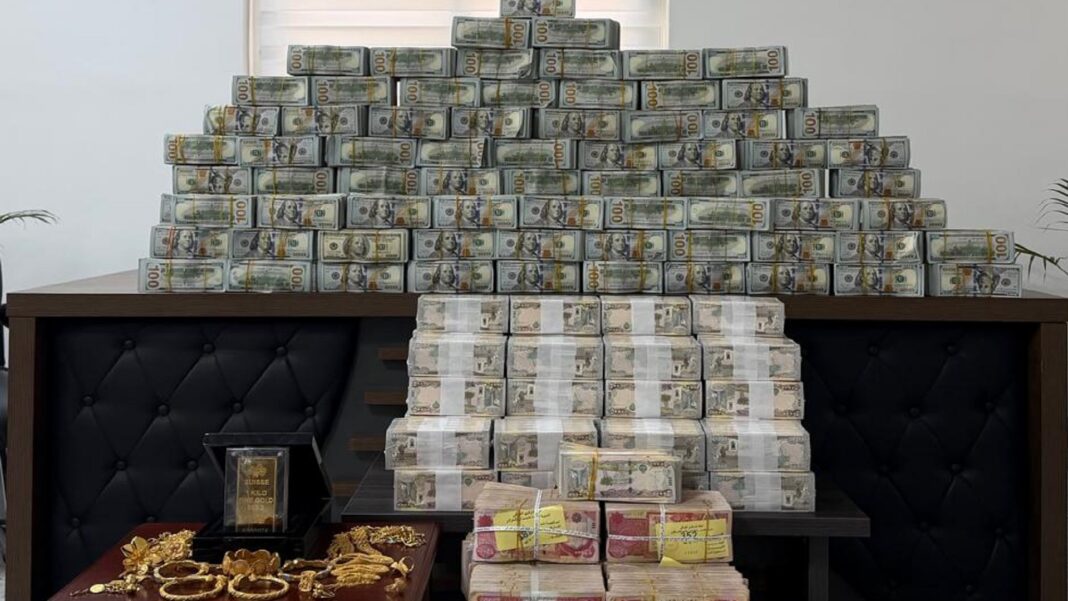
In addition, officials confiscated around $10 million and nearly three billion Iraqi dinars. Investigators also recovered about 1.5 kilograms of gold jewelry during the operation.
Furthermore, authorities discovered significant amounts of light and medium weapons. Officials said the investigation continues. They also stressed that teams are working to identify everyone connected to the case.
Meanwhile, Communications Minister Mustafa Sanad confirmed Jumaili’s arrest. He described the former official as an “oil whale.”
Moreover, Sanad accused Jumaili of diverting funds from oil refineries. He also alleged that the money supported several political parties.
The Iraq corruption investigation represents the first major corruption case under the new government. Therefore, many observers consider the outcome a key test for the administration.
Earlier this week, Ali al-Zaidi revealed another major development. According to the prime minister, individuals offered him a $200 million bribe. However, he rejected the offer and refused to halt the investigation involving the oil ministry.
Since taking office, Zaidi has emphasized the need for reform. Consequently, his government program focuses on fighting corruption and reducing Iraq’s dependence on oil revenues.
During his first official address, Zaidi acknowledged the challenges ahead. Nevertheless, he expressed confidence in achieving meaningful reforms through collective efforts.
Additionally, international indicators continue to highlight corruption concerns. Transparency International ranked Iraq 136th among 180 countries in its Corruption Perceptions Index. The country received a score of 28 out of 100.
As a result, Iraq remains among the countries facing serious public-sector corruption challenges.
Nevertheless, officials say recent actions demonstrate stronger efforts to address financial crimes. Supporters of the government’s agenda believe accountability could strengthen public trust.
At the same time, critics argue that lasting reforms require institutional changes and greater transparency. Therefore, many Iraqis will closely watch the progress of the Iraq corruption investigation in the coming months.
The outcome could influence public confidence and shape the government’s wider reform agenda for years ahead.