Analysis By Salm Jasim
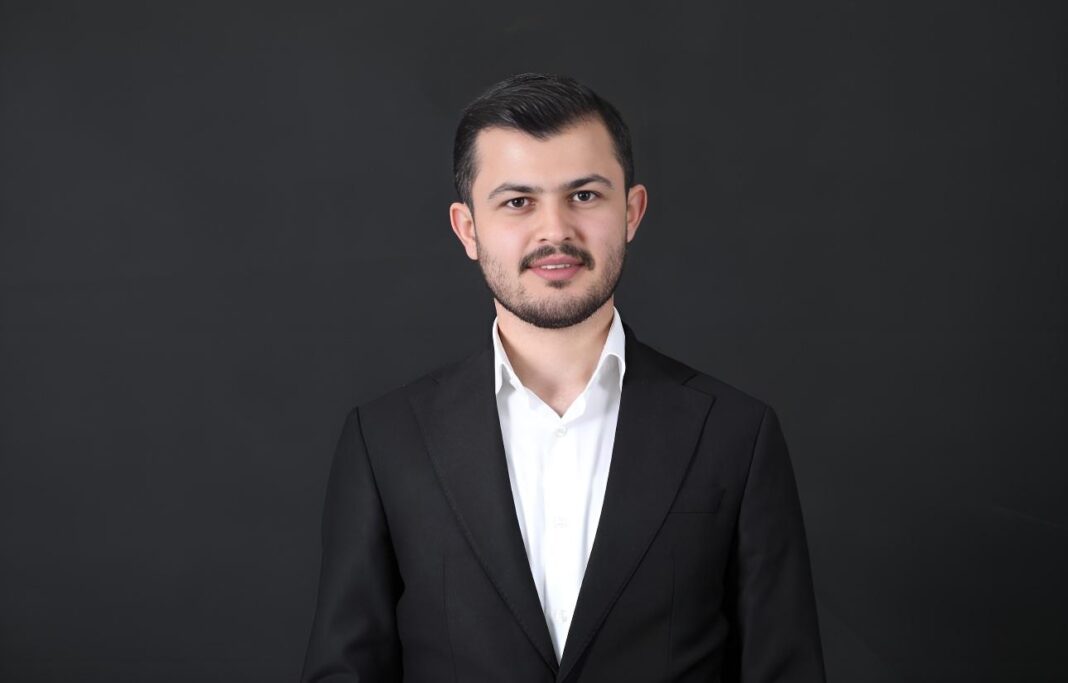
In Iraq, when power is discussed, the general political mind immediately shifts toward militias, tribes, and political elites. However, Mohamed al-Halbousi, the leader of the Taqadum Party, who also served as Parliament Speaker, has exercised an entirely different model of shadow power in Iraq. Without owning an armed force or a security apparatus or being backed by strong tribes, he has managed to become the primary architect in deciding the fate of top positions in Iraq, from the Prime Minister, the parliament speaker, and even the President of the Football Federation.
The main question here is: Where does all this influence stem from? In this article, we attempt to uncover the hidden side of this power and expose the interwoven relations that have made Halbousi a shadowless character at the center of Iraq’s political decision-making.
Halbousi’s biggest secret is his expertise in investing in the internal problems of other factions, strategically leveraging and taking advantage of the fragmentation within the Shia house and the rifts within the Kurdish house. Within the Shia house, fragmentation has led certain Shia factions to forge a hidden alliance with Halbousi to settle internal Shia rivalries, the settling of the Prime Minister’s position being a prime example.
Within the Kurdish house, the disputes between the PUK (Patriotic Union of Kurdistan) and the KDP (Kurdistan Democratic Party) have opened the door for Halbousi, leading the PUK to rely on him during several sensitive junctures to secure the positions it views as its right in Baghdad, particularly the presidency of the republic. This situation has turned Halbousi into a major political creditor; thus, whenever he needs votes to secure a position or a bill, the parties that previously achieved gains through him are forced to pay back their political debt.
Halbousi’s strength is not just domestic; it is rooted at a strategic international level. The United States and European countries view Halbousi as the most pragmatic character within the Sunni component who can work with the official state system without falling under the direct hegemony of the militias. On the other hand, Halbousi has smartly presented himself as the guardian of Saudi and UAE interests in Iraq, and this informal financial and political backing has created a powerful shield for him.
On the level of institutional management, instead of buying weapons, Halbousi manages institutions. He managed to transform the parliament from a legislative body into a circle for managing interests, where political decisions are settled according to temporary alliances. The emergence of Younis Mahmoud, backed by him for the leadership of the Football Federation, carried a clear message: Halbousi wants to build influence through sports and the public in areas that ideological forces are less capable of reaching.
Halbousi is currently at a sensitive stage; he has transitioned from being the Speaker of Parliament to the head of a network that cannot be ignored. The reason for Halbousi’s success is the creation of a network of interests rather than ideology, which has made loyalties based on pragmatism. Despite all of this, Halbousi is undergoing the biggest test in Iraq: can institutional power prevail in a country where weapons make the decisions? Or can this game of exploiting the opponent’s fragmentation continue? In reality, the future of this equation is tied to whether the Shia and Kurdish houses will continue their current deep fragmentation and disputes, or if they will eventually sense the danger and return to their traditional, national, and sectarian lines. If inter-party interests among these factions no longer lead to crossing those traditional lines, Halbousi’s shadow power will face a major obstacle.
However, if disputes continue based on “party survival” over “component survival,” Halbousi will have more opportunities to remain the main driver of events. Therefore, the big question remains: can political will in Iraq bring an end to these fragmentations, or will Halbousi continue turning their disputes into political gains? This is the question that the future of Iraq will answer.