Iraq’s effort to place weapons under state control has exposed deep divisions among the country’s armed groups. While some factions have expressed willingness to discuss disarmament, others continue to reject the proposal, creating a major challenge for the new government.
Officials and faction representatives revealed that the dispute centers on whether armed groups should surrender their weapons to the state. The debate has intensified following recent government initiatives aimed at strengthening security and reinforcing the rule of law.
According to security sources in Baghdad, several armed groups have shown openness to discussions with the administration of Prime Minister Ali al-Zaidi. Among them is Saraya al-Salam, which is affiliated with Shiite cleric and politician Muqtada al-Sadr. Sources indicated that these groups are prepared to explore mechanisms for transferring weapons to state authorities.
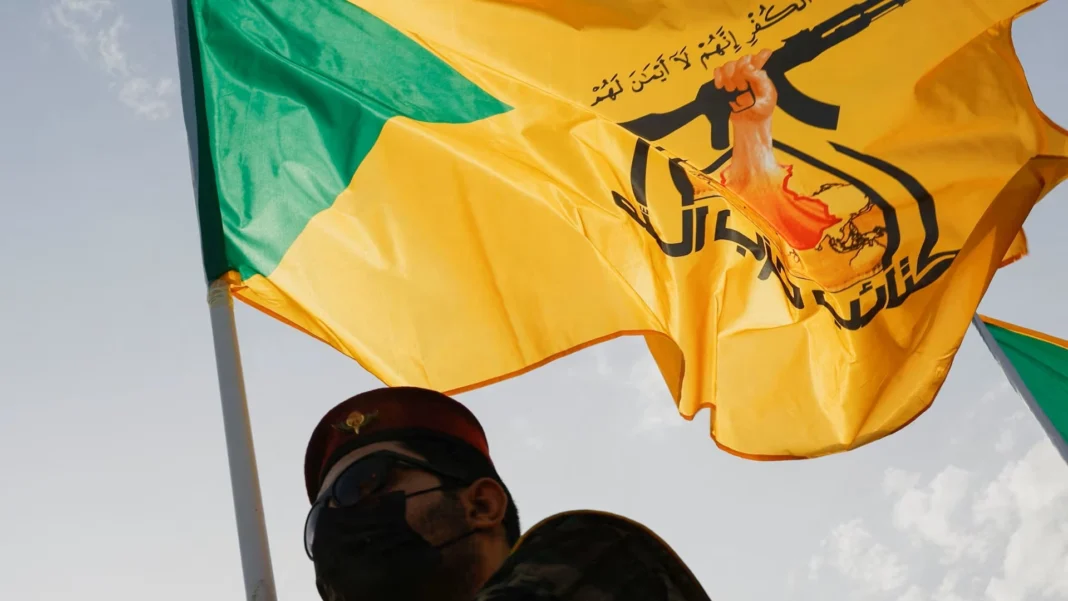
However, other factions remain strongly opposed. Kata’ib Hezbollah and Harakat Hezbollah al-Nujaba have rejected the proposal and insist that they will not hand over their weapons.
Harakat Hezbollah al-Nujaba argues that disarmament discussions lack meaning while American troops remain in Iraq. The group maintains that Iraq must first achieve full political, financial, and security sovereignty. Representatives also claim that foreign influence continues to affect Iraqi political decisions.
Furthermore, the group points to regional security concerns. Leaders cite military developments in neighboring Syria as a reason to maintain their weapons. They argue that instability across the border could eventually create security threats inside Iraq.
Meanwhile, Kata’ib Hezbollah has adopted a different tone. The group recently welcomed efforts by some factions to end armed activities. At the same time, it offered to assume responsibility for advanced weapon systems, including drones and missile technology. The group even stated that it would consider purchasing such equipment from factions that choose to disarm.
The debate comes after Zaidi pledged to place weapons under state control during his address to parliament in May. He presented the policy as part of a broader strategy to strengthen national institutions, improve security, and enhance the capabilities of Iraq’s armed forces.
In addition, political figures within the Shiite Coordination Framework confirmed that indirect discussions continue between the government and several armed groups operating outside the Popular Mobilization Forces (PMF).
The PMF emerged in 2014 after the rapid expansion of ISIS across northern and western Iraq. Religious guidance from Ali al-Sistani helped mobilize thousands of volunteers. Over time, the PMF developed into a state-funded institution that includes dozens of armed factions and hundreds of thousands of members.
Nevertheless, questions remain regarding the relationship between some PMF factions and the broader Iran-aligned Axis of Resistance. Several groups associated with this network have carried out regional operations in recent years under the banner of the Islamic Resistance in Iraq.
Not all factions oppose the government’s objective. Asa’ib Ahl al-Haq says it already transferred its weapons to state control in 2017. Representatives explain that the group’s weapons are stored in PMF facilities and therefore fall under official oversight.
As negotiations continue, the future of weapons under state control remains uncertain. The outcome could significantly shape Iraq’s security landscape and determine the balance between state authority and armed factions in the years ahead.