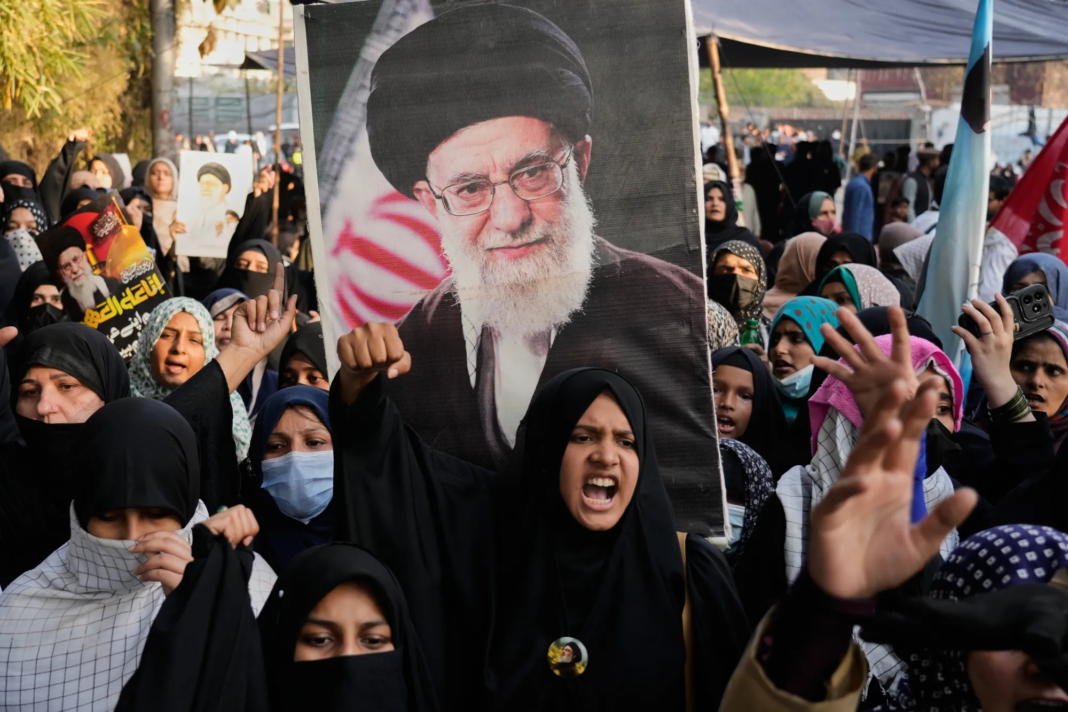
Regional tensions escalate after hundreds of residents gathered Sunday evening in Suwaira to protest the killing of Ali Khamenei. Demonstrators carried a symbolic coffin during a march around a central square. They also raised flags linked to Iraqi armed factions throughout the gathering.
Protesters said they organized the event to condemn attacks targeting Iran’s leadership. Many local officials attended alongside community members and religious figures. Organizers described the march as a public show of solidarity and grief.
Earlier that day, Iranian state television confirmed the death of Khamenei. He had led Iran as supreme leader since 1989. His leadership shaped decades of political and regional policies. The announcement quickly triggered reactions across several Middle Eastern countries.
Local officials in Wasit expressed strong emotions during the gathering. A provincial council member addressed the crowd with a brief speech. He described the death as a major loss for supporters. He also said communities would continue defending their beliefs and identity.
Religious leaders also spoke during the demonstration. A director of a religious school accused foreign powers of responsibility. He claimed the killing would not weaken ideological movements. Instead, he argued, such events often strengthen resistance narratives.
Several residents echoed similar sentiments during interviews. One participant compared the situation to historic religious struggles. He said supporters would remain committed to their pledges despite the loss. Others described the protest as symbolic rather than political.
Meanwhile, Iraqi authorities announced a nationwide response. The government declared three days of official mourning across the country. Officials also renewed calls for an immediate halt to regional military operations. They warned that continued conflict could threaten national stability.
Analysts said the protest reflects broader regional divisions. They noted that public reactions often mirror geopolitical alignments. Furthermore, they warned that emotional demonstrations could raise security concerns.
Regional tensions escalate as political leaders monitor potential fallout. Experts fear the situation could deepen polarization within Iraq. They also stress that competing narratives may intensify public debates.
Observers emphasized that authorities must manage protests carefully. They urged officials to prevent violence while protecting freedom of expression. Security forces increased monitoring in several areas following the march.
Ultimately, the protest highlighted how regional conflicts affect local communities. It showed how international events quickly trigger domestic reactions. As developments continue, many expect further demonstrations.