Iraq’s gold prices held mostly steady in Baghdad, while Erbil recorded a slight increase. Market dealers said prices stayed near 890,000 dinars per mithqal. A mithqal equals five grams in local gold trading. The movement showed different demand levels between central and northern markets.
In Baghdad, traders on Al-Nahr Street kept prices largely unchanged. They quoted 21-carat imported gold at 887,000 dinars per mithqal. This category includes Gulf, Turkish, and European gold. Meanwhile, buyers offered around 883,000 dinars for the same weight.
Local Iraqi gold also stayed below imported varieties in Baghdad. Dealers quoted 21-carat Iraqi gold at 857,000 dinars per mithqal. Buyers offered around 853,000 dinars for Iraqi gold. Therefore, the gap between local and imported gold remained clear.
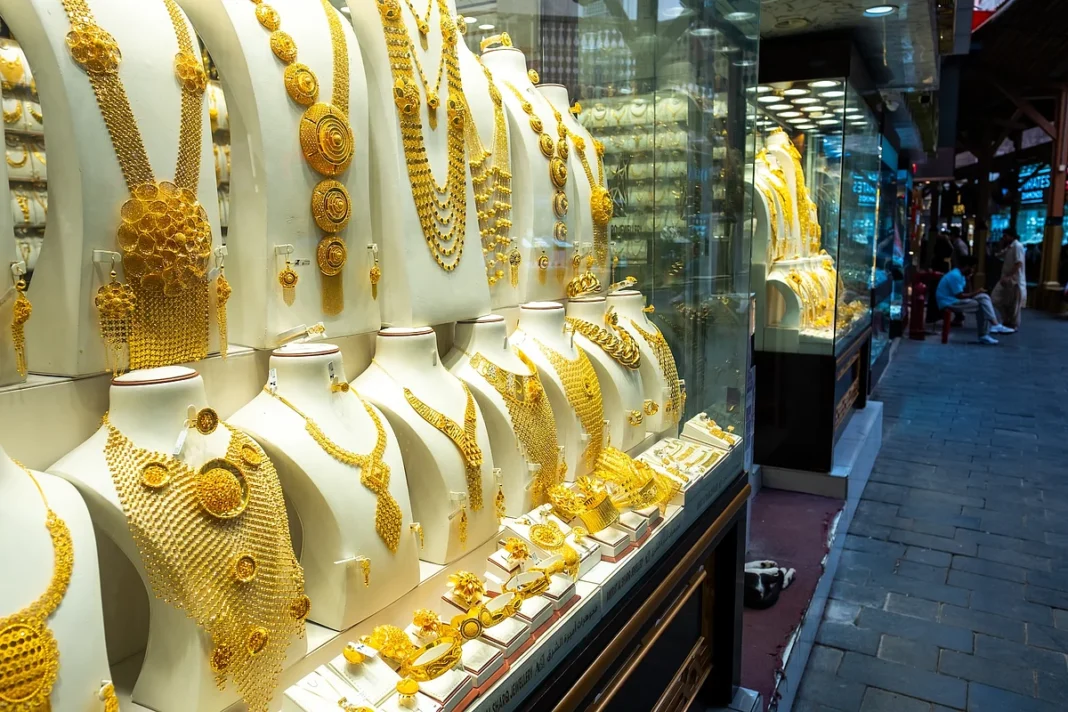
Jewelry shops showed slightly higher retail prices than wholesale markets. In Baghdad stores, 21-carat Gulf gold ranged between 890,000 and 900,000 dinars. Iraqi gold ranged between 860,000 and 870,000 dinars per mithqal. These retail levels reflect shop costs and customer demand.
However, Erbil recorded stronger prices across several gold categories. Dealers in the city quoted 22-carat gold at 943,000 dinars per mithqal. They also quoted 21-carat gold at 900,000 dinars. In addition, 18-carat gold reached 772,000 dinars per mithqal.
The difference between Baghdad and Erbil reflects local market conditions. Demand, transport costs, and shop pricing can shape daily gold rates. Moreover, regional buying patterns often affect jewelry markets in Kurdistan. As a result, Erbil prices can move differently from Baghdad.
Gold remains a key savings tool for many Iraqi families. People often buy gold during weddings, holidays, and major family events. In addition, some buyers use gold to protect savings from currency changes. Therefore, even small price moves can affect household decisions.
Iraq gold prices also matter for traders and jewelry shop owners. Dealers watch daily rates closely before setting retail prices. They must balance buying costs, customer demand, and profit margins. Consequently, stable prices in Baghdad can support calmer trading.
Imported gold usually carries higher prices than local Iraqi gold. Buyers often choose Gulf, Turkish, or European gold for design and quality preferences. However, Iraqi gold still attracts customers seeking lower prices. This creates two active price levels inside the same market.
The latest movement suggests a mixed gold market across Iraq. Baghdad showed stability, while Erbil moved slightly higher. Furthermore, retail shops kept wider price ranges because of customer demand. Traders may continue watching exchange rates and global gold trends.
Iraq gold prices will likely remain important for consumers and investors. Many buyers track the market before making major purchases. In addition, shop owners adjust prices as soon as market signals change. For now, Baghdad looks steady while Erbil shows a firmer tone.