Iraq still faces a huge shortage of homes despite repeated government plans. Officials estimate that the country needs about five million more housing units. Baghdad now promotes a plan to distribute one million residential plots. However, the Iraqi housing crisis continues to expose deeper failures.
The new plan aims to give citizens land and let them build homes. Supporters say this approach could reduce pressure on crowded cities. Yet experts warn that land alone cannot solve the shortage. They say Iraq needs stronger laws, financing, and project protection.
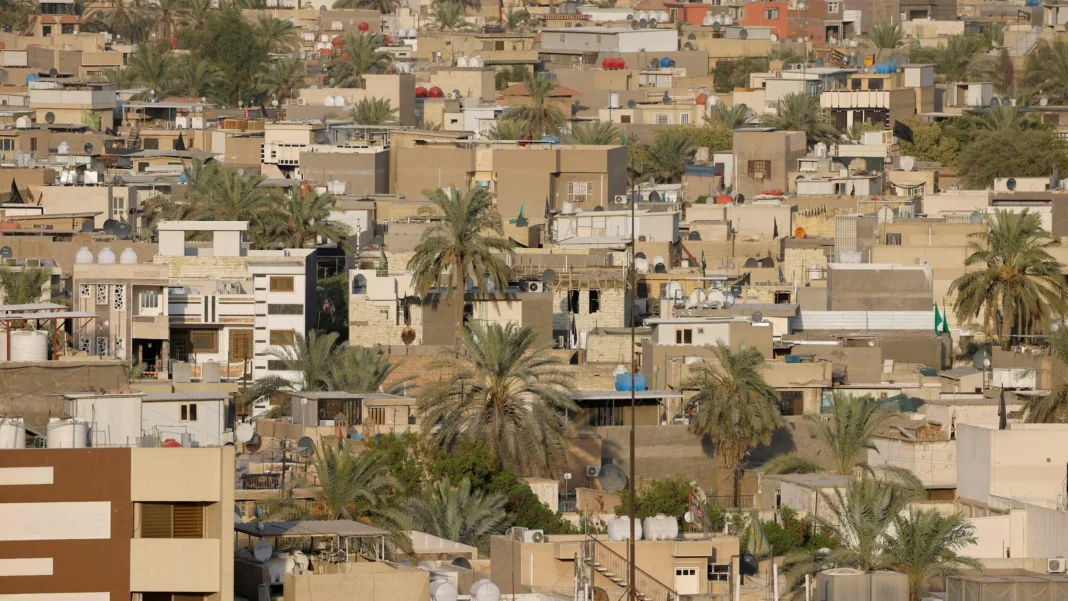
Millions of Iraqis now live in informal settlements across the country. Many of these areas sit outside official city plans. Therefore, residents often lack proper schools, sewage systems, and stable electricity. The problem grows as Iraq’s population continues to rise.
The government wants to use residential plots as a faster solution. In addition, it wants citizens to build according to local needs. However, many families still cannot afford construction costs. Without affordable loans, land distribution may help only some citizens.
Baghdad has also reviewed residential investment projects across Iraq. Officials want a full picture of active and stalled housing projects. Moreover, they want to check legal compliance and project progress. This review shows concern over weak execution in the construction market.
Experts say the main problem goes beyond construction budgets. They argue that Iraq struggles to enforce land laws fairly. Powerful groups and local interests often protect illegal land use. As a result, authorities fail to control urban expansion.
The housing shortage also reflects weak oversight over investors. Some projects meant for poor families turned into profit-making tools. Corrupt investors and politically connected actors gained from weak regulation. Meanwhile, many low-income families remained outside the housing market.
Planning officials have used data systems to track urban growth. They also map informal settlements and population density. However, these tools only describe the crisis. They do not fix weak enforcement or slow project delivery.
The Construction Ministry has focused on illegal housing areas. It wants to regularize some informal homes and prevent new violations. Committees also inspect properties and check eligibility. Still, the country needs faster action and clearer rules.
More than 1,600 development projects remain stalled across Iraq. Several abandoned housing complexes sit among these projects. This reality weakens trust among citizens and investors. It also raises doubts about every new government promise.
Economic researchers blame poor planning and political contracting. They say many projects stopped because officials chose weak contractors. In addition, bureaucracy slowed work in crowded provinces. Therefore, the housing gap became a crisis of delivery.
Parliamentary voices also point to financial shocks and old policy decisions. These measures stopped many projects and damaged public confidence. Furthermore, slow procedures kept residential developments from moving forward. Weak oversight then turned delays into long-term failures.
The Iraq housing crisis now tests the state’s ability to act. Baghdad must enforce laws, choose contractors fairly, and support affordable financing. It must also protect housing plans from political interference. Without these steps, new plans may repeat old mistakes.
The residential plot initiative could help if the government manages it well. However, citizens need roads, services, loans, and legal protection. Investors also need to trust that projects will not stop without reason. Therefore, execution matters more than announcements.
Iraq’s housing future depends on consistent government action. The state must connect land policy with real construction support. It must also place ordinary families at the center of housing reform. Otherwise, the Iraqi housing crisis will keep growing.