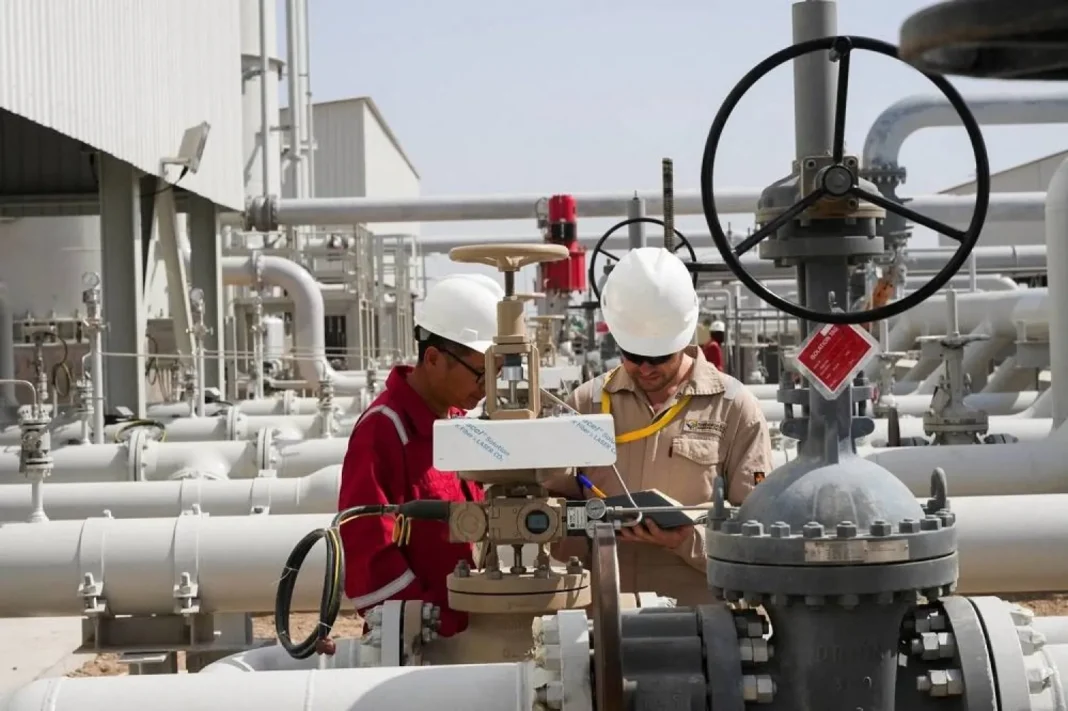
Iraq has moved quickly to restore crude output at three major southern fields. The Oil Ministry told operators to raise production at Rumaila, West Qurna-1, and Artawi. Officials want each field to return to full capacity. The move supports Iraq’s broader plan to rebuild its energy sector.
The Iraq oil recovery comes after regional tensions disrupted exports and shipping routes. Production dropped sharply during the conflict. As a result, Baghdad pushed operators to restart work at key hubs. The government now wants faster output growth across the south.
Basra Oil Company has led the recovery effort at major southern fields. The company asked operators to increase output as fast as possible. Consequently, southern production climbed to around 1.75 million barrels per day. Officials expect further gains as operations improve.
Iraq relies heavily on oil exports to fund its budget. Therefore, any production loss can quickly pressure public finances. Higher output can support salaries, services, and development plans. Moreover, it can help Baghdad protect its economic stability.
The government wants to raise national production capacity in a major way. Officials aim to reach seven million barrels per day within three years. To achieve that goal, Baghdad wants stronger partnerships with major U.S. energy companies. It also wants better technology, faster drilling, and stronger field management.
The Iraq oil recovery also reflects a broader energy strategy. Baghdad no longer wants to depend only on risky maritime export routes. Instead, officials want new pipeline networks and more flexible export options. This approach could protect Iraq from future regional disruptions.
The cabinet has backed early agreements with an international group that includes Chevron. The group will study a large pipeline network for Iraqi crude. The project could help Iraq move oil through safer routes. In addition, it could give Baghdad more control over export flows.
Energy officials see the southern fields as central to Iraq’s future output. Rumaila remains one of the country’s most important oil assets. West Qurna-1 also holds major production value. Meanwhile, Artawi adds another key source of future growth.
However, Iraq still faces major challenges. The country needs stronger infrastructure and steady investment. It also needs fast approvals for large energy projects. Without those steps, production goals may face delays.
Still, the recovery sends a strong message to oil markets. Iraq wants to return as a stable energy supplier. In addition, the country wants to reassure buyers after export disruptions. Higher Iraqi output could help ease pressure on global supplies.
The Iraq oil recovery may also support global price stability. More crude from southern fields can reduce supply concerns. Furthermore, restored shipping routes can help markets regain confidence. For Baghdad, the push offers both economic relief and political momentum.