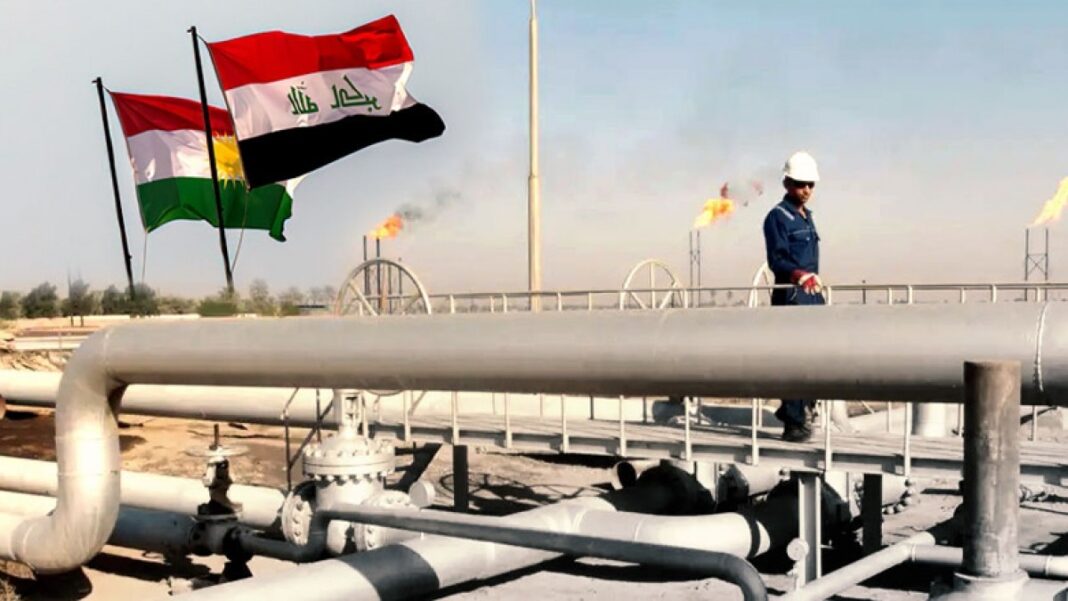
Kurdistan oil exports remain a central issue as Baghdad and Erbil continue efforts to restore production and strengthen energy cooperation.
Iraq’s Oil Ministry announced on Saturday that the government will not sign new agreements with companies operating in the Kurdistan Region. Instead, officials confirmed that existing contracts remain valid and continue to govern current operations.
Oil Ministry spokesperson Salim al-Rikabi said previous agreements between the Kurdistan Region and foreign companies still stand. Therefore, authorities see no need for additional contracts.
Meanwhile, Baghdad and Erbil continue discussions aimed at restoring oil production and resuming exports at full capacity. Both sides have intensified efforts after disruptions affected the energy sector.
Furthermore, officials continue to address concerns that previously forced several companies to halt operations. According to al-Rikabi, security worries prompted some firms to suspend their activities.
However, the government has taken steps to remove obstacles. Al-Rikabi said officials held meetings with company representatives under the leadership of Prime Minister Ali al-Zaidi. During those discussions, authorities encouraged firms to restart operations without delay.
In addition, officials worked to resolve challenges that effected production and investment. Those efforts aim to ensure stability across the sector.
Another major issue involves production costs in the Kurdistan Region. For months, Baghdad and Erbil have debated the amount allocated for extracting oil.
Al-Rikabi explained that the $16 per barrel figure included in Iraq’s federal budget serves only as an advance payment. He noted that international experts continue to calculate the actual costs of production and transportation.
Consequently, officials expect more precise figures once consultants complete their assessments. Those findings could influence future financial arrangements between both sides.
At the same time, regional tensions have increased the importance of export routes. The conflict involving Iran, the United States, and Israel, which erupted on February 28, has created additional challenges for Iraq’s energy sector.
As a result, alternative export channels have gained greater significance. Iraq currently relies heavily on the Kurdistan Region’s pipeline network that connects to Turkey’s port of Ceyhan.
Because of these developments, Kurdistan’s oil exports have become increasingly important for maintaining the country’s energy flow.
Moreover, officials continue to focus on securing stable transportation routes and restoring production levels. Their efforts reflect the growing importance of the sector amid regional uncertainty.
Going forward, policymakers hope continued cooperation between Baghdad and Erbil will support economic stability and strengthen the country’s energy industry. Consequently, Kurdistan oil exports remain a key element in Iraq’s broader strategy to sustain crude supplies and protect export capacity.