Plans to drill for oil in Iraq’s protected Mesopotamian Marshes have sparked a powerful outcry. Villagers and environmental activists have united against what they see as a direct threat to their home. With a deep cultural and ecological legacy at stake, many believe it’s time to prove that Iraq supports wetlands, not just oil profits.
The government awarded exploration rights in the Huwaizah oilfield to a Chinese firm. This decision surprised many locals in Abu Khsaf village, located near the wetlands. Residents say they only realized the gravity of the situation when machinery arrived and seismic studies began. They quickly saw how this development could alter their land forever.
Activist Murtada al-Janubi, speaking in a reed hall surrounded by concerned villagers, warned that losing the marshes would mean losing a key part of Iraq’s identity. His words echoed throughout the meeting hall as residents nodded in agreement. “A historical era will vanish,” he declared.
The government insists that oil and environment ministries are working together. They claim drilling will not occur inside the marshes but near them. However, satellite images show newly built roads within vegetated areas. According to Dutch analyst Wim Zwijnenburg, construction has already disrupted parts of the landscape.
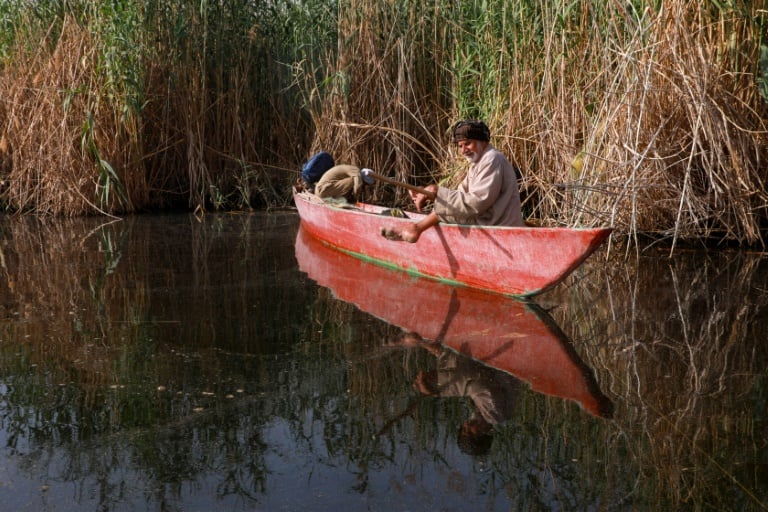
Villagers rely on these marshes for fishing, farming, and water. For 80-year-old fisherman Kazem Ali, the idea of trading wetlands for jobs is a hollow promise. “All we want is water,” he said. Another resident, buffalo farmer Rasul al-Ghurabi, said no job offer could make him abandon the freedom of marsh life.
Despite government reassurances, locals say they’ve witnessed drilling activities near sensitive zones. The Missan Oil Company denies working inside the protected core. Yet the 300 square kilometers of overlap with the buffer zone raise serious concerns.
The marshes are vital not just for Iraq, but also for global biodiversity. They host migratory birds and countless native species. That’s why activists like Ahmed Saleh Neema call for stronger oversight. Regulations exist, but many fear they won’t be enforced once oil operations ramp up.
UNESCO has also raised red flags. Across the border in Iran, similar wetlands have suffered from oil drilling. There, fields blocked water flow, drained habitat areas, and contaminated resources.
In the end, Neema says Iraq must strike a balance. The nation needs oil revenue, but not at the cost of its natural heritage. “Iraq supports wetlands” must be more than a slogan—it must be a policy, a practice, and a promise.
Back in Abu Khsaf, Janubi summed up the local sentiment: “Isn’t that enough oil? Leave our marshes alone.” Through his voice, one message rings clear: Iraq supports wetlands. Let’s hope it always will.