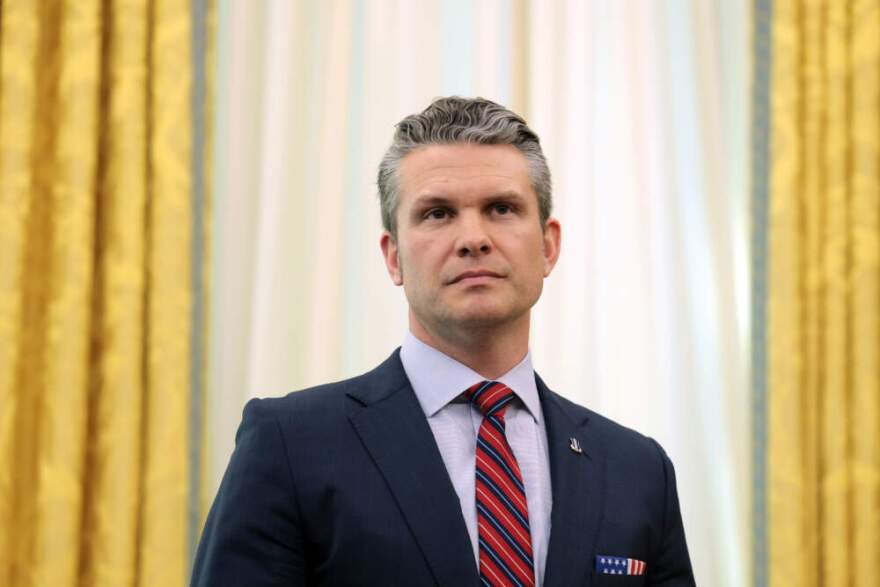
U.S.-Iraq security cooperation took center stage after U.S. Secretary of Defense Pete Hegseth called Prime Minister-designate Ali al-Zaidi to congratulate him on his nomination. Moreover, the call focused on strengthening defense ties under the Strategic Framework Agreement.
Hegseth emphasized expanding coordination between both countries. In addition, he highlighted training programs designed to improve the capabilities of the Iraqi Armed Forces.
Zaidi welcomed the discussion and stressed the importance of continued partnership. Furthermore, he noted that cooperation between Baghdad and Washington supports long-term regional stability.
The conversation followed a recent call from U.S. President Donald Trump. During that call, Trump congratulated Zaidi and invited him to visit Washington after forming the new government.
Consequently, diplomatic momentum between Iraq and the United States has increased significantly. Observers now view U.S.-Iraq security cooperation as a central pillar of Zaidi’s foreign policy agenda.
Meanwhile, regional diplomacy also intensified through multiple high-level communications. Iranian President Masoud Pezeshkian contacted Zaidi earlier in the week to extend congratulations.
During that call, both sides agreed to exchange official visits. In addition, Zaidi reaffirmed Iraq’s commitment to dialogue and peaceful dispute resolution.
He also suggested that Iraq could act as a mediator between Iran and the United States. Therefore, Baghdad may take a more active diplomatic role in regional tensions.
At the same time, political developments inside Iraq continue to shape the transition process. The Coordination Framework nominated Zaidi after both Nouri al-Maliki and Mohammed Shia al-Sudani withdrew from consideration.
Zaidi now faces a strict 30-day deadline to form a cabinet. Moreover, he must present a detailed government program to parliament.
He also needs to secure approval from an absolute majority of Iraq’s 329 lawmakers. Consequently, political negotiations remain intense in Baghdad.
Supporters argue that strong U.S.-Iraq security cooperation will help stabilize Iraq during this transition. In contrast, critics warn that regional pressures could complicate government formation efforts.
Still, recent diplomatic calls indicate growing international engagement with Iraq’s political process. Furthermore, they highlight Baghdad’s increasing role in balancing relations between global powers.
As a result, Iraq now stands at a critical political and diplomatic crossroads. Ultimately, the coming weeks will determine the direction of its government and foreign relations.