
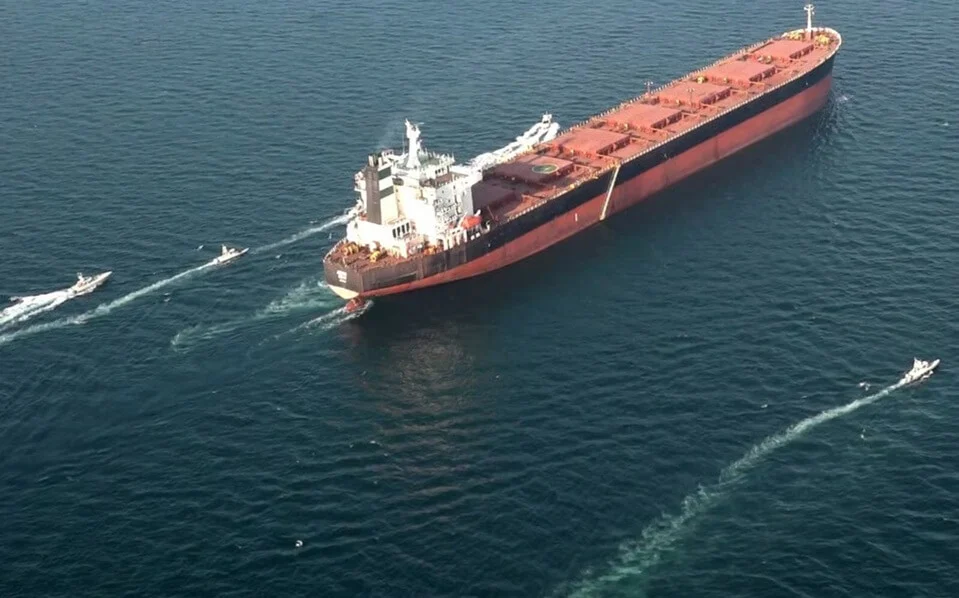
Strait of Hormuz exports returned to focus after Iraq confirmed that two oil tankers crossed the strategic waterway this month. Iraqi officials hope the renewed shipments will help restore export levels after months of regional conflict and maritime disruption.
Iraq’s Oil Ministry announced Tuesday that two vessels carrying Iraqi crude successfully moved through the Strait of Hormuz during May. Officials described the crossings as an important step toward rebuilding the country’s oil trade.
Basim Khudair, Iraq’s oil ministry undersecretary, said the latest tanker loaded one million barrels of crude from Basra on Sunday. He added that Iraq could quickly increase exports if maritime traffic returns to normal conditions.
Khudair explained that Iraq could restore exports to nearly three million barrels within one week after a full reopening of the waterway.
The Strait of Hormuz faced severe disruptions after Iran imposed restrictions earlier this year. Tehran introduced the measures after the United States and Israel launched a large aerial campaign against Iran on February 28.
The military confrontation continued for more than six weeks. However, Pakistan later mediated a ceasefire agreement on April 8. The truce opened the door for regional negotiations and limited commercial recovery.
Meanwhile, Iranian state-linked media confirmed Monday that a tanker carrying Iraqi crude crossed the strait successfully on Sunday.
According to the maritime tracking platform MarineTraffic, the Maltese-flagged tanker departed Iraq’s Basra port in late April. The vessel is expected to arrive at Vietnam’s Nghi Son port on May 26.
Earlier in April, Ebrahim Zolfaghari, spokesperson for the IRGC’s Khatam al-Anbiya Headquarters, stated that Iraq would avoid the blockade restrictions. He claimed the measures targeted only countries considered hostile by Tehran.
Despite that exemption, Iraq still struggled to restore normal export operations. The country depends heavily on foreign shipping companies to transport crude oil.
Before the conflict erupted, Iraq produced nearly 4.5 million barrels of oil daily. The country also exported around 3.5 million barrels each day.
Nearly 90 percent of those exports traveled through the Gulf route. As a result, Strait of Hormuz exports remain essential for Iraq’s economy and energy sector.
Oil ministry figures highlighted the financial impact of the regional tensions. Iraq exported only 18.6 million barrels during March. Those shipments generated nearly $1.96 billion in revenue.
In comparison, Iraq exported more than 99 million barrels during February. February revenues reached approximately $6.81 billion before the conflict intensified.
Energy analysts believe Iraq could recover exports gradually if regional stability continues. However, shipping concerns and security risks still threaten the pace of recovery.
Government officials now hope that continued tanker movement will strengthen confidence among global shipping operators. They also expect Strait of Hormuz exports to improve further during the coming weeks.