ISIS security threat concerns continue to shape military operations across Iraq as security forces intensify efforts against extremist remnants hiding in disputed territories between Baghdad and Erbil.
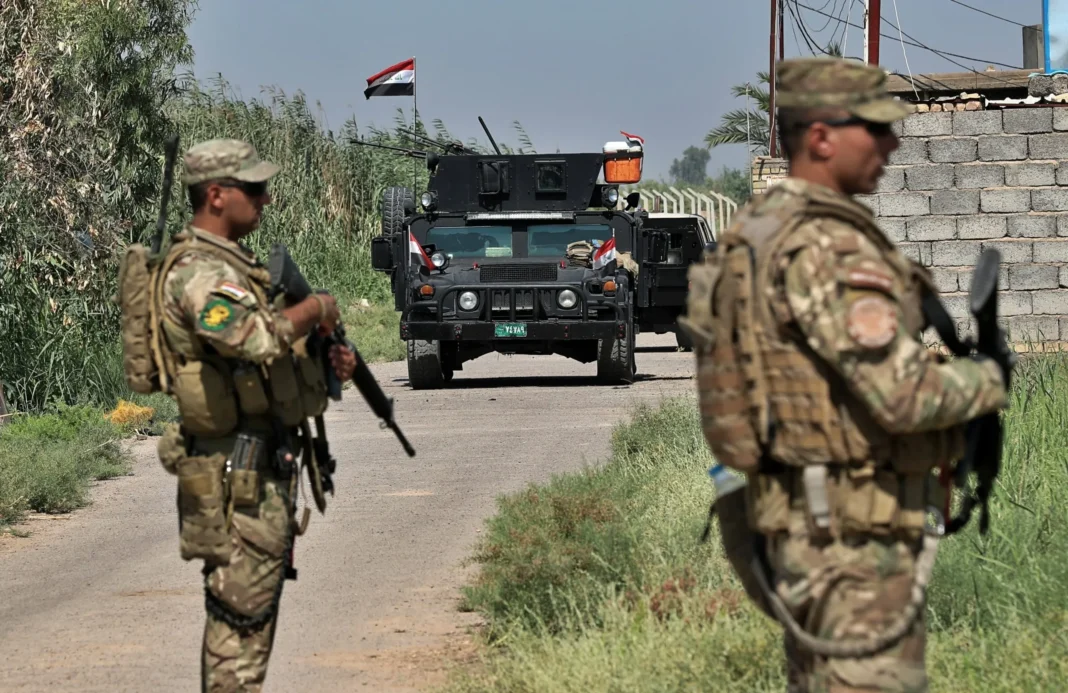
The Iraqi Counter-Terrorism Service announced new operations targeting ISIS hideouts and weapons storage sites in northern and eastern Iraq. Security officials said the missions relied on precise intelligence and continuous field surveillance. The operations also focused on remote regions where ISIS militants continue limited insurgent activity.
According to the Counter-Terrorism Service, security units carried out two separate missions in the Hamrin mountain range. The area stretches between Salahaddin and Kirkuk provinces. During the operations, forces discovered and seized two ammunition caches hidden inside rugged terrain.
In addition, Iraqi forces searched an ISIS hideout containing explosive materials and ammunition. Security teams later uncovered another weapons cache in the Mandali district of Diyala province near the Iranian border.
The Counter-Terrorism Service stressed its commitment to protecting Iraq and dismantling extremist networks. Officials also pledged to continue pursuing ISIS cells operating in remote and disputed territories.
Although Iraqi forces declared victory over ISIS in 2017, the group still launches periodic attacks across several provinces. Militants often exploit difficult geography and security gaps to avoid detection. Consequently, Iraqi forces continue counterterrorism operations in vulnerable regions.
The disputed territories between the Kurdistan Region and federal Iraq remain among the most sensitive security zones. These areas include parts of Diyala, Kirkuk, Nineveh, and Salahaddin provinces. Security analysts frequently describe those regions as weak points in Iraq’s security structure.
Moreover, the withdrawal of Kurdish Peshmerga forces from Kirkuk and nearby disputed territories in 2017 widened existing security gaps. Since then, coordination challenges between Baghdad and Erbil have complicated security operations in those areas.
As a result, ISIS militants have used isolated valleys, caves, and mountain routes as temporary shelters. Some sleeper cells also established logistics hubs in unmonitored regions. Militants continue launching hit-and-run attacks against Iraqi forces and civilians.
Meanwhile, Iraqi military commanders continue strengthening intelligence cooperation and surveillance operations. Security officials believe stronger coordination between federal and Kurdish forces could reduce militant activity significantly.
The latest operations highlight Iraq’s ongoing battle against extremist remnants despite the group’s territorial collapse years ago. Officials warn that the ISIS security threat still demands constant monitoring and rapid security responses.
Furthermore, political leaders and military officials increasingly call for broader coordination in disputed territories. Many experts argue that lasting stability requires stronger joint security mechanisms between Baghdad and Erbil.
As Iraqi forces continue searching remote areas, authorities remain determined to prevent ISIS militants from rebuilding operational networks. For now, the ISIS security threat continues to influence Iraq’s security strategy across several volatile provinces.