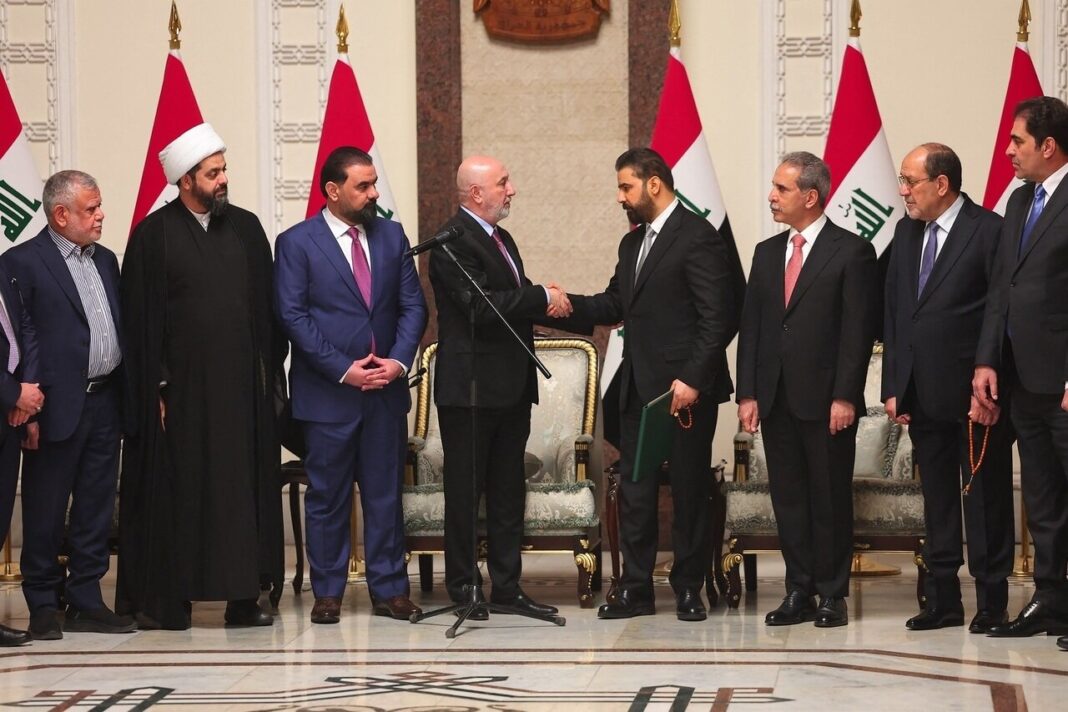
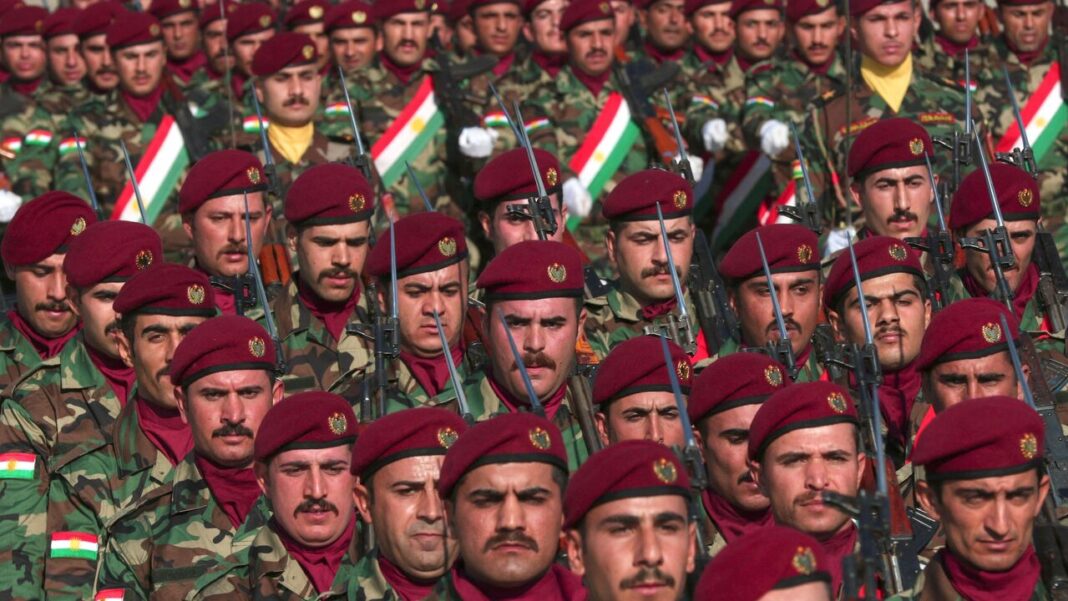
The Iraq security funding shift marks a major change in the U.S. military assistance policy toward Iraq in the FY 2027 Counter-ISIS Train and Equip Fund request. Furthermore, the new budget reduces overall funding while restructuring support priorities across Iraqi security forces.
The U.S. Department of War proposes a significant cut in total assistance compared to previous years. Additionally, the new plan ends direct funding for the Ministry of Peshmerga Affairs.
The FY 2027 request allocates zero dollars for Peshmerga training and equipping programs. Meanwhile, the same category received more than 61 million dollars in FY 2026.
This sharp reduction signals a major policy transition. Moreover, it shows a shift away from separate regional support structures.
At the same time, Washington increases emphasis on Iraqi federal security institutions. As a result, funding now concentrates on central military forces in Baghdad.
The Iraqi Ministry of Defense receives 38.6 million dollars under the new proposal. Additionally, the Counter Terrorism Service receives nearly 57.9 million dollars.
Together, these allocations bring total funding to just over 96 million dollars. However, this remains significantly lower than in previous fiscal years.
The Iraq security funding shift continues a downward trend in U.S. assistance levels. For example, FY 2026 funding stood at 175 million dollars.
Earlier, FY 2025 support reached more than 257 million dollars. Consequently, the new plan reflects a steady reduction in overall financial assistance.
Officials state that the Ministry of Defense and Joint Operations Command now share consolidated planning structures. Therefore, Washington aims to simplify coordination across Iraqi forces.
The Counter Terrorism Service remains a top priority within the funding plan. Additionally, U.S. planners highlight their role in specialized operations across Iraq.
The Ministry of Defense continues managing Iraq’s ground forces, air force, navy, and air defense units. Furthermore, defense leadership maintains responsibility for nationwide military readiness.
The Iraq security funding shift also carries political implications inside Iraq. In particular, the Kurdistan Region may view the decision as a reduction in direct partnership.
For years, U.S. funding supported the Peshmerga forces through separate assistance programs. However, the new budget eliminates that direct channel.
This change may increase discussions between Baghdad and Erbil. Moreover, it could affect coordination on shared security threats.
Recent years have seen repeated drone and missile attacks across northern Iraq. As a result, security cooperation remains a sensitive national issue.
Analysts suggest the funding change reflects a broader U.S. strategy. Specifically, Washington appears to favor centralized Iraqi federal institutions.
This approach aims to streamline military assistance and improve coordination efficiency. However, it may also reshape existing regional security relationships.
The FY 2027 proposal, therefore, represents both financial and strategic adjustments. Ultimately, it signals a new phase in U.S.-Iraq defense cooperation under evolving regional conditions.