The U.S.-Iraq security pressure campaign has intensified after Washington announced a major reward targeting a militia-linked leader in Iraq. Furthermore, the move signals a stronger U.S. approach toward Iran-aligned factions operating inside the country. The U.S.-Iraq security pressure campaign now focuses on intelligence collection and disruption of coordinated networks.
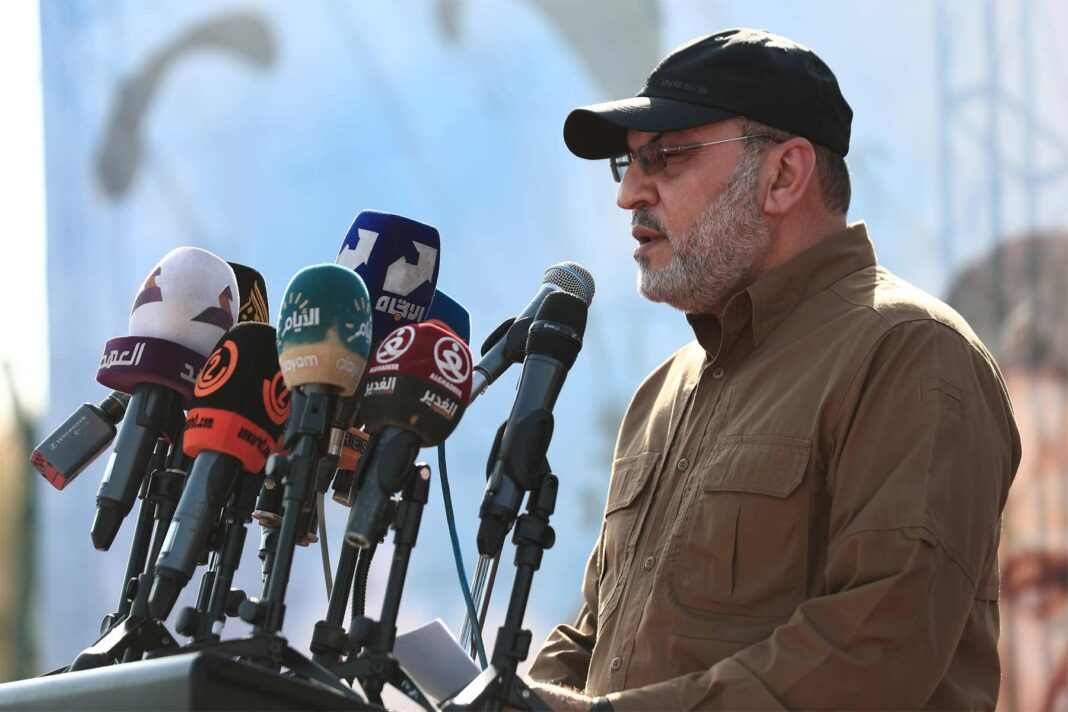
The U.S. Department of State announced a reward of up to 10 million dollars for information on Haydar Muzhir Ma’lak al-Sa’idi, also known as Haydar al-Gharawi. He leads Harakat Ansar Allah al-Awfiya, according to U.S. officials. Additionally, Washington describes the group as Iran-aligned and active across Iraq. This development strengthens the U.S.-Iraq security pressure campaign against regional proxy structures.
The pressure effort also includes allegations of cross-border operations. According to the State Department, the group targeted U.S. diplomatic facilities and military positions. Moreover, officials claim the attacks affected personnel in Iraq, Jordan, and Syria. U.S. authorities further state that some incidents caused fatalities, although verification remains limited in several cases.
In addition, Washington says individuals providing information may receive relocation support. Therefore, the program combines financial incentives with protection measures. However, independent verification of several claims remains incomplete. The US-Iraq security pressure campaign increasingly blends rewards with intelligence-driven disruption strategies.
This campaign extends beyond a single faction. Officials link Harakat Ansar Allah al-Awfiya to the broader Islamic Resistance in Iraq network. This umbrella structure reportedly includes factions such as Kata’ib Hezbollah and Asa’ib Ahl al-Haq. Furthermore, analysts note that these groups often shift identities and operational names.
The Islamic Resistance in Iraq emerged after the Gaza war escalation in October 2023. Since then, it has coordinated several Iran-aligned Iraqi factions. Additionally, these networks frequently claim responsibility for attacks on U.S.-linked assets across the region.
Tensions escalated further during a six-week Iran-Israel confrontation. Iran responded with drone and missile strikes across multiple Middle Eastern locations. Meanwhile, Iraqi factions aligned with Tehran claimed operations against U.S. interests. Consequently, regional security conditions became more volatile.
The U.S.-Iraq security pressure campaign also follows claims of large-scale operations. The Islamic Resistance in Iraq stated it carried out hundreds of attacks during the early conflict phases. However, U.S. officials continue to challenge these figures and seek independent confirmation.
Just days earlier, Washington announced a similar reward targeting another militia-linked figure. That announcement focused on Abu Ala al-Wala’i, associated with Kata’ib Sayyid al-Shuhada. Moreover, U.S. officials accuse his network of attacks on civilians and U.S.-linked facilities in Iraq and Syria.
As a result, the United States continues expanding its reward-based intelligence strategy. Furthermore, officials aim to disrupt financing channels, leadership structures, and coordination pathways within these networks.