By Kamiyar Deraney
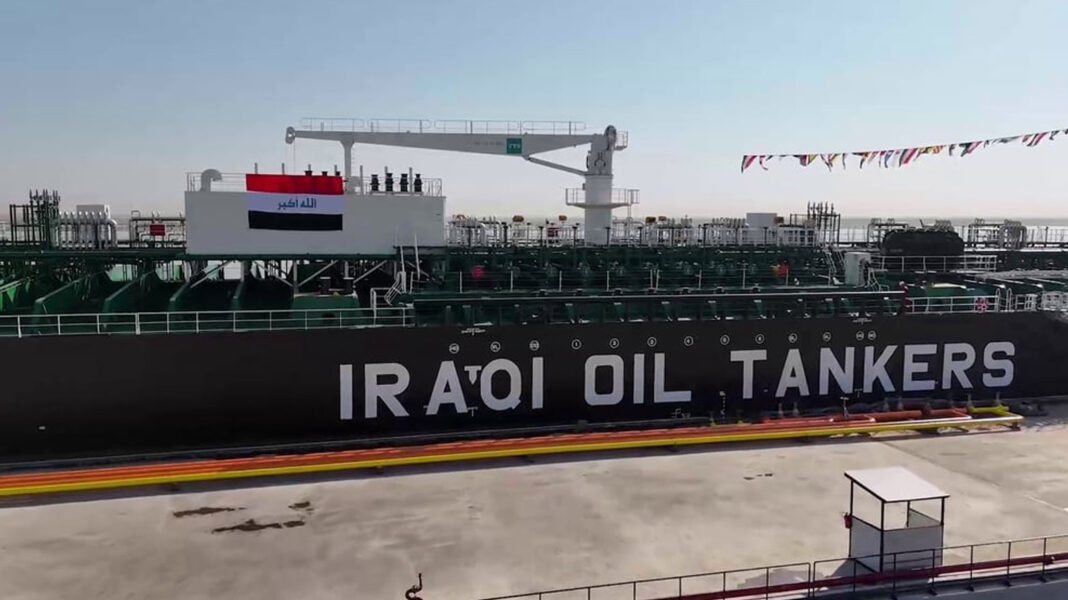
The U.S./Israeli war with Iran passed the one-month mark. Global oil, gas, and petroleum markets feel the pressure. Iraq and the Kurdistan Region depend heavily on oil sales, so both have taken a direct hit. Production dropped by 3.2 million barrels. Exports now sit at roughly 400,000 barrels per day. For a country built on oil revenue, that is a steep fall.
Before the war, things looked very different in February. Oil production in Iraq and the Kurdistan Region stood at 4.5 million barrels per day. The Kurdistan Region contributed 314,000 barrels of that total. Exports were 3.567 million barrels per day, with the Kurdistan Region exporting 198,000 barrels daily. The top ten Iraqi oil fields ran at full capacity. The Rumaila field, operated by British BP, Chinese PetroChina, and SOMO, produced 1.35 million barrels per day. West Qurna-1 delivered 430,000 barrels. West Qurna-2 added another 380,000 barrels. The Kirkuk fields produced 320,000 barrels. The Zubair fields gave 370,000 barrels. Together, these fields formed the backbone of Iraqi oil revenue.
In the Kurdistan Region, production came from a mix of international players. DNO Norway operated the Tawke and Pishkhabur fields, producing 78,000 barrels. HKN Energy Ltd., a U.S. oil producer, ran the Sarsang field at 22,000 barrels and the Atroush field at 32,500 barrels. Gulf Keystone from Britain produced 41,500 barrels at Sheikhan. The Khurmala field, operated by the Kar Group, produced 90,000 barrels. Total regional production hit 314,500 barrels.
After the war started, production levels collapsed. Total Iraqi oil production dropped by 1.332 million barrels. The Kurdistan Region lost 80,000 barrels from its share. A broader measure shows a 3.2 million barrel reduction, including 250,000 barrels lost from the Kurdistan Region.
Current production in the Kurdistan Region sits at only 80,000 barrels. Most fields have stopped entirely. Here is the breakdown of what is left.
Tawke field: 0
Pishkhabur field: 0
Atroush field: 0
Sarsang field: 0
Sheikhan field: 0
Kormor gas field: 0
Sarqala field: 6,000 barrels
Only a handful of fields continue limited operations. Ain Safini produces 6,000 barrels. Bjil produces 4,000, and the Erbil field gives 4,000. The Khurmala field averages 58,000 barrels. The Taqtaq field produces just 2,000 barrels. The federal side of Iraq shows similar damage. Basra Oil Company now produces only 638,000 barrels across the Rumaila and Zubair fields. That is less than half of what Rumaila alone produced before the war. Northern Oil Company produces 380,000 barrels in the Kirkuk fields. Maysan Oil Company dropped to 20,000 barrels, Midland Oil Company produces 122,000 barrels, and Ziqar Oil Company produces 92,000 barrels.
Three main factors explain the drop in federal Iraq. First, the closure of the Strait of Hormuz blocked shipping routes. Iraqi oil cannot reach international buyers. J.P. Morgan Global Research reported that flows through the Strait account for 20% of global oil volumes. By mid-March, regional production shut-ins approached 7 million barrels per day as storage filled and bottlenecks persisted. Second, Iraq lacks national reserves. There is no storage buffer to absorb shocks. Production stops when exports stop. Reuters reported that Iraqi storage tanks reached critical levels. The Basra Oil Company issued formal letters to BP and Eni requesting immediate production reductions.
Thirdly and lastly, joint ventures withdrew. International companies pulled out of 41 out of 67 oil and gas fields. Partners from BP, PetroChina, Lukoil, Eni, and others suspended operations. The Kurdistan Region faces a different problem. International companies halted production at the start of the war. DNO Norway shut down its Tawke and Peshkabir fields as a precaution, moving personnel to safe locations. HKN stopped, Gulf Keystone stopped, and Dana Gas stopped. Without these operators, the fields sit idle.
Iraq and the Kurdistan Region now face a revenue crisis. Oil sales fund government salaries, infrastructure, and imports. At 400,000 barrels per day of export capacity, monthly revenue drops below $1 billion at current prices. Before the war, monthly revenue exceeded $10 billion. The Kurdistan Region loses nearly 80% of its oil income. Federal Iraq loses more than 70% of its production capacity. Neither region has a quick fix. Restarting fields takes time, and reopening the Strait of Hormuz requires an end to the war. Bringing back international operators needs security and payment guarantees.
There is a narrow path to recovery. Reuters reported that Iraq could restore crude oil exports to around 3.4 million barrels per day within a week if the war ends and the Strait of Hormuz re-opens.
Oil production in Iraq may not return to pre-war levels for years. The longer the war continues, the deeper the damage. Pipelines, wells, and export infrastructure degrade without maintenance. Skilled workers leave, and contracts remain suspended. Look at the numbers, production fell from 4.5 million barrels to 1.3 million. The Kurdistan Region dropped from 314,000 barrels to 80,000. Exports went from 3.5 million to 400,000. These are not small adjustments; they are structural breaks. Recovery depends on peace. Until then, Iraq and the Kurdistan Region managed a smaller oil economy, one with fewer fields, fewer partners, and fewer options.