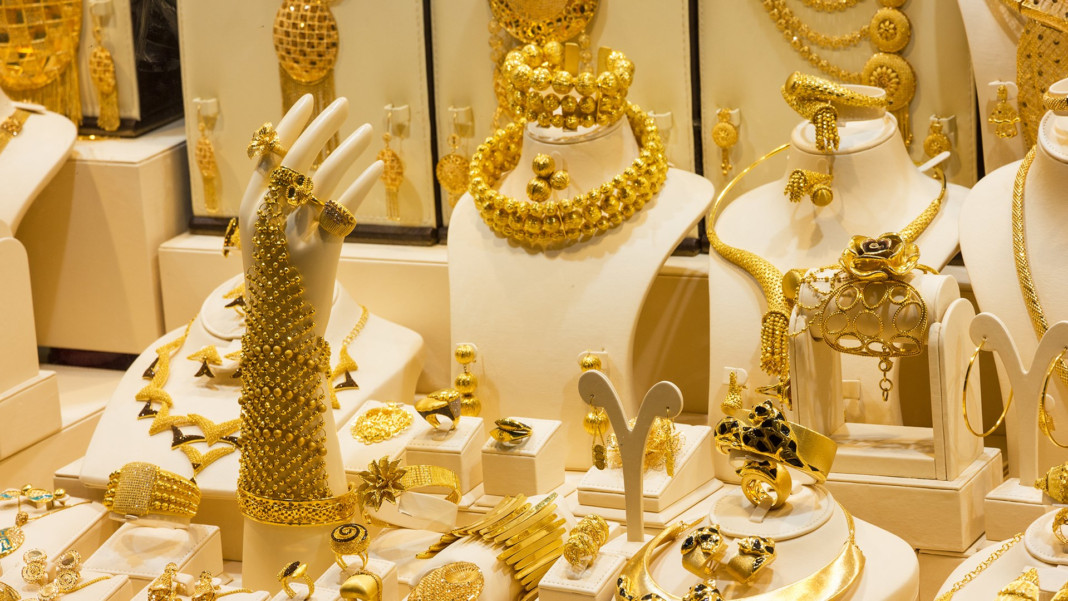
Baghdad witnessed a noticeable rise in gold prices on Tuesday, while Erbil maintained steady rates. According to local market surveys, gold prices in Iraq continue to attract investor attention. Traders and jewelers reported active buying and selling throughout the day.
On Baghdad’s Al-Nahr Street, the selling price for 21-carat gold reached 1,025,000 IQD per mithqal, including Gulf, Turkish, and European types. Buyers paid 1,021,000 IQD per mithqal. On Monday, the same gold had sold for 1,020,000 IQD. Therefore, the market saw a clear upward movement.
Similarly, Iraqi 21-carat gold recorded a selling price of 995,000 IQD and a buying price of 991,000 IQD. Jewelry stores reported slight variations, with Gulf gold selling between 1,025,000 and 1,035,000 IQD per mithqal. Meanwhile, Iraqi gold ranged from 995,000 to 1,005,000 IQD.
In contrast, Erbil’s markets remained stable. Traders sold 22-carat gold for 1,069,000 IQD per mithqal. The price of 21-carat gold stayed at 1,021,000 IQD, and 18-carat gold sold for 875,000 IQD. Analysts explained that steady demand in Erbil helped maintain these prices.
Experts suggest that gold prices in Iraq are influenced by both domestic demand and international trends. Baghdad’s market reacts quickly to economic shifts, while Erbil shows more consistency. Investors monitor these movements closely to decide when to buy or sell.
Moreover, the fluctuation in Baghdad encourages consumers to consider gold as an investment rather than just jewelry. Traders emphasize that the gold market remains highly liquid, and small daily changes can create opportunities.
Overall, gold prices in Iraq reflect a dynamic and region-specific market. Baghdad experienced a rise, Erbil held steady, and local traders continue to adjust prices based on demand. This pattern shows a clear distinction between the two cities’ trading behaviours.