Iraq is strengthening its diplomatic outreach as regional tensions continue to grow. Diplomacy to prevent regional escalation now stands at the center of Baghdad’s foreign policy priorities. Leaders increasingly call for dialogue instead of confrontation. They also stress cooperation to protect stability across the Middle East.
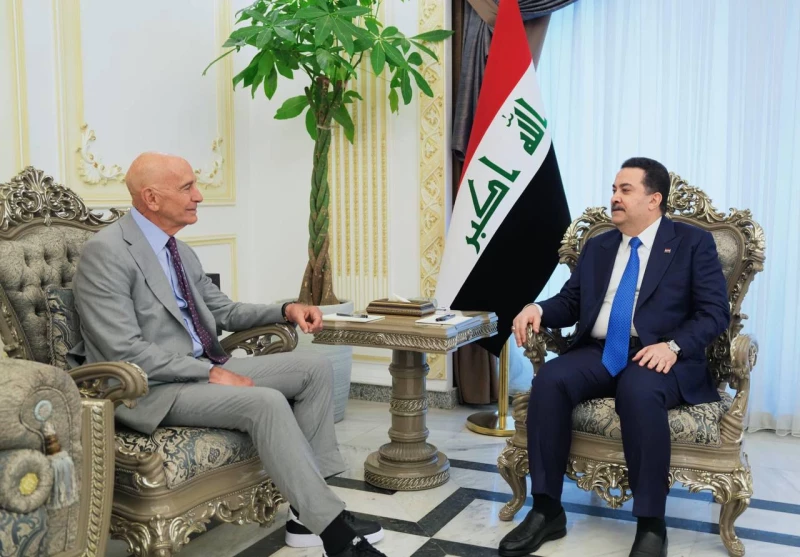
Mohammed Shia al-Sudani met in Baghdad with Tom Barrack, the U.S. Special Envoy for Syria, on Sunday. The talks focused on regional security challenges and future cooperation. Both sides emphasized diplomatic solutions over military responses. They also agreed that communication remains essential during periods of crisis.
Officials discussed relations between Iraq and the United States in detail. They reviewed security coordination and political cooperation. In addition, they explored economic partnerships and development initiatives. Leaders believe these steps can strengthen long-term regional stability.
During the meeting, al-Sudani highlighted Iraq’s growing role in mediation efforts. He stressed that dialogue offers the only path to lasting solutions. He also warned that unresolved conflicts fuel instability across borders. Therefore, he urged all parties to address root causes directly.
Moreover, he called for respect for sovereignty throughout the region. He stressed that violations and aggressive actions deepen tensions. As well as arguing that responsible diplomacy must replace confrontation. He also pointed out that development efforts help reduce conflict risks.
Barrack praised Iraq’s role as a regional stabilizer. He emphasized Baghdad’s importance in reducing tensions among neighboring states. He also noted Iraq’s continued efforts to support negotiations in Syria. Furthermore, he acknowledged Iraqi cooperation in counterterrorism operations.
Both sides agreed to expand economic cooperation. They discussed infrastructure development, energy partnerships, and investment opportunities. Leaders believe economic growth can reduce instability. They also said shared prosperity supports peace efforts.
Importantly, participants repeatedly stressed Diplomacy to prevent regional escalation as the guiding principle for future engagement. They agreed that dialogue mechanisms must remain active even during crises. They also emphasized the need for regional cooperation frameworks.
The meeting ended with commitments to continued communication. Both sides pledged to support negotiations across conflict zones. They also agreed to coordinate efforts against terrorism threats. Finally, officials reiterated that Diplomacy to prevent regional escalation remains essential for lasting peace.