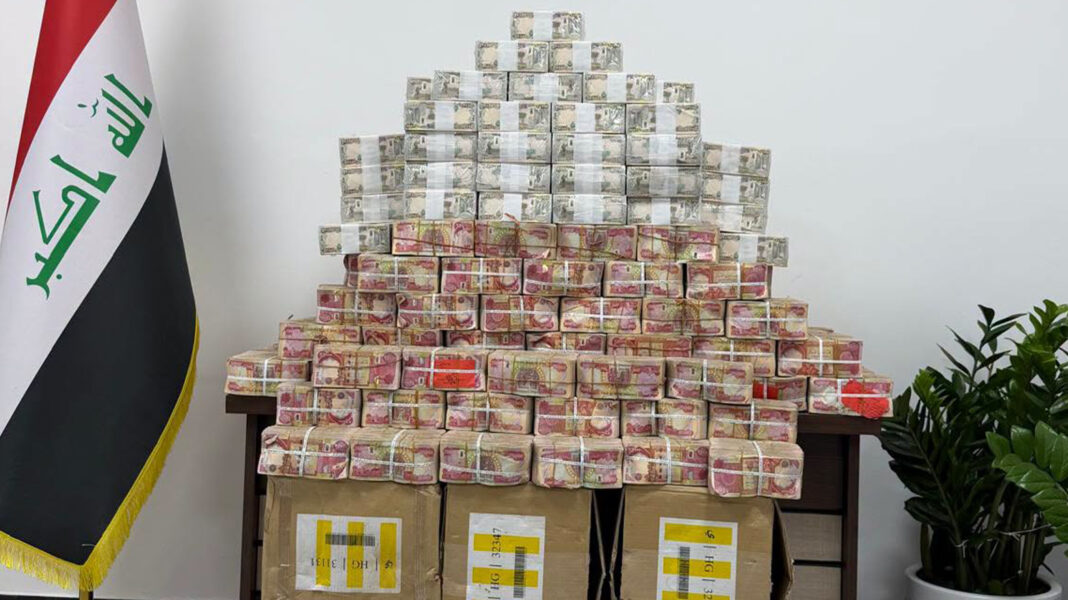
Iraq’s anti-corruption drive has reached a major stage with new asset seizures. Judicial authorities announced the recovery of $20.34 million in cash and 60 kilograms of gold. They also seized seven vehicles linked to Deputy Oil Minister Adnan Al Jumaili.
Al Jumaili also previously led the Northern Refineries Company as its general director. Authorities arrested him in May during a growing investigation into alleged financial crimes. The investigation focuses on refinery projects managed under the Oil Ministry.
According to judicial officials, investigators traced financial proceeds connected to alleged waste. They also examined funds connected to projects involving Al Jumaili and other suspects. The Central Anti-Corruption Criminal Court supervised the latest seizures.
Furthermore, authorities worked with officials in the Kurdistan Region during the operation. Investigators recovered assets across Baghdad and Erbil, according to judicial authorities. However, officials did not disclose additional details about the seized property.
The investigating judge said authorities will continue tracking assets linked to the case. Investigators will also pursue other individuals suspected of involvement. Legal proceedings will continue until authorities complete the necessary procedures.
Prosecutors allege that networks diverted money through companies and intermediaries. They reportedly redirected funds allocated for refinery upgrades and operations. Consequently, investigators have expanded their focus beyond individual officials.
Al Jumaili remains in custody while authorities continue the investigation. Meanwhile, the Oil Ministry has not publicly commented on the latest seizures.
The case forms part of a wider anti-corruption campaign under Prime Minister Ali Al Zaidi. Since taking office in May, Al Zaidi has ordered several high-profile investigations. Authorities have targeted officials across the Oil, Electricity, and other ministries.
The government presents the campaign as a major test of state authority. It also aims to restore public confidence and protect government finances. Moreover, officials want to recover stolen funds and return them to state coffers.
The judiciary has also strengthened cooperation with anti-corruption institutions. These include the Integrity Commission and financial intelligence units. Regional authorities have also joined efforts to track suspicious financial movements.
Meanwhile, Iraq’s oil industry remains central to the investigation. Oil provides the country with most of its government revenue. However, the sector has faced repeated allegations involving smuggling and inflated contracts.
Refining projects carry particular importance for Iraq’s economy. The country still imports significant amounts of fuel despite its large crude reserves. Therefore, problems within refinery projects create both economic and political concerns.
Iraq’s anti-corruption drive now faces pressure to produce convictions and recover assets. The government also needs visible results to maintain public support. At the same time, officials face other major political and security challenges.
Parliament must advance reforms while the government prepares for security deadlines. Officials increasingly link these efforts to stronger state control over national resources.
For now, the latest seizures represent one of the campaign’s largest financial recoveries. Iraq’s anti-corruption drive is expected to continue as investigators pursue additional suspects.