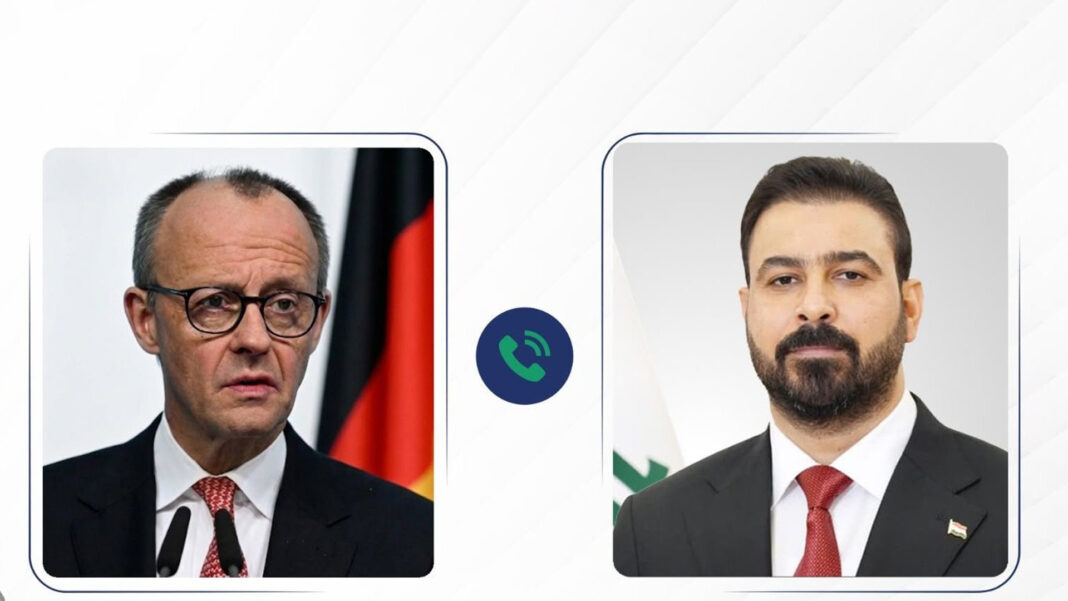
Prime Minister Ali Falih al-Zaidi and German Chancellor Friedrich Merz held high-level telephone talks on closer economic relations. The leaders focused on trade, industrial investment, financial reforms, and government cooperation.
Moreover, Al-Zaidi presented a proposal that could bring German expertise and capital into Iraq’s industrial sector. The Iraq joint fund could finance factories, infrastructure, technology transfers, and other industrial projects.
Under the proposal, Iraq would provide local opportunities. Meanwhile, German partners would offer financing and technical knowledge. This structure could help Iraqi industries increase productivity and improve quality.
Additionally, the fund could connect Iraqi businesses with experienced German manufacturers and financial institutions. Such partnerships could also create employment opportunities and offer practical training for Iraqi workers.
Meanwhile, both leaders examined ways to increase trade between their countries. Iraq wants broader commercial partnerships that extend beyond oil exports and government contracts.
Therefore, stronger ties with Germany could support machinery imports, manufacturing projects, and modern industrial services. German companies could also access Iraq’s growing consumer market and major reconstruction opportunities.
Furthermore, Al-Zaidi highlighted his government’s economic reform program during the conversation. He emphasized Baghdad’s commitment to combating administrative corruption and enhancing transparency.
Al-Zaidi also argued that clear regulations would encourage more international companies to enter Iraq. Consequently, stronger oversight could reduce investment risks and increase private-sector confidence.
Banking and financial reforms also played an important role in the talks. Germany expressed support for Iraq’s efforts to strengthen public finances and modernize economic management.
Moreover, German businesses showed readiness to expand their operations across Iraq. That interest could bring fresh capital, advanced equipment, and stronger management practices.
The Iraq joint fund also supports Baghdad’s wider plan for a more diverse national economy. Currently, oil income dominates Iraq’s public revenue and shapes most government spending.
However, industrial growth could create alternative income and reduce exposure to energy market changes. Therefore, Iraq seeks partnerships that combine foreign investment with domestic production.
Migration management formed another part of the leaders’ discussion. Both governments want practical frameworks that encourage coordination and shared responsibilities.
However, economic cooperation remained the central theme of the call. Merz also invited Al-Zaidi to Berlin for further official discussions.
The proposed visit could deepen coordination on trade, investment, reforms, migration, and wider political relations. Moreover, direct talks could help officials turn general commitments into specific projects.
Both governments now need clear regulations, financing structures, and project selection standards. They must also identify industries that can deliver jobs, exports, and long-term economic value.
Potential areas include manufacturing, construction materials, transportation equipment, renewable energy, and agricultural processing. Additionally, German technology could help Iraqi companies improve efficiency and meet international standards.
However, successful cooperation will require consistent policies and strong legal protections. Investors usually seek reliable contracts, transparent procedures, and predictable financial regulations.
Therefore, Baghdad must continue its anti-corruption campaign and improve institutional accountability. These steps could strengthen investor trust and encourage more long-term projects.
The proposed partnership could also encourage other European companies to explore opportunities in Iraq. Furthermore, successful German projects could strengthen Iraq’s reputation among international investors.
Better infrastructure and modern factories could increase production and support Iraqi exports. Meanwhile, local companies could benefit from German experience in engineering and industrial planning.
The partnership could also help Iraqi businesses adopt modern manufacturing methods. Consequently, stronger local production could reduce the country’s reliance on imported goods.
Moreover, new industrial projects could create opportunities for young workers. Training programs could also help Iraq develop a more skilled workforce.
Germany could gain stronger commercial access to Iraq’s expanding market. Meanwhile, Iraq could receive advanced technology, business knowledge, and investment capital.
Both governments must now develop practical financing and management plans. They also need transparent standards for selecting and supervising future projects.
Ultimately, the proposal signals Iraq’s intention to build stronger economic links with Europe. It also reflects Germany’s growing interest in Iraq’s industrial and investment opportunities.
If both sides advance the plan, their partnership could support lasting growth and wider economic diversification. It could also establish stronger foundations for future trade and investment agreements.