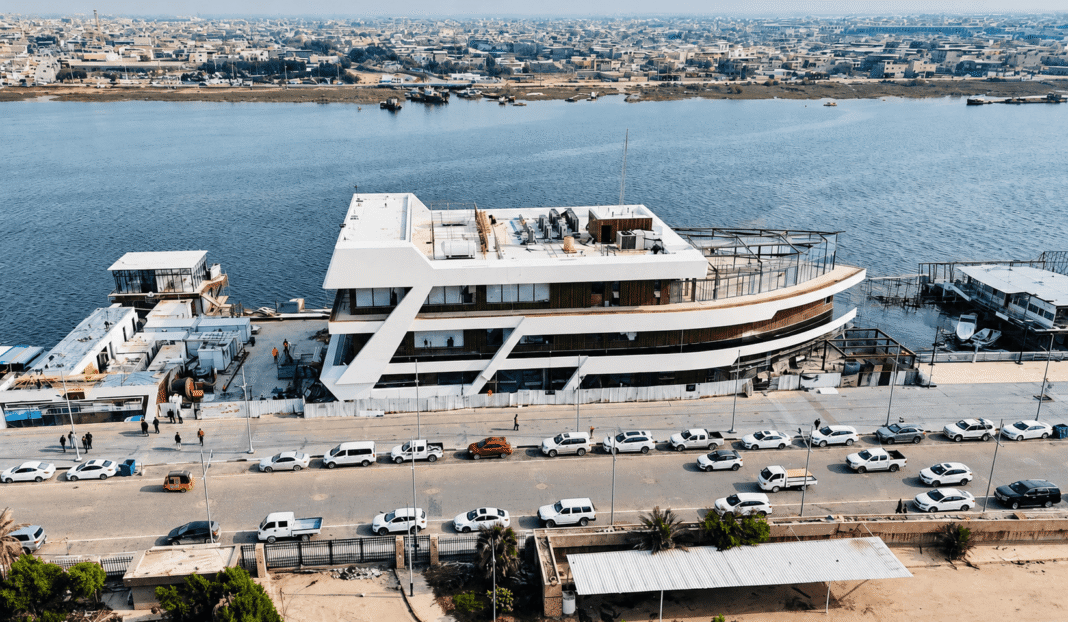
Iraq is nearing completion of its largest marina along the Shatt al-Arab waterway. The Basra marina will accommodate up to 50 boats after construction ends. Moreover, the project will introduce modern tourism and recreational facilities. Iraqi officials expect it to strengthen Basra’s growing waterfront economy.
Ahmed Jassim leads the General Company for Maritime Transport. He said that construction teams continue to work on the marina and its supporting infrastructure. Additionally, the development includes a helicopter landing pad and several visitor facilities. The project will follow international standards for marina operations and tourism services.
The Ministry of Transport considers the development one of its leading infrastructure projects. Therefore, officials want to complete the remaining construction work quickly. The ministry will open the facility after workers finish all technical preparations. Meanwhile, authorities will continue monitoring safety and operational requirements.
The marina occupies a strategic position beside the Shatt al-Arab in southern Basra. This famous waterway connects the city with important maritime routes. Consequently, the location could attract boat owners, visitors, and tourism companies. It could also support new recreational activities across the surrounding waterfront.
The project represents a major addition to Iraq’s tourism infrastructure. Iraq has long depended heavily on oil exports for government revenue. However, officials now want tourism and transportation to support broader economic growth. Therefore, the government continues developing leisure, hospitality, and maritime projects.
The Basra marina could create new opportunities for private investors. Hotels, restaurants, travel companies, and entertainment businesses may benefit from increased visitor numbers. Furthermore, local companies could offer boat services, maintenance, supplies, and guided trips. These activities could create jobs for residents across Basra.
Iraq also wants to improve the appearance and economic value of its waterfront areas. Modern facilities could encourage families and tourists to spend more time near the waterway. Additionally, improved infrastructure could enable Basra to host more maritime events and recreational activities. Such events could strengthen the city’s image as a tourism destination.
The project also supports Iraq’s wider transportation development strategy. Baghdad has increased investment in ports, logistics networks, and maritime facilities. As a result, Iraq hopes to become a stronger regional transportation center. The marina adds a tourism element to that broader economic strategy.
Meanwhile, Basra already plays a central role in Iraq’s trade and energy sectors. The province contains major ports, oil fields, and industrial facilities. Nevertheless, officials want Basra to develop beyond its traditional economic industries. Tourism could provide another important source of income and employment.
The marina may also encourage further investment along the Shatt al-Arab. Private companies could develop hotels, cafés, shops, and entertainment centers nearby. Moreover, better waterfront services could attract both local and international visitors. Investors may view the project as a starting point for wider tourism growth.
However, the marina’s success will require strong management and regular maintenance. Operators must protect the waterway and keep the facilities clean. They must also provide reliable safety, security, and emergency services. Consequently, long-term planning will remain essential after the marina opens.
Iraqi authorities could also promote the marina through tourism campaigns. These campaigns may highlight Basra’s culture, history, food, and maritime identity. Furthermore, travel companies could connect marina visits with tours across southern Iraq. Such packages could encourage visitors to stay longer and spend more.
The development could also support small businesses near the waterfront. Local entrepreneurs may open restaurants, cafés, souvenir stores, and marine supply shops. Additionally, fishing and boating companies could introduce new services for visitors. These businesses would help spread economic benefits throughout the community.
Iraq continues seeking ways to attract private capital outside the oil industry. Tourism infrastructure offers investors opportunities across hospitality, transportation, and entertainment. Therefore, the marina could demonstrate Iraq’s ability to deliver modern leisure projects. Its success could encourage similar developments in other cities.
Ultimately, the project combines transportation, tourism, and investment goals. The marina will give Basra a new attraction beside its historic waterway. At the same time, it could generate business opportunities and strengthen the local economy. Iraq hopes the development will support a more diverse economic future.