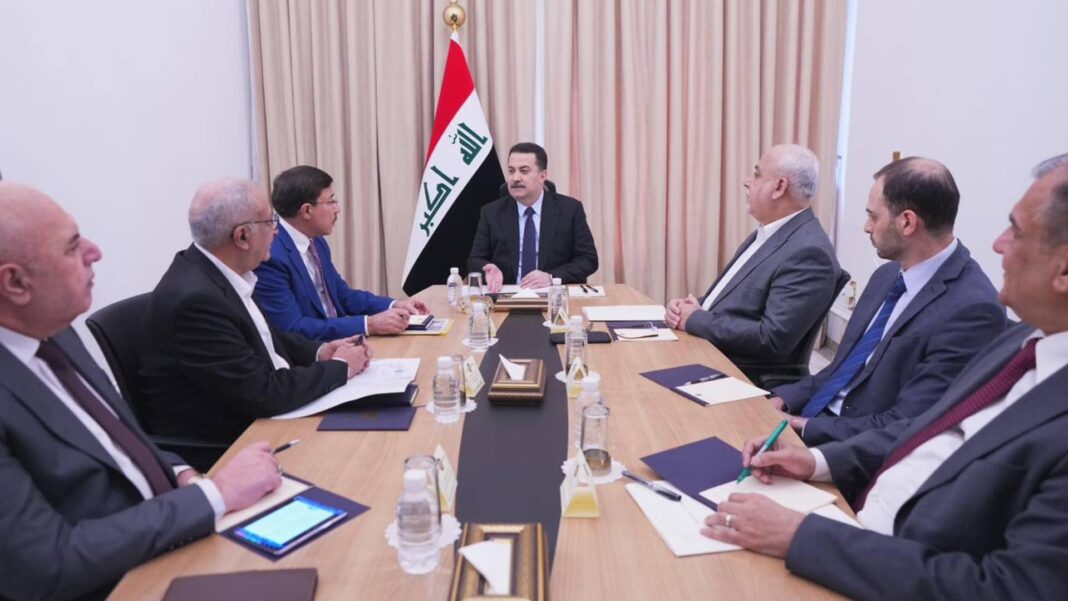
Baghdad, Iraq – On Saturday, Prime Minister Muhammed S. Al-Sudani led a crucial meeting to examine the economic and commercial consequences of the United States’ decision to raise customs tariffs. The meeting focused on understanding how these changes could affect Iraq’s economy and the global market.
During the session, officials discussed the broader economic implications of the U.S. tariff increase, including its impact on global oil prices and trade dynamics. The discussions also highlighted the specific effects on Iraq’s economy. According to the Prime Minister’s Media Office, the data reviewed indicated that the tariff hikes were primarily driven by the trade imbalance between Iraq and the U.S., rather than any retaliatory actions by Iraq.
The Ministry of Trade presented data showing that a significant portion of Iraq’s imports from the U.S. passes through third-party countries. This is due to certain commercial practices that American companies follow when dealing with Iraq. The data also emphasized that these tariff increases were not a result of Iraq’s own customs duties on U.S. goods.
In response to these developments, PM Al-Sudani instructed his team to take decisive steps aimed at protecting Iraq’s economic interests. The proposed measures are designed to bolster Iraq’s trade relations with the U.S. and ensure sustainable economic growth.
To enhance commercial ties, the Prime Minister outlined several key strategies. These include creating direct trade channels between U.S. distributors and Iraqi businesses. In addition, the government will work on improving banking relations between Iraq and the U.S., ensuring both nations benefit from these financial interactions.
Furthermore, the negotiation team handling trade relations with the U.S. has been tasked with reviewing the foundations of this partnership. Their goal is to establish a balanced, mutually beneficial trade agreement.
The Ministry of Foreign Affairs, the Ministry of Finance, and the Ministry of Trade will collaborate with relevant American agencies. They plan to initiate dialogue, monitor financial markets, and provide the Prime Minister’s Office with weekly updates.
Overall, these measures aim to safeguard Iraq’s economy in light of changing global trade dynamics. Through these efforts, the government hopes to strengthen Iraq’s commercial ties with the U.S. while ensuring sustainable growth.

