Political tensions over Iraq’s energy sector intensified Monday as leaders clashed over the Iraq oil export dispute between Baghdad and the Kurdistan Regional Government.
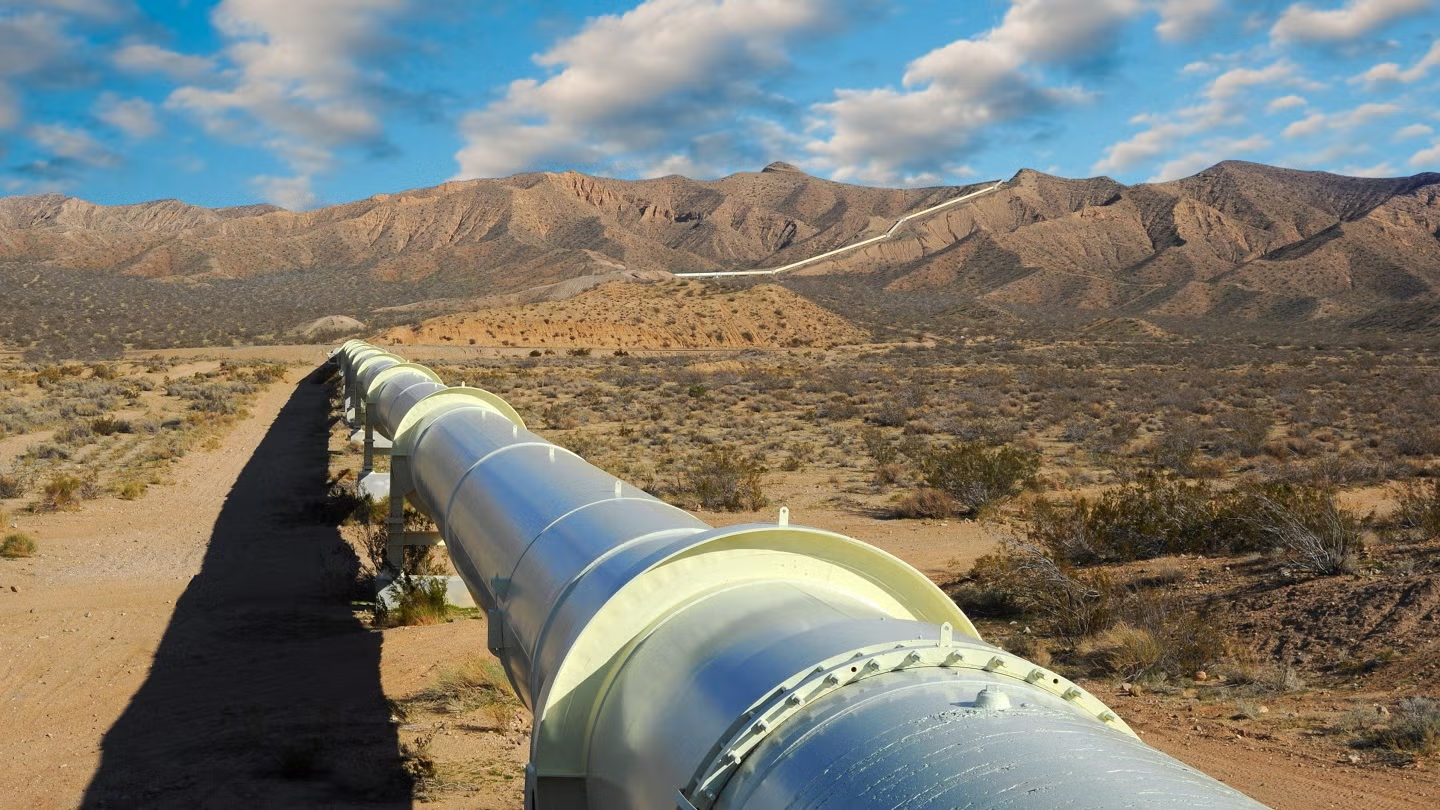
First, the Shiite political alliance known as the Coordination Framework rejected accusations made by the Kurdistan Regional Government regarding crude oil exports through the northern pipeline. The alliance said the claims would not help resolve the Iraq oil export dispute.
Meanwhile, the alliance stressed that oil and gas management must follow the Iraqi constitution and national laws. Leaders said these rules protect Iraq’s unified decision-making and safeguard the rights of citizens across the country.
Furthermore, the alliance urged both sides to focus on national interests instead of public accusations. It encouraged cooperation between the federal government and the Kurdistan Regional Government. According to the statement, officials should work together to restore oil exports through the Turkish port of Ceyhan.
However, the alliance strongly rejected the recent statement issued by the Kurdistan Regional Government Ministry of Natural Resources. The group argued that the accusations within the statement failed to provide practical solutions to the ongoing Iraq oil export dispute.
At the same time, the alliance encouraged leaders to resolve disagreements through cooperation. It called for discussions guided by national partnership and shared responsibility.
Nevertheless, the statement avoided addressing several complaints raised by Kurdish officials. Earlier, the KRG Ministry of Natural Resources criticized Baghdad’s explanation for the halted exports.
Specifically, Kurdish officials pointed to financial and security pressures affecting the region’s energy sector. They said a dollar embargo targeting traders in the Kurdistan Region created serious economic obstacles.
In addition, Kurdish authorities blamed ongoing attacks on energy infrastructure. According to officials, militia strikes damaged key facilities and forced production to stop in several areas.
Moreover, Kurdish leaders highlighted continued delays in salary payments to public employees. They argued these delays worsened the economic pressure facing the Kurdistan Region.
Despite these claims, the Coordination Framework dismissed the accusations without addressing them in detail.
Meanwhile, Kurdish political leader Masoud Barzani urged both sides to return to direct negotiations. He warned that Iraq faces several political and economic crises while divisions continue to grow.
Therefore, Barzani called on Baghdad and Erbil to hold immediate talks. He also warned that political opportunists could exploit the tensions if leaders fail to resolve their disagreements quickly.
Looking ahead, lawmakers plan to hold a key meeting in the Council of Representatives of Iraq. Officials scheduled the session for Tuesday evening in hopes of easing tensions.
During the meeting, federal and Kurdish oil ministers will discuss possible solutions. Their talks may determine whether Baghdad and Erbil can break the deadlock.
The outcome could also affect Iraq’s wider financial stability. Recently, the country lost most of its southern export revenues after disruptions near the Strait of Hormuz.
As a result, pressure continues to grow for leaders to settle the Iraq oil export dispute and restore critical oil flows.