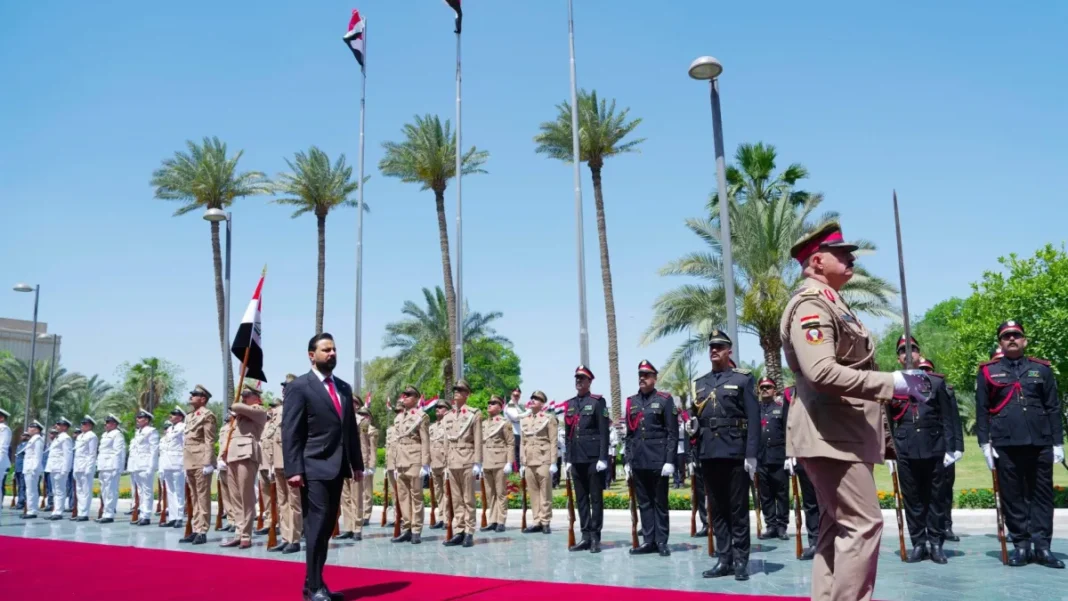
The Iraqi militia control has emerged as one of the government’s most pressing priorities as regional tensions continue to threaten stability. Moreover, Prime Minister Mohammed al-Zaidi has intensified efforts to bring armed groups under state authority while avoiding confrontation.
According to sources familiar with the discussions, Zaidi meets regularly with advisers and political allies in Baghdad. Furthermore, he continues to pursue a strategy aimed at preventing Iraq from becoming entangled in renewed regional conflicts.
Sources indicated that the prime minister relies on a diverse advisory team. The group includes experts and political figures with different international connections. In addition, the team includes specialists from several fields.
People close to the government said Zaidi seeks dialogue rather than confrontation. However, officials insist that armed groups must respect state decisions.
Recent meetings within the ruling Shiite Coordination Framework highlighted growing concerns. During those discussions, Zaidi reportedly warned against actions that could undermine Iraq’s foreign policy positions.
Consequently, government officials have focused on preventing armed factions from entering the conflict between Israel and Iran. Leaders fear that renewed hostilities could drag Iraq into another period of instability.
Earlier confrontations witnessed attacks on American interests inside Iraq. In addition, drones targeted several Gulf countries during previous periods of escalation.
Although Israel and Iran recently announced a halt to military exchanges, uncertainty remains. Therefore, Baghdad continues to monitor developments closely.
Sources within the prime minister’s office said political outreach has accelerated. Officials have reportedly communicated with influential figures and organizations linked to major armed factions.
According to those sources, the government rejects any military actions that could expose Iraq to further risks. Therefore, officials have increased diplomatic contacts with various parties.
At the same time, authorities have issued clear warnings. Officials stated that any group attempting to widen the conflict could face legal consequences.
The government has reportedly concentrated its efforts on several influential factions. In particular, authorities have sought to keep those groups away from regional confrontations.
Meanwhile, cabinet members with longstanding ties to armed organizations have used communication channels to encourage restraint. They argue that keeping Iraq outside the conflict remains essential for preserving stability.
The strategy also aims to create a secure environment for the government. Consequently, Baghdad has spent recent days conducting complex negotiations with several parties.
According to political sources, prominent Shiite figures have provided indirect assurances. Those contacts suggest some factions currently favor restraint.
Nevertheless, officials remain cautious. Many leaders acknowledge that predicting long-term behavior remains difficult.
Meanwhile, international pressure on Iraq has increased. Washington has repeatedly urged Iraqi authorities to adopt a firmer position toward Iran-aligned factions.
Recently, some groups announced steps to transfer control of their armed formations to the Iraqi state. Observers viewed those decisions as a response to growing pressure.
However, several organizations have resisted similar measures. Those groups maintain that foreign forces must first leave Iraq before disarmament discussions can proceed.
Despite those differences, the government continues to advance its approach. The broader objective centers on preserving stability and strengthening state authority.
As a result, Iraq militia control remains a central issue in Baghdad’s political agenda. Officials believe the policy could prevent future crises and protect national interests.
At the same time, the success of Iraq’s militia control efforts may determine whether Iraq can avoid another period of regional turmoil. For now, authorities continue to rely on negotiations while keeping additional measures on the table.