
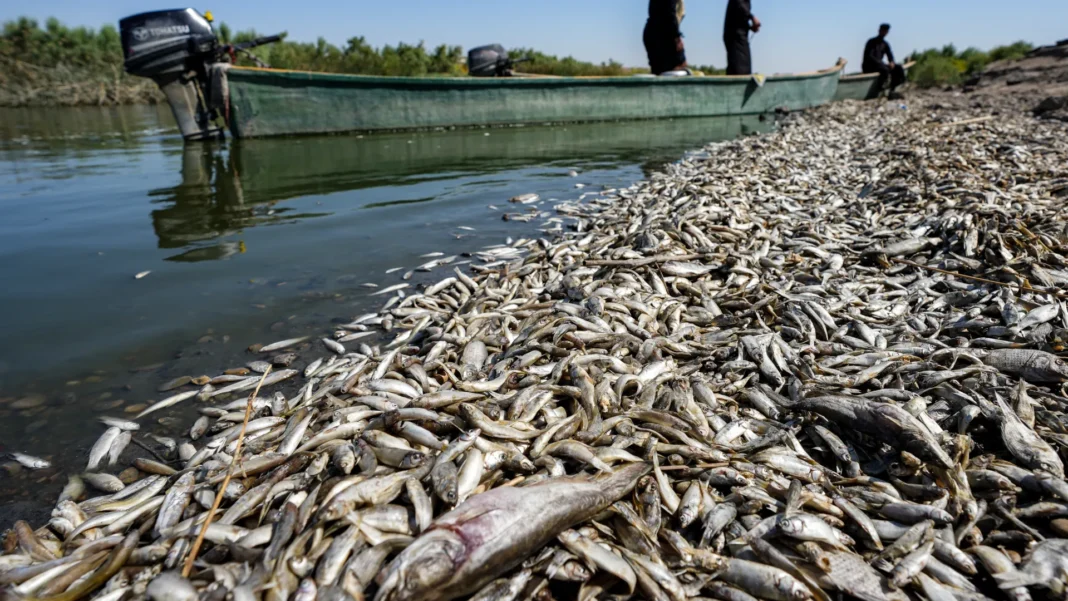
The Iraq water pollution disaster has devastated livelihoods along the Tigris River after toxic water wiped out fish farms. The Iraq water pollution disaster highlights that growing environmental risks have been linked to climate change and weak infrastructure. As a result, communities now face severe economic losses and rising health concerns.
On the banks of the Tigris River, fish farmer Haidar Kazem surveys the damage. He lost nearly 300 tons of fish in just hours. He had raised them for more than a year. However, polluted floodwater destroyed everything in a single day. Consequently, he now faces financial ruin and uncertainty.
Earlier this month, authorities opened floodgates at the Hamrin Dam after heavy rainfall. This decision followed a prolonged dry season across Iraq. Water surged into the Diyala River, which suffers from severe sewage pollution. Soon after, contaminated water flowed into the Tigris, spreading toxins downstream.
Satellite imagery from Copernicus Sentinel revealed the scale of pollution. Dark water clearly moved from the Diyala into the Tigris between late March and mid-April. Therefore, the contamination reached multiple areas, including major fish farming zones.
Kazem said no authority warned him about the incoming polluted water. The toxic flow reached his ponds on April 5. It killed his entire stock and caused losses exceeding one million dollars. He buried the dead carp, commonly used for Iraq’s traditional masguf. Now, he spends his days cleaning empty cages and searching for answers.
The Iraq water pollution disaster has affected many farmers beyond Kazem. Arkan Al-Shimari, a local agriculture official, confirmed widespread losses. He reported that more than 1,000 tons of fish died in Wasit province alone. Meanwhile, several treatment plants continue to release untreated sewage into the Diyala River.
Environmental expert Wim Zwijnenburg explained the unusual impact. He noted that the Diyala often appears darker due to wastewater discharge and low water levels. However, strong rainfall increased the river’s current this time. Therefore, less diluted pollution entered the Tigris and spread further downstream.
As conditions worsened, authorities restricted water supplies in several areas. Officials documented at least 20 cases of poisoning and skin rashes. These incidents raised serious concerns about public health and water safety.
At the same time, Iraq continues to face worsening water shortages. Declining rainfall and rising temperatures have reduced river levels. In addition, upstream dams in Turkey and Iran limit water flow into Iraq. These factors have intensified environmental pressures across the country.
Following the disaster, officials pledged to improve wastewater treatment systems. Authorities announced plans to open several new treatment plants in Baghdad. However, years of conflict have damaged infrastructure and slowed progress.
In Al-Numaniyah, another farmer, Mazen Mansour, described similar losses. He lost 38,000 fish overnight after polluted water filled his cages. He attempted to save them by pumping oxygen, but the effort failed.
Now, many farmers demand compensation and accountability. They urge the government to take urgent action to prevent future disasters. Without reforms, experts warn that such environmental crises will continue to threaten livelihoods across Iraq.