
Iraq political crisis continues to intensify as the Coordination Framework reshapes its decision-making process. Iraq political crisis now centers on leadership authority and stalled negotiations. The crisis grows further after repeated failures to agree on a prime minister candidate.
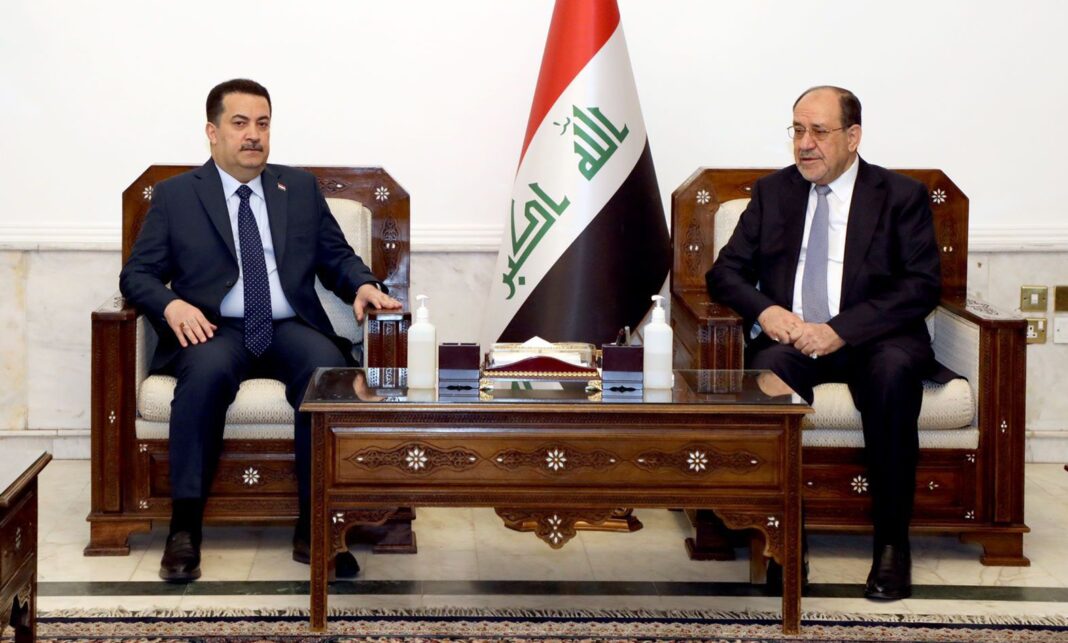
The Coordination Framework has assigned joint authority to Mohammed Shia’ Al-Sudani and Nouri al-Maliki. They now hold the responsibility to select a prime minister candidate. This decision follows multiple failed negotiation rounds. Moreover, lawmakers confirmed the move on Saturday.
According to Alia Nassif, recent talks reset the entire process. She explained that leaders returned to earlier proposals. In addition, she stated that discussions once again focused on Sudani and Maliki.
Furthermore, Nassif said a voting proposal stalled progress. The plan required approval from eight leaders. These leaders control more than 110 parliamentary seats. However, she argued that the idea blocked progress instead of enabling it.
Meanwhile, political tensions increased inside the bloc. Some members supported a structured vote system. Others rejected it and preferred direct agreement. Therefore, negotiations repeatedly collapsed without resolution.
At the same time, Iraq’s political crisis deepened due to legal interpretations of deadlines. The Coordination Framework missed the 15-day constitutional window. This deadline is related to the appointment process after President Nizar Ameditook office.
Consequently, legal experts described the situation as a second constitutional breach. Some political leaders rejected that interpretation. However, others warned about long-term institutional consequences.
In addition, discussions now focus on compromise conditions for candidates. Leaders demand that candidates avoid party affiliation. They also require candidates to stay out of future elections.
Moreover, internal alliances play a major role in negotiations. Sudani’s supporters include key political figures within the framework. Together, they hold significant parliamentary strength. However, rival factions continue to resist unified decision-making.
Furthermore, leaders continue to prioritize unity within the Coordination Framework. They fear internal splits could weaken their political influence. Therefore, they avoid aggressive moves toward a final vote.
In contrast, Sudani rejected proposals to gather parliamentary signatures. He preferred maintaining bloc unity instead of forcing a numerical advantage. This decision further delayed resolution efforts.
Finally, Iraq’s political crisis remains unresolved as competing camps struggle for an agreement. Iraq political crisis now depends on whether leaders compromise or continue internal disputes. This will likely shape the next stage of government formation.