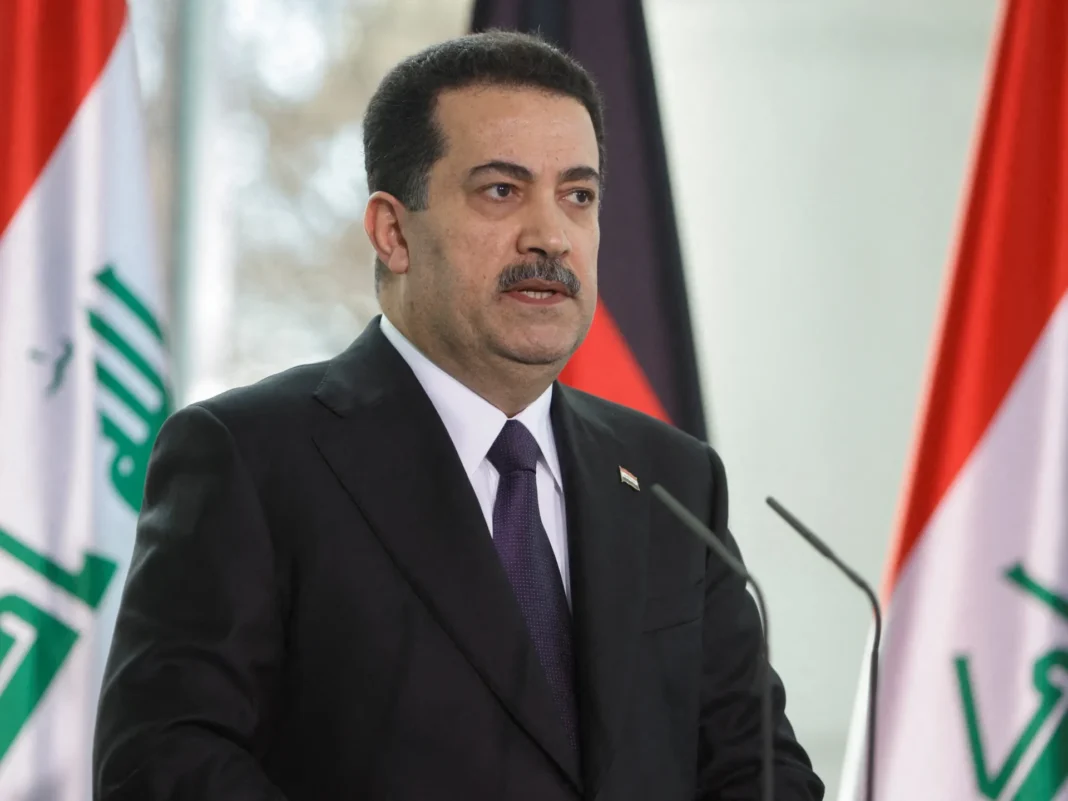
Iraq PM race support shifted on Sunday as political leaders revealed new positions within the ruling alliance. A senior figure from the Coordination Framework said several blocs now support Prime Minister Mohammed Shia al-Sudani for a second term. Moreover, discussions continue as parties debate alternative candidates. As a result, the political scene remains highly active.
A leading member of the Reconstruction and Development Alliance stated that eight blocs currently back Sudani. He also said four blocs continue to support former Prime Minister Nouri al-Maliki. Therefore, divisions inside the alliance remain clear. In addition, no unified agreement has emerged on a single candidate.
Iraq PM race support also changed after reports of foreign influence. The same official claimed that a U.S .veto affected the candidacy of Bassem al-Badri. He said this development effectively removed Badri from the competition. Moreover, political groups reacted quickly to this claim. As a result, attention shifted back to other leading candidates.
The official also criticized Badri’s qualifications for leadership. He argued that Badri lacks a clear government program and national vision. Furthermore, he stressed the need for a candidate with strong international ties. Therefore, he urged political blocs to support a more experienced figure.
Iraq PM race support continued to evolve as leaders discussed the current political stage. The official called on members of the State of Law bloc to reconsider their position. He emphasized the importance of unity during a sensitive period. In addition, he highlighted the need for a leader with broad acceptance.
The presence of regional figures in Baghdad also influenced political discussions. Leaders noted that high-level visits reflect the seriousness of the situation. Moreover, these developments added pressure on political factions to reach an agreement. As a result, negotiations intensified across different groups.
Political sources confirmed that earlier efforts to nominate other candidates faced challenges. Disagreements inside the Coordination Framework delayed progress. Furthermore, external pressure complicated decision-making. Therefore, blocs continue to search for a compromise candidate.
Overall, Iraq PM race support remains divided as discussions continue. Political leaders are working to resolve differences and select a nominee. Moreover, ongoing negotiations will shape the next phase of government formation.