
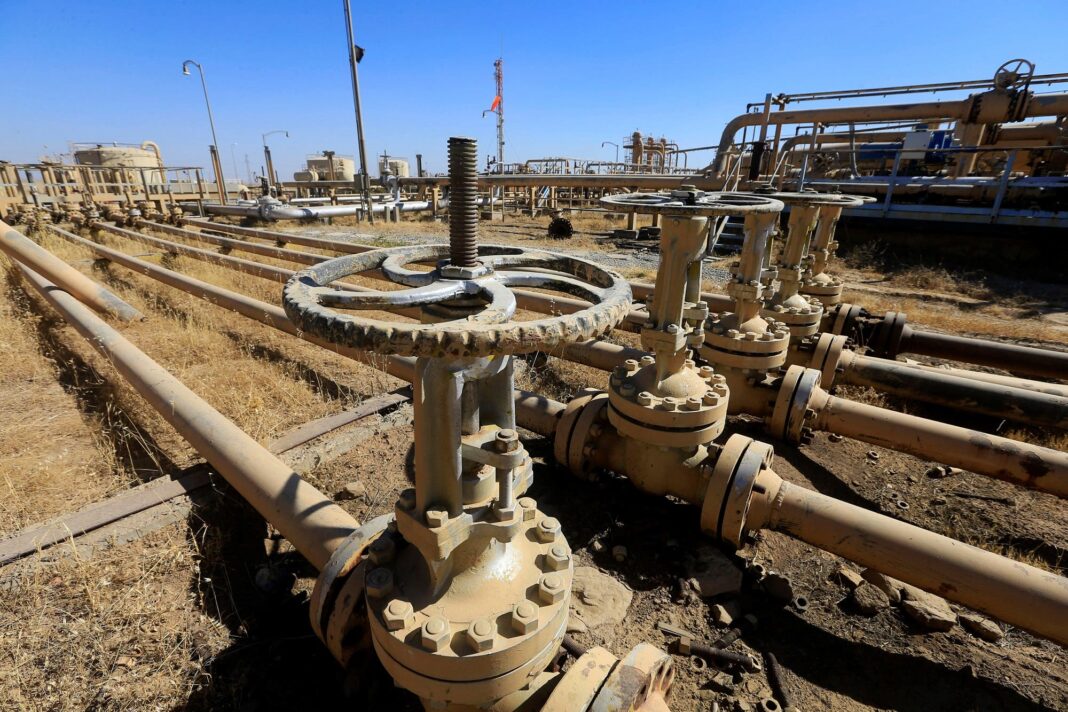
Baghdad – Iraq earns roughly $24 million every day from Kirkuk oil exports. These shipments travel through the Kurdistan pipeline. Yet, the flows cover only 6% of Iraq’s total oil output. Analysts warn that this limits the impact on national supply.
The Eco Iraq Observatory reported Tuesday that the current flow amounts to about 200,000 barrels per day. At $100 per barrel, the revenue seems significant. However, transport costs reduce the net gain. Domestic operators share roughly $3.15 per barrel for moving oil through Turkiye to Ceyhan port.
Despite bypassing the Strait of Hormuz, the pipeline cannot fully offset disruptions. Iran’s post-U.S.-Israeli strikes restrictions slowed tanker traffic and raised maritime costs. Observers stress that relying on a single route leaves Iraq vulnerable. They suggest the country needs broader export diversification to strengthen resilience.
Flows resumed after a Baghdad-Erbil agreement last year. Capacity could increase to 250,000 barrels per day. This expansion offers some relief, yet the contribution remains modest compared to Iraq’s total output. Analysts emphasize that Kirkuk oil flows provide immediate but limited workarounds to maritime risks.
Economists note the $24 million daily gain as important for local budgets. Still, they warn that it does not replace lost revenue from other pipelines. Supply bottlenecks continue to affect southern and northern markets. Investors remain cautious, given the ongoing geopolitical tensions.
Energy experts point out that partial flows can stabilize short-term markets. Yet, Iraq cannot rely on Kirkuk oil flows alone. Strategic planning must address infrastructure upgrades, alternative export routes, and regional security concerns. Without these steps, the country risks repeated disruptions.
In conclusion, Kirkuk oil flows demonstrate Iraq’s ability to generate revenue quickly. However, they cover just 6% of total production, showing the need for long-term solutions. Experts repeat that diversifying export channels remains vital to national energy security.