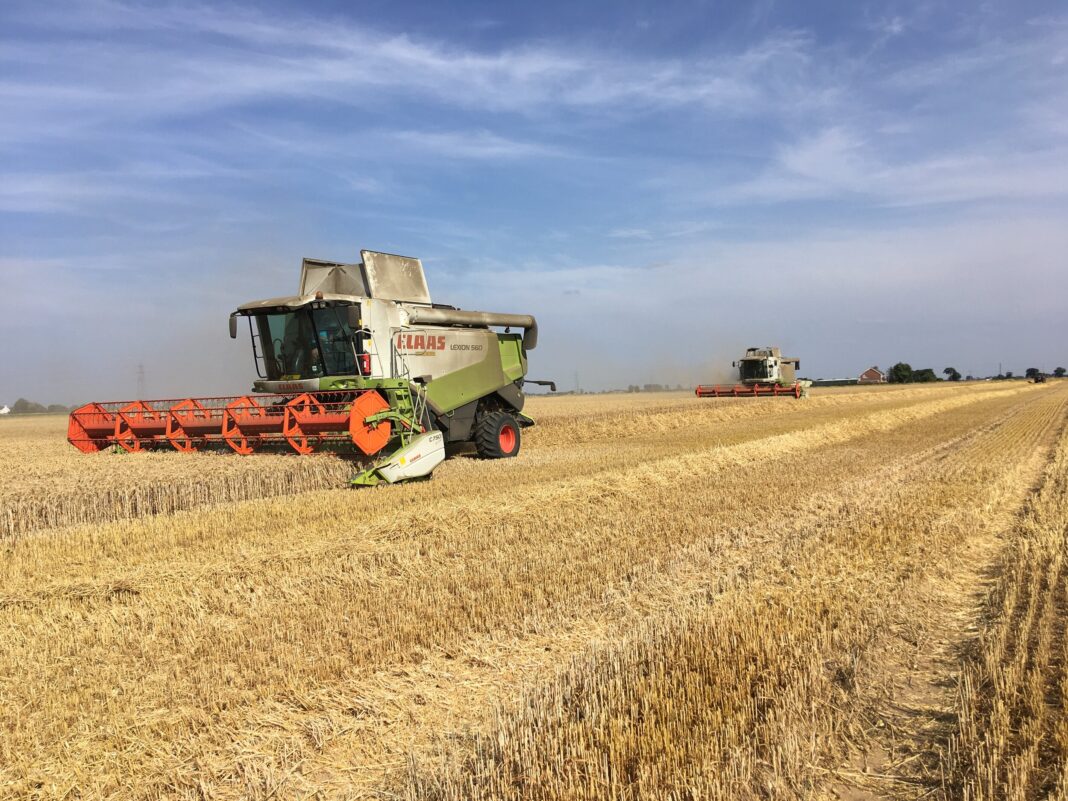
Iraq wheat production success continues for the third consecutive year, according to the Ministry of Agriculture. The country has reached full wheat self-sufficiency once again, with output hitting four million tons. All of this wheat came from various provinces, excluding the Kurdistan Region.
Meanwhile, officials attribute this achievement to consistent government planning and targeted agricultural support. Minister of Agriculture Abbas Al-Maliki emphasized the role of advanced irrigation, improved seeds, and fertilizer distribution. These elements have helped farmers deal with water shortages and land degradation.
Moreover, the Ministry celebrated this progress in a recent public ceremony. The event highlighted the importance of strategic support for farmers and long-term sustainability in agriculture.
Notably, a recent Reuters report revealed an economic challenge tied to this success. The Iraqi government could lose $500 million due to surplus grain. Despite being a top wheat importer in the region, Iraq now faces an oversupply, reaching 1.5 million tons.
Still, this surplus reflects better-than-expected rainfall and increased government funding. Iraq now pays farmers more than twice the global market rate. This policy ensures wheat remains profitable and encourages large-scale farming, even during dry seasons.
Historically, Iraq achieved self-sufficiency before the Ukraine conflict. The country produced 4.7 million tons in 2019, 6.2 million tons in 2020, and 4.2 million tons in 2021. However, droughts and desertification later cut into yields and forced imports.
Currently, Iraq’s wheat strategy aims to prevent future shortages. Authorities plan to balance production with storage and export capacity. By doing so, they hope to protect farmers’ incomes while maintaining food security.
Clearly, the Iraq wheat production success is more than a number. It reflects policy choices, climate resilience, and national priorities. As a result, the government is turning a former weakness into a source of strength.Looking ahead, Iraq plans to invest in grain storage, boost farmer training, and expand irrigation systems to ensure lasting agricultural stability.