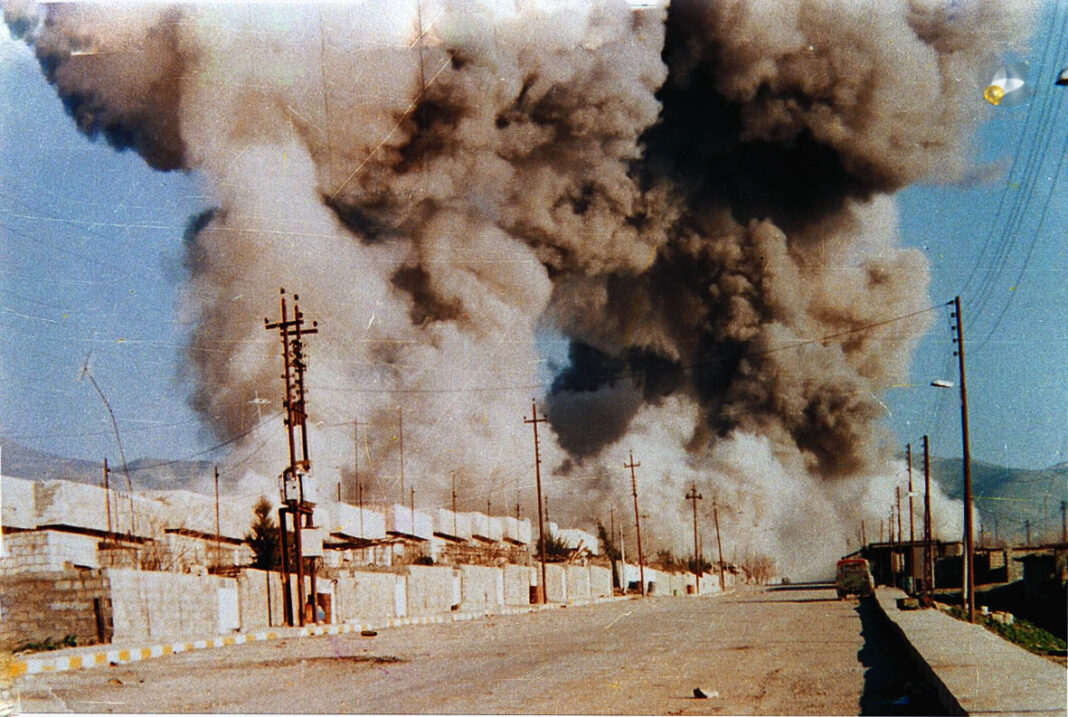
On March 16, 1988, the city of Halabja in Iraqi Kurdistan became the site of one of the most horrific chemical attacks in modern history. Thousands of Kurdish civilians lost their lives in a large-scale assault using chemical weapons, marking a dark moment in the history of the Iran–Iraq War.
The attack took place during the Anfal campaign, a series of military operations orchestrated by the Iraqi government under the leadership of Ali Hassan al-Majid. Just two days before the bombing, the city had fallen into Iranian hands as part of Operation Zafar 7. In response, the Iraqi regime launched the chemical assault as part of its efforts to defeat Iranian forces, pro-Iranian Kurdish fighters, and local Kurdish populations.
The United Nations investigation into the tragedy confirmed the use of mustard gas and other unidentified nerve agents, aimed at the civilians of Halabja. Initially, the United States Defense Intelligence Agency blamed Iran for the attack, but subsequent evidence pointed to Iraq as the perpetrator. The chemical weapons were deployed to support the Iraqi military’s ongoing offensive against Iranian forces, Kurdish fighters aligned with Iran, and innocent residents.
The massacre remains the largest chemical weapons attack ever targeted at a civilian population, with estimates of the death toll ranging from 3,200 to 5,000, and another 7,000 to 10,000 people left wounded. In the years following the attack, surveys of the affected areas revealed an alarming rise in cancer cases and birth defects, underscoring the long-term consequences of the assault.
In 2010, the Supreme Iraqi Criminal Tribunal officially classified the chemical attack as a genocidal act against the Kurdish people, a tragic event that occurred under the regime of then-Iraqi President Saddam Hussein. That same year, the attack was condemned by the Parliament of Canada, which recognized it as a crime against humanity.
Ali Hassan al-Majid, who was responsible for orchestrating the assault, was captured after the 2003 invasion of Iraq. In 2007, he was sentenced to death for his role in ordering the attack, and he was executed by hanging in January 2010.
The Halabja massacre serves as a grim reminder of the devastating consequences of chemical warfare and the immense suffering endured by civilians caught in the crossfire of political and military conflicts.