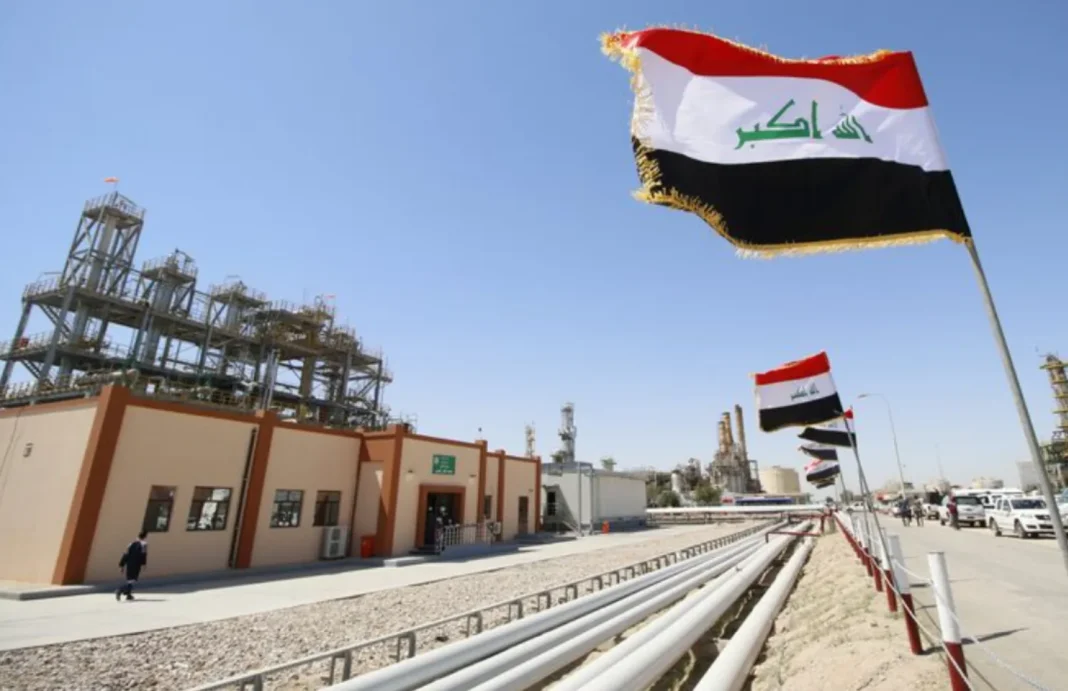
Iraq has increased Iraq’s oil export capacity to more than 3 million barrels per day as Baghdad works to expand alternative routes and reduce its reliance on the Strait of Hormuz. Oil Minister Basim Mohammed Khudair said Saturday that exports reached around 3 million barrels per day at the start of September.
Khudair said the government ultimately aims to raise export capacity to 5 million barrels per day. However, Iraq must first complete several strategic pipeline projects designed to connect its oil fields with export terminals in the north and west.
The planned infrastructure includes the Basra-Haditha-Fishkhabur pipeline and the Haditha-Banias route. Prime Minister Ali Faleh al-Zaidi ordered work to proceed on both projects last month as part of Baghdad’s broader effort to diversify crude export channels.
The northern pipeline would connect oil fields in southern Iraq with Fishkhabur, near the Turkish border. From there, Iraqi crude could access the Kirkuk-Ceyhan pipeline and eventually reach Türkiye’s Mediterranean port of Ceyhan. Therefore, the route could provide Baghdad with another major outlet for its oil exports.
Meanwhile, the western project would connect Haditha with Syria’s Banias port on the Mediterranean coast. The route could give Iraq direct access to another maritime outlet while potentially restoring an important oil corridor between Iraq and Syria.
Consequently, Iraq’s oil export capacity could increase significantly once the two projects reach completion. The government expects the new infrastructure to strengthen the country’s ability to transport crude internationally while reducing exposure to disruptions affecting a single maritime route.
The push comes as Iraq continues recovering from a sharp decline in oil production during the US-Israeli war on Iran that began in late February. Before the conflict, Iraq produced approximately 3.3 million barrels per day. However, output fell to around 1.3 million barrels per day as regional instability disrupted energy operations and transportation.
Production began recovering during July and August, allowing Iraq to gradually restore its exports. By September, the country had brought export capacity back above 3 million barrels per day, according to the oil minister.
Iraq also possesses substantial reserves to support its long-term production ambitions. Official figures place the country’s proven oil reserves at approximately 145 billion barrels, giving Baghdad considerable potential to expand output and strengthen its position in global energy markets.
Nevertheless, the government faces continuing risks because the Strait of Hormuz remains strategically important for regional energy shipments. Tensions between Washington and Tehran have disrupted maritime traffic and increased concerns over the reliability of the waterway.
For that reason, Baghdad is prioritizing additional pipelines and export terminals. By developing routes through Türkiye and Syria, Iraq hopes to create greater flexibility when moving crude to international markets.
If the planned infrastructure progresses as expected, Iraq’s oil export capacity could eventually reach the government’s 5 million-barrel-per-day target. Such an expansion would give Iraq more options for transporting crude and could help protect vital oil revenues against future regional disruptions.