By Kamyar Deraney
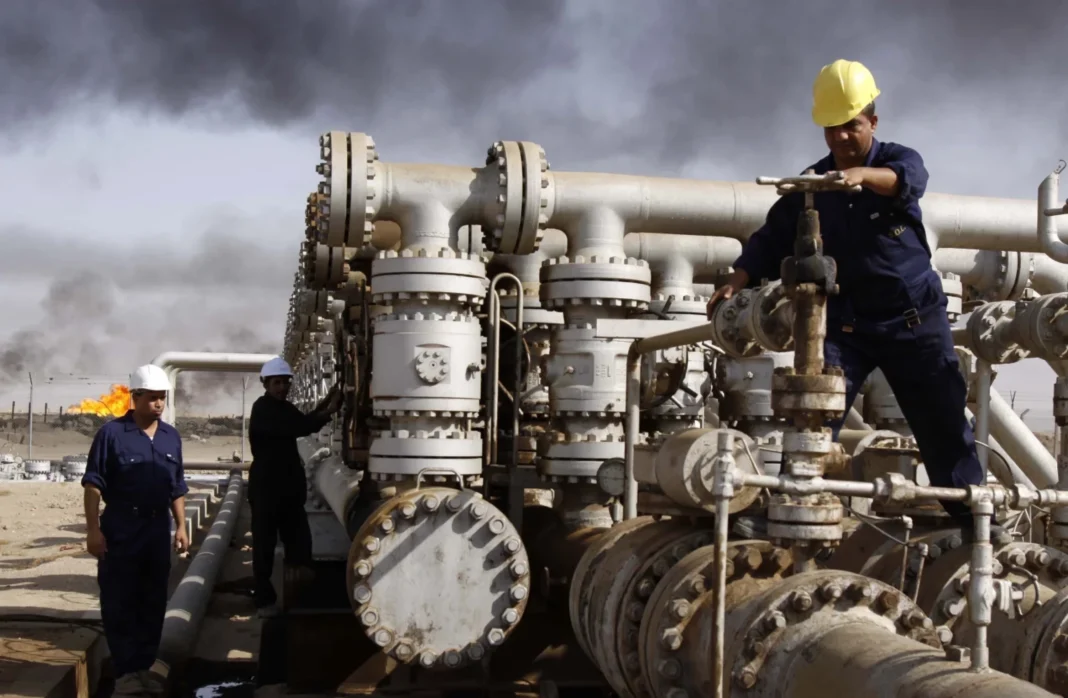
The ongoing regional conflict between the US-Israel partnership and Iran had negative repercussions on the oil industry of Iraq. Throughout the country, the production and exports of oil sharply decreased, and oil fields of the Kurdistan Region of Iraq were subjected to multiple drone and missile attacks.
Prior to all these events, Iraq produced around 4.5 million barrels per day. By July, the number of daily exports fell to around 1.6 million barrels. Such a sharp decline in revenue affected Iraq’s ability to pay salaries to its civil servants on time which resulted in a crisis situation for the whole country.
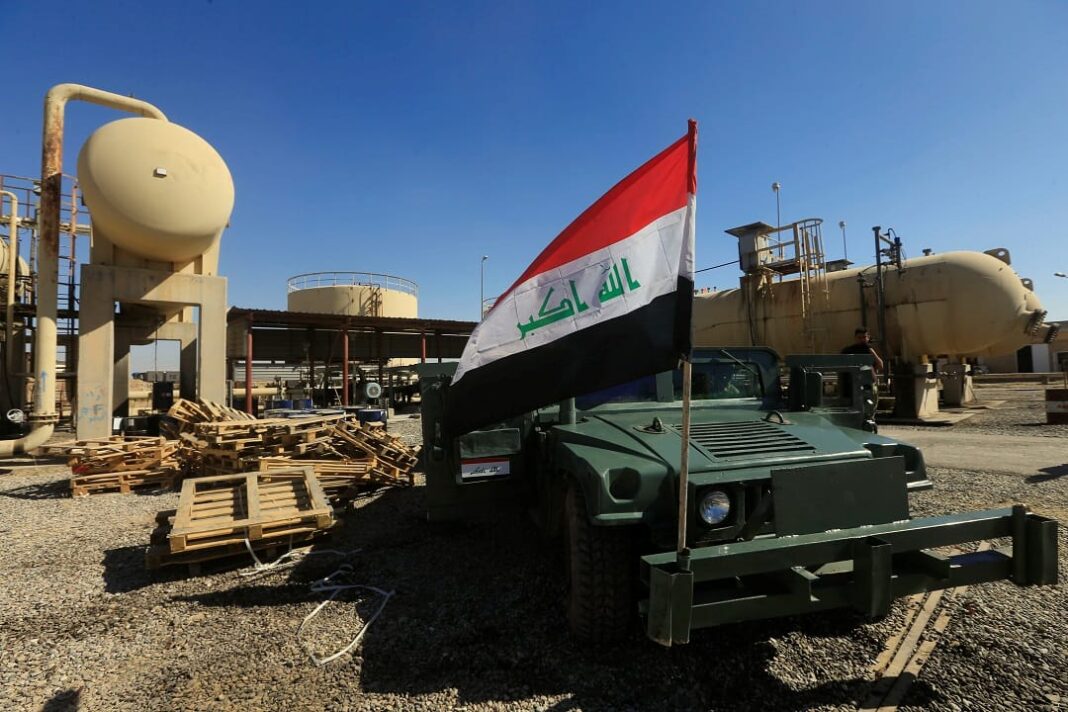
Most of the physical destruction was done in the Kurdistan Region. From late February through April, the authorities reported more than 800 drone and missile strikes in the region. It impacted not only the oil fields but the entire area causing serious problems with supply chains. Foreign oil companies were forced to suspend their activity due to both safety reasons and the inability to export the oil since export routes were closed. They explicitly stated that they would resume their activities once they got tangible security guarantees.
Such enormous financial pressure was the main reason why Baghdad and Erbil agreed to cooperate with each other. The salary budget of Iraq’s public sector reaches six to seven billion dollars per month.
In June, the Chief of Staff of the Iraqi Army met with President Nechirvan Barzani and Prime Minister Masrour Barzani of the Kurdistan Region to coordinate efforts. As a result, both parties agreed to work together securing oil fields: Iraqi Army will collaborate with Peshmerga to protect the oil fields. Moreover, Baghdad agreed to provide an air defense system for Erbil and northern energy facilities. It can be considered a breakthrough in terms of cooperation between the two governments.
President Nechirvan Barzani mentioned in his recent TV interview that such collaboration is needed in order to get the economy on track. It was noted that there is already a good intelligence and military coordination between Baghdad and Erbil. Kurdistan Region of Iraq is described as an essential part of Iraq’s social and economic system.
By August, however, positive changes began occurring. In terms of production, it rose again above the mark of three million barrels per day. As for the export operations, they had resumed, with around 150,000 to 180,000 barrels per day being exported through the pipeline in the Kurdistan Region to the Ceyhan terminal of Turkey.
The objective set by the stakeholders includes increasing the export capacity to 750,000 barrels per day through the use of the Turkish pipeline. Nonetheless, achieving such results will require overcoming numerous challenges, including settling various issues, such as the compensation scheme for the foreign companies involved in the process and the restoration of infrastructure used.
One should note that the Iraqi Oil Minister Bassim Khudair highlighted the key issue related to the current situation: the dependency of the country on the strait, through which 94% of its sea exports occur. Thus, it is essential to discover other export options, such as using the aforementioned northern pipeline.
In any case, the attacks on the energy infrastructure in the North made apparent the flimsiness of the rentier state paradigm in Iraq. However, the current crisis has brought about a more realistic approach that shows that neither Erbil nor Baghdad can secure its own economic survival without the other. The fact that both cities have agreed to coordinate border protection is a breakthrough, but much more is needed in order for the problem to be solved once and for all. The existence of such uncontrolled and armed non-state groups directly challenges the sovereignty of the institutions in Iraq, as well as puts the country into potential conflict situations from which it cannot recover.