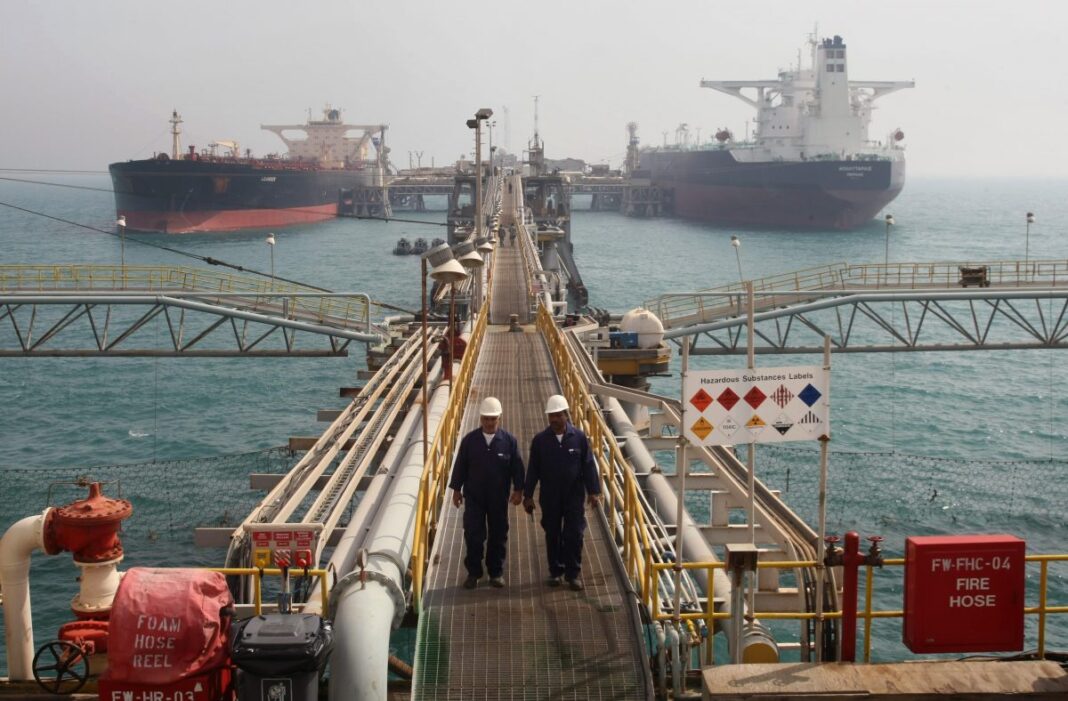
Iraq is reshaping Iraq’s oil export strategy as maritime shipments gradually recover following major disruptions linked to regional conflict. The Oil Ministry says the country now relies on Free on Board (FOB) sales at southern ports, allowing buyers to assume responsibility for transporting crude through the Strait of Hormuz.
Salim al-Rikabi, a spokesperson for the Oil Ministry, said the State Organization for Marketing of Oil (SOMO) offers Iraqi crude directly at the ports. Under the arrangement, purchasing companies handle the shipments after taking ownership, including their movement through secure maritime routes.
Meanwhile, Iraq continues efforts to restore production after output fell sharply during the disruption of shipping through the Strait of Hormuz. Before the conflict, Iraq maintained crude production capacity above 4.5 million barrels per day. However, shipping difficulties forced producers to reduce output as vessels faced greater risks along key maritime routes.
According to Rikabi, exports have since improved considerably. Daily shipments increased from roughly 200,000 barrels to about 2.2 million barrels. Consequently, Iraq recorded around 70 million barrels of exports during August. However, monthly and daily figures continue to fluctuate because supplies from the Kurdistan Region and Kirkuk vary.
Currently, shipments from the Kurdistan Region stand at approximately 150,000 barrels per day. Kirkuk contributes another 30,000 barrels per day, bringing the combined northern contribution to about 180,000 barrels daily.
At the same time, Baghdad and Erbil have extended their cooperation over northern oil exports through Türkiye’s Ceyhan port. The tripartite framework involving Baghdad, the Kurdistan Regional Government and international oil companies will continue for another year. Iraq also extended its agreement with Türkiye for another year.
Before the disruptions, Iraq exported close to 100 million barrels of crude each month. However, exports plunged to 18.6 million barrels in March, producing around $1.96 billion in revenue. In February, Iraq exported more than 99 million barrels and generated approximately $6.8 billion.
Looking ahead, Iraq’s oil export strategy also includes expanding production capacity. Prime Minister Ali al-Zaidi has directed the Oil Ministry to pursue a long-term target of roughly 10 million barrels per day by 2030. The government also wants greater investment in fields across the Kurdistan Region and wider exploration activity.
Furthermore, international energy companies are preparing to expand operations in Iraq. BP and ConocoPhillips have begun studies and established camps in Kirkuk as joint management committees move forward with development plans. The ministry also expects American companies to participate in projects involving several major oil fields.
Iraq is additionally examining alternative export routes through Syria. SOMO currently sells fuel oil in southern facilities for onward transportation through Tartous. Baghdad has outlined short-term tanker-truck shipments and longer-term pipeline projects connecting Basra, Haditha and Baniyas.
Despite plans to increase production, the ministry rejected claims that Iraq intends to leave OPEC. Rikabi stressed Iraq’s founding role in the organization and said Baghdad instead wants its production quota reviewed. The government argues that higher production limits should reflect Iraq’s reserves, available capacity and years of conflict.
Meanwhile, domestic fuel demand remains another challenge. Gasoline consumption recently reached about 38 million liters per day, while local production stood at around 30 million liters. Imports therefore cover the eight-million-liter daily gap.
The situation could improve once the Fluid Catalytic Cracking project in Basra begins operations. The project, expected within the coming months, should add approximately five million liters of premium gasoline each day. Together with expanding crude production and alternative transportation routes, these measures form a broader Iraq’s oil export strategy aimed at protecting energy revenues and strengthening the country’s position in regional oil markets.