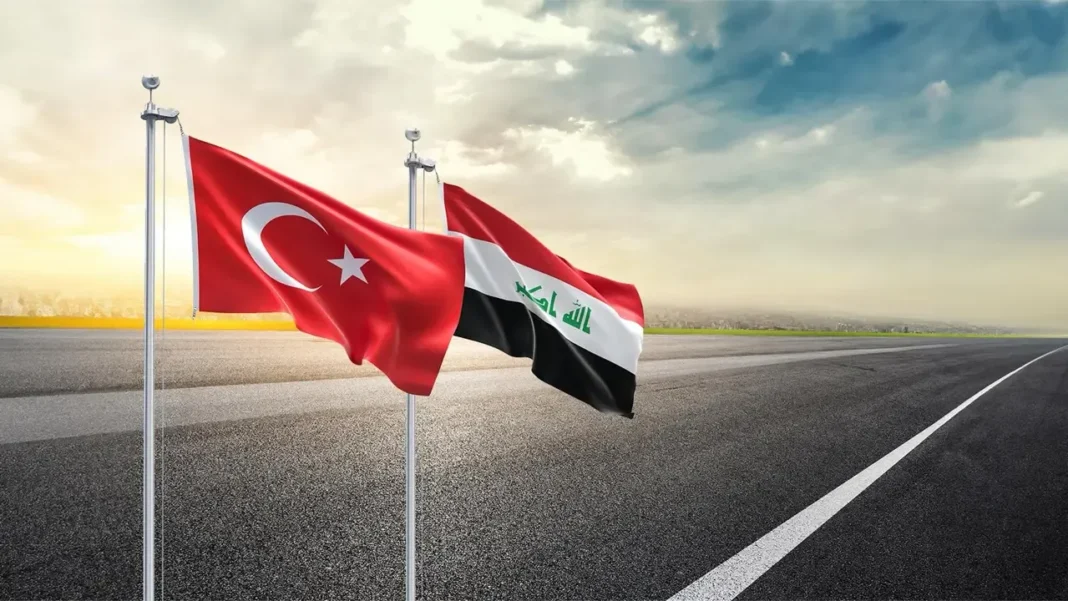
Turkish Transport and Infrastructure Minister Abdulkadir Uraloğlu arrived in Baghdad for high-level talks with Iraqi officials. His visit focuses on transportation, logistics, and telecommunications cooperation. Moreover, both governments want closer coordination on major regional infrastructure projects. Officials also plan to strengthen commercial connections between their countries.
Iraqi Deputy Transport Minister Hazem Razi Lafta welcomed Uraloğlu at Baghdad International Airport. Uraloğlu then met Iraqi Transport Minister Wahb Al-Hasani at Baghdad’s state guesthouse. The ministers discussed joint transportation priorities and stronger logistical connections. Additionally, they examined opportunities for deeper technical cooperation.
The Development Road dominated the ministers’ agenda during the Baghdad talks. The project seeks to create a major railway and highway corridor through Iraq. It will connect Grand Faw Port with Turkey and European commercial markets. Consequently, the corridor could reshape regional transportation and international trade.
Both countries want to accelerate the project’s planning and construction phases. Officials will review transportation routes, border connections, and technical requirements. Moreover, both sides want closer coordination between their ministries and infrastructure agencies. Faster decisions could help the project maintain its momentum.
The talks also prepare both governments for upcoming leadership meetings. Iraqi Prime Minister Ali Falih al-Zaidi plans to visit Turkey for official discussions. Therefore, the transport ministers can develop proposals before the leaders meet. Their recommendations could guide future agreements between Baghdad and Ankara.
Iraq and Turkey already maintain one of the region’s largest trade partnerships. Their annual bilateral trade ranges between $15 billion and $17 billion. However, both governments want to raise that figure to approximately $24 billion. Improved transportation links could help them reach that target.
Turkish exports to Iraq exceed $12 billion annually. Food products, construction materials, machinery, and consumer goods account for much of this trade. Meanwhile, Iraqi companies depend on Turkish suppliers across several important sectors. Faster transportation could lower costs and improve delivery times.
Turkish construction companies also maintain a major presence across Iraq. These firms have completed more than 1,100 projects throughout the country. Their combined value exceeds $36 billion. Consequently, Iraq remains a major market for Turkish engineering and construction expertise.
Further infrastructure cooperation could create additional opportunities for Turkish companies. Iraqi businesses could also benefit from new logistics centers and transportation services. Moreover, international investors may support projects along the planned corridor. These investments could stimulate development across several Iraqi provinces.
Grand Faw Port gives Iraq an important position near major Gulf shipping routes. The planned corridor would move cargo from the port toward Turkey and Europe. Therefore, traders could avoid longer maritime routes through other regional waterways. Shorter journeys could reduce transportation costs and delivery times.
Turkey could also gain stronger access to Gulf commercial markets. Its railways and highways already connect with major European transportation networks. Consequently, Iraq could provide an important southern gateway for Turkish trade. European companies could also gain faster access to Gulf markets.
Telecommunications cooperation forms another important part of the ministerial talks. Cross-border digital systems can support customs services and cargo tracking. Furthermore, better data connections could improve security across the planned route. Digital networks could also help companies monitor shipments more efficiently.
Both governments must still address major technical and financial challenges. They need common railway standards, efficient border crossings, and reliable customs procedures. Additionally, authorities must secure consistent financing for every construction phase. Strong project management will also remain essential.
Security will play a central role in the corridor’s success. Authorities must protect workers, cargo, railway lines, and highway connections. Moreover, businesses will require predictable regulations before committing major investments. Stable policies could increase confidence among international partners.
Iraq wants to diversify its economy beyond oil exports. Transit fees could provide the government with an additional source of revenue. Logistics centers could also attract warehouses, factories, hotels, and service companies. Meanwhile, new businesses could create jobs for local communities.
Transport development could especially benefit southern Iraq. New railway and highway connections may increase activity around Grand Faw Port. Construction work could generate employment and demand for local materials. Later, logistics companies could provide permanent jobs across the corridor.
However, both governments must coordinate closely throughout every project phase. Delays in one section could affect the entire transportation network. Therefore, ministers want stronger communication between Iraqi and Turkish agencies. Regular meetings could help officials resolve technical problems quickly.
The project could also strengthen Iraq’s position as a regional transit center. Goods from Asia and the Gulf could cross Iraq before entering Turkey. From there, companies could transport cargo to European destinations. This route could give Iraq greater influence over regional supply chains.
Both countries view the Development Road as a long-term economic partnership. Uraloğlu’s Baghdad visit shows their commitment to stronger transportation connections. Further agreements could accelerate construction and attract international capital. Successful cooperation could transform trade between the Gulf, Turkey, and Europe.